

Fed Chair Warsh's Hawkish Tone Shakes Markets
Saturday, August 29, 2026
FED CHAIR WARSH'S HAWKISH TONE SHAKES MARKETS
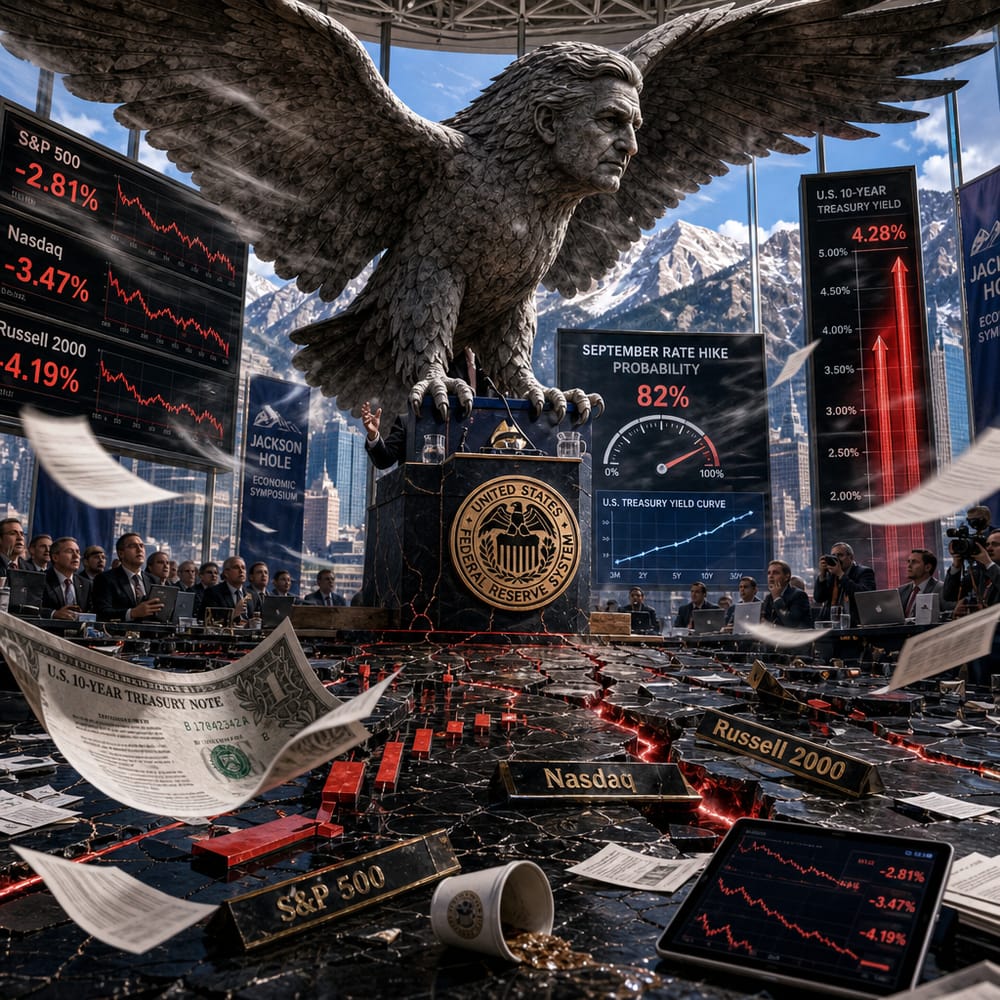
When Fed Chair Kevin Warsh took the stage in Jackson Hole, he wasn’t there to deliver a lullaby. His words struck a hawkish note—a tone that investors might’ve hoped was a thing of the past but is now echoing loudly across financial markets. Suddenly, a September rate hike isn’t just a specter; it’s a genuine possibility. And like a caffeine-addled squirrel in a park, the markets are jittering.
What’s the fuss all about? Well, if you’re new to the game, the Federal Reserve’s interest rates are like the thermostat for the economy. Turn up the heat too much, and things can get a little too spicy—think inflation. Turn it down, and the chill of recession might creep in. Warsh’s speech has everyone guessing if that dial is about to tick up a notch, meaning higher borrowing costs and a likely shake-up in your investment portfolio.
So how did Wall Street react? Picture a startled cat. The S&P 500, Nasdaq, and Russell 2000 all took a dive, while the U.S. 10-year Treasury yield made an upward leap. Investors are scrambling to adjust their strategies, and you can’t blame them—when the Fed sneezes, the market catches a cold.
THE RIPPLE EFFECT ON EQUITIES AND BONDS
A potential rate hike is like the looming shadow over the financial playground. Equities, those pieces of the grand stock market pie, don’t particularly enjoy such news. Why? Because higher interest rates mean companies pay more to borrow money, leaving them with less to invest in their own growth. As costs climb, profits can shrink, and investors start to see stocks as a less appetizing option.
On the flip side, bonds—those trusty IOUs that governments and corporations issue—actually gain a bit of allure in a rising rate environment. The yields, which are essentially the returns you get, increase, making bonds more attractive to investors seeking stable income. The U.S. 10-year Treasury yield’s jump is a shout-out to this dynamic. It’s the market’s way of saying, “Hey, bonds aren’t so bad after all!”
SECTOR SHOWDOWN: WHO STANDS TO LOSE OR WIN?
Not all sectors are created equal, and when the Fed gets hawkish, some industries brace for impact more than others. Tech stocks, known for their growth aspirations and reliance on cheap money, tend to feel the pinch. The Nasdaq’s slide is a testament to this uncertainty. When interest rates go up, the cost of doing techy things, like investing in innovation or expanding operations, follows suit.
Conversely, financials might crack a slight smile. Why? Because banks can profit from the wider gap between the interest they pay on deposits and the interest they earn on loans. Think of it as a banker’s dream scenario—a little extra padding to their bottom lines.
INVESTOR SENTIMENT: ADAPTING TO THE FED'S TEMPO
Now, before you panic-sell your tech stocks or rush to hoard bonds like a dragon with its gold, take a breather. These market swings aren’t about doom or gloom; they’re about adjustments. Investors need to recalibrate, and the Fed’s potential rate hike is like a call to reassess what makes sense in their portfolios.
Some may shift their focus to sectors that thrive in a higher rate environment, like energy and finance, while others might find solace in diversifying their holdings. It’s all about playing the long game, staying nimble, and remembering that markets have weathered many storms before.
THE NEW NORMAL?
With Warsh’s speech, it seems the Fed is turning a page—a subtle reminder that the era of significant communication might be waning. Investors and analysts, used to playing Sherlock Holmes with Fed signals, now face a new challenge: navigating ambiguity. And that might just be the real story here.
So, as the dust settles and markets find their footing, remember to keep your eyes peeled and your strategies flexible. The financial world may be a whirlwind, but for retail investors, it’s all about staying informed, staying alert, and, most importantly, staying in the game.
This article is for informational purposes only and is not investment advice. Always do your own research or consult a licensed financial professional before making investment decisions.
© Copyright 2024. All Rights Reserved.
© Copyright 2024. All Rights Reserved.