

Fed Chair Warsh's Hawkish Tone Shakes Markets
Friday, August 28, 2026
FED CHAIR WARSH'S HAWKISH TONE SHAKES MARKETS
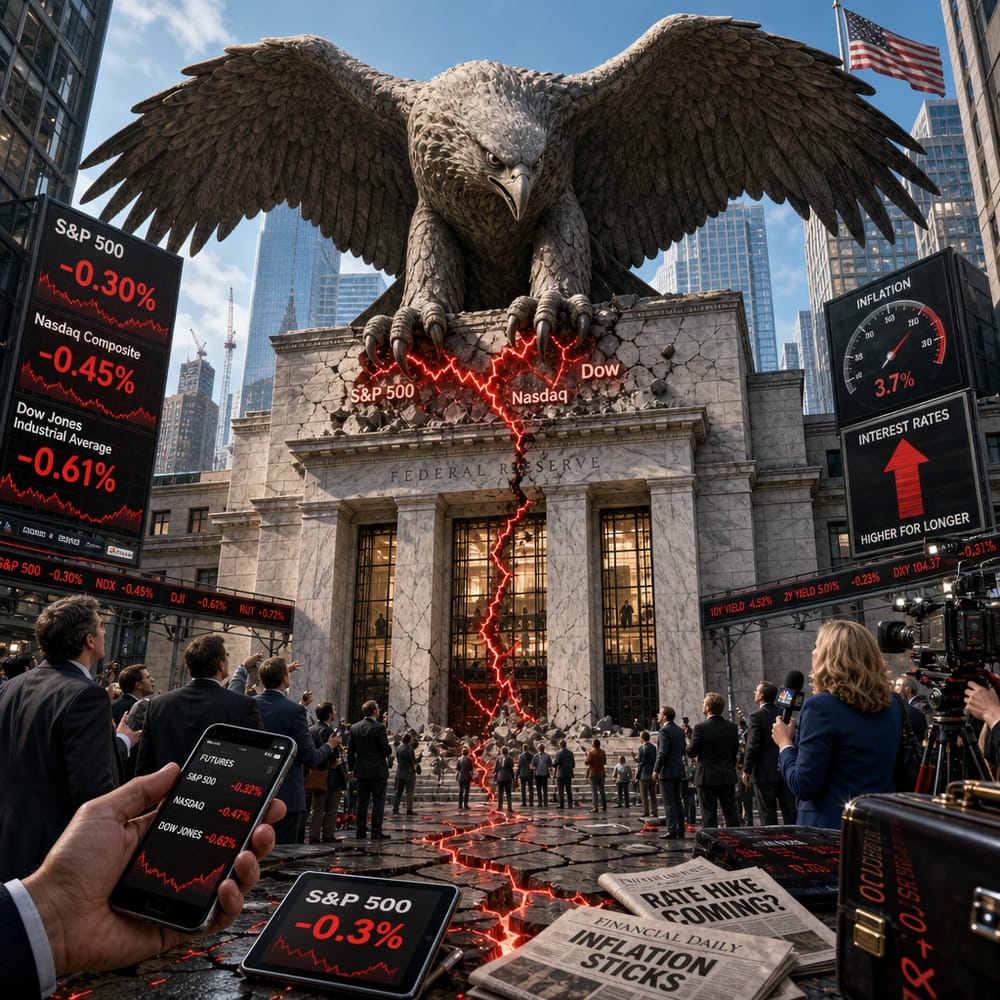
If Federal Reserve Chairman Kevin Warsh wanted to jolt investors awake, he might as well have brought a bullhorn to Jackson Hole. But it turns out, all he needed was a few choice words about inflation. Warsh’s recent speech was a masterclass in the art of subtle yet impactful financial guidance. Like a warning bell for Wall Street, his comments sent shockwaves through the markets, leaving major indices like the S&P 500, Dow Jones, and Nasdaq Composite in a bit of a tailspin.
Picture this: you're enjoying a pleasant Friday, scrolling through financial news, when suddenly Warsh’s hawkish undertones hit like a splash of cold water. The S&P 500 dipped 0.3%, the Nasdaq Composite slid 0.5%, and even the stalwart Dow Jones couldn't escape, shedding 48 points. So, what did Warsh say that made the market shiver? In a nutshell, he signaled that inflation might be more persistent than a houseguest who overstays their welcome.
Warsh’s commentary suggested that the Federal Reserve isn’t going to sit around twiddling its thumbs if inflation doesn’t improve. Remember, interest rates are like the Fed’s toolbox — they tighten them up to cool an overheated economy or loosen them when things are too chilly. Warsh hinted that rates might be heading upwards if those pesky price pressures don’t ease off. This left investors scratching their heads and reevaluating their next moves.
Now, you might be wondering, how did this impact the average investor’s portfolio? Well, strap in because certain sectors took the spotlight. Tech stocks, which have been the darlings of the pandemic era, felt the weight of potential rate hikes. Companies like Nvidia and Intel saw their shares dip, dragging down the tech-heavy Nasdaq. Why? Rising interest rates can sour the mood for growth stocks by increasing borrowing costs and reducing future earnings potential.
On the other side of the spectrum, financials might just be the unexpected belle of the ball. Banks, in particular, have a tendency to do a little happy dance when interest rates rise because they can earn more from the gap between what they pay on deposits and what they charge on loans. So, while tech stocks might be feeling the burn, financial institutions are eyeing potential rate hikes with a gleam in their collective eyes.
But it’s not just about which stocks are up and which are down. Warsh’s speech essentially recalibrated the market’s GPS. Investors are now adjusting their expectations, and the question on everyone's mind is: Are we heading for more rate hikes? Warsh left the door wide open, suggesting that if inflation doesn’t align with the Fed’s goals, more rate hikes could be on the horizon.
For the average retail investor, this is the moment to pause and reconsider the landscape. It might be time to revisit portfolios and think strategically about sector exposure. When interest rates are on the rise, it’s often a prudent strategy to keep an eye on financials and perhaps be a bit wary of high-flying growth stocks that might not fare as well in a higher rate environment.
But don’t pull the ripcord just yet. While the market may have wobbled, it’s still standing. The S&P 500, although bruised, is pacing for a slight advance, and the Dow might just notch its first winning week in a while. Warsh’s words might have ruffled feathers, but they haven’t grounded the market entirely.
In the end, Warsh’s Jackson Hole address was more than just a few lines in a speech. It was a statement, a reassertion of the Fed’s commitment to taming inflation and keeping the economy on an even keel. For investors, it’s a reminder that the Fed’s actions and words can have profound implications. So, keep your ears sharp and your investment strategies sharper, because in this ever-evolving financial landscape, it’s not just about knowing where you stand, but where you’re headed.
This article is for informational purposes only and is not investment advice. Always do your own research or consult a licensed financial professional before making investment decisions.
© Copyright 2024. All Rights Reserved.
© Copyright 2024. All Rights Reserved.