

Fed Chair Warsh's Hawkish Stance at Jackson Hole
Sunday, August 30, 2026
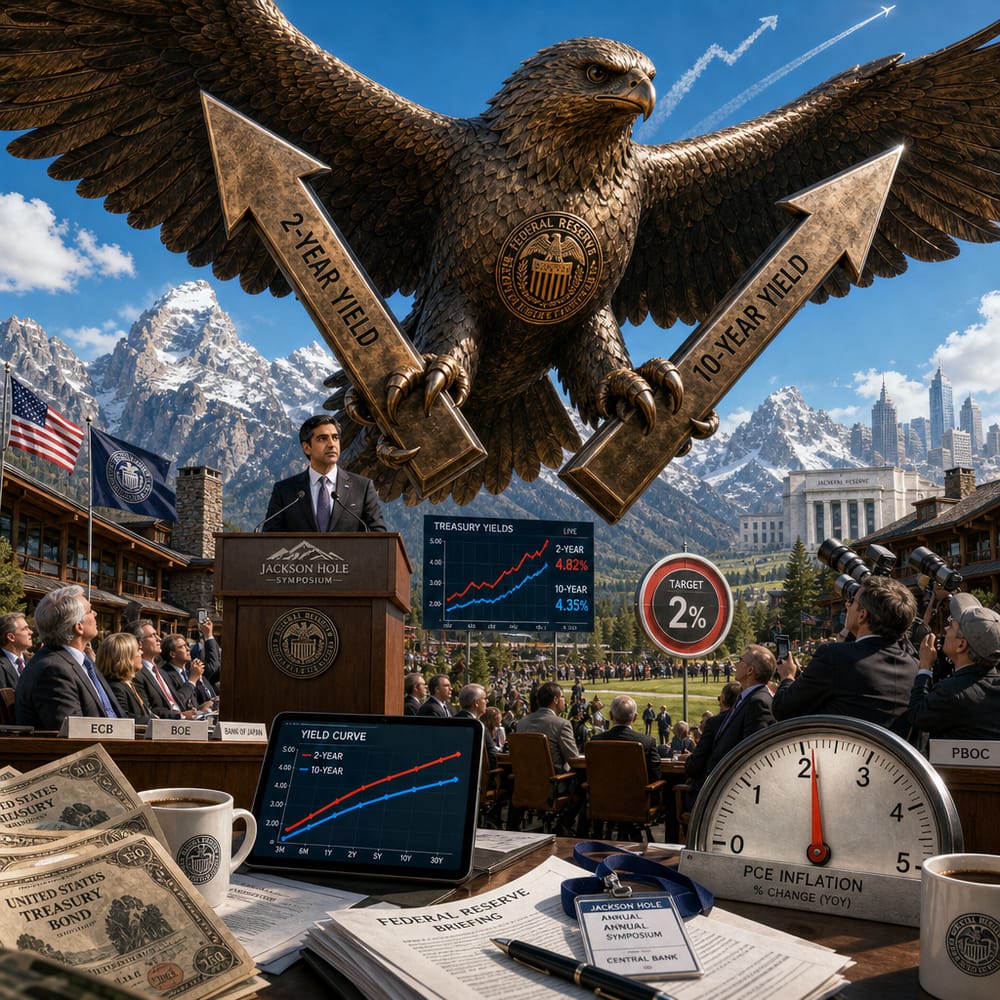
FED CHAIR WARSH'S HAWKISH STANCE AT JACKSON HOLE
Hold onto your wallets, folks—Kevin Warsh just sent a shiver down the spine of everyone who's partial to low interest rates. In a move that could put your credit card bills on a treadmill, the Fed Chair signaled something we've all been dreading: more potential rate hikes unless inflation behaves and waltzes back down to that elusive 2% target. Warsh's recent speech at the Jackson Hole Symposium was a master class in hawkish rhetoric, leaving retail investors wondering how deep their pockets will need to be.
IMPLICATIONS OF WARSH’S HAWKISH STANCE
So what does this hawkish stance mean for the average Joe? In short, borrowing costs could become the financial equivalent of climbing Mount Everest. When interest rates rise, it gets pricier for businesses and consumers to borrow money. Think of it as the financial world’s version of gravity—what goes up must cost you more. Mortgages, car loans, credit cards—all these could start to feel a bit like luxury items if the Fed decides to push rates higher.
The Fed's goal is to reign in inflation without dunking the economy in a recessionary ice bath. But as Warsh’s comments reverberate through Wall Street, there's anxiety about how this balancing act might play out. Keep your eyes peeled on consumer spending and investment—both could take a hit if borrowing becomes a game for only the deep-pocketed.
EFFECTS ON STOCK AND BOND MARKETS
Now, let’s talk about the market fallout. Stock markets and bond yields are like the weather—they affect everyone, and everyone has an opinion. Warsh’s hawkish stance could send stock markets into a frenzy. Why? Higher interest rates often lead to higher borrowing costs for companies, which can crimp profits and send stock prices on a downward trajectory. Investors may start to shy away from equities, seeking safer havens in bonds.
Speaking of bonds, keep your eye on those 2-year and 10-year Treasury yields. These are the North Stars in the finance galaxy, guiding everything from mortgage rates to your cousin’s decision to finally buy that house. If Warsh’s comments lead to a spike in these yields, it could be a signal that investors are bracing for more rate hikes, pricing in the cost of an uncertain future.
THE MARKET’S CRYSTAL BALL
But hold your horses—markets aren’t just sitting ducks. They’ve got tricks up their sleeves, and expectations can change as quickly as a TikTok trend. Investors will be dissecting Warsh’s every word like it’s the latest episode of their favorite true crime podcast, trying to predict the Fed’s next move.
It’s a game of chess, and Warsh just moved his queen. The question now is how the markets will respond. Will they panic and start selling off riskier stocks, or will they see this as a temporary storm and hold their ground? As always, the key is in the interpretation, and every analyst will have their own take.
THE FINAL WORD
In the end, Warsh’s hawkish stance isn’t just about numbers and graphs; it’s about the real-world impact on your wallet. While the Fed’s mission to curb inflation is commendable, the path there could get bumpy. So, retail investors, take note: it might be time to batten down the hatches, keep an eye on those interest rates, and maybe, just maybe, resist the urge to splurge on that next big-ticket item.
In the world of monetary policy, nothing is certain, except maybe one thing: there's never a dull moment. So, grab your popcorn and stay tuned, because Warsh's next move could be just around the corner.
This article is for informational purposes only and is not investment advice. Always do your own research or consult a licensed financial professional before making investment decisions.
© Copyright 2024. All Rights Reserved.
© Copyright 2024. All Rights Reserved.