

Fed Chair Warsh Emphasizes No Tolerance for High Inflation
Tuesday, July 28, 2026
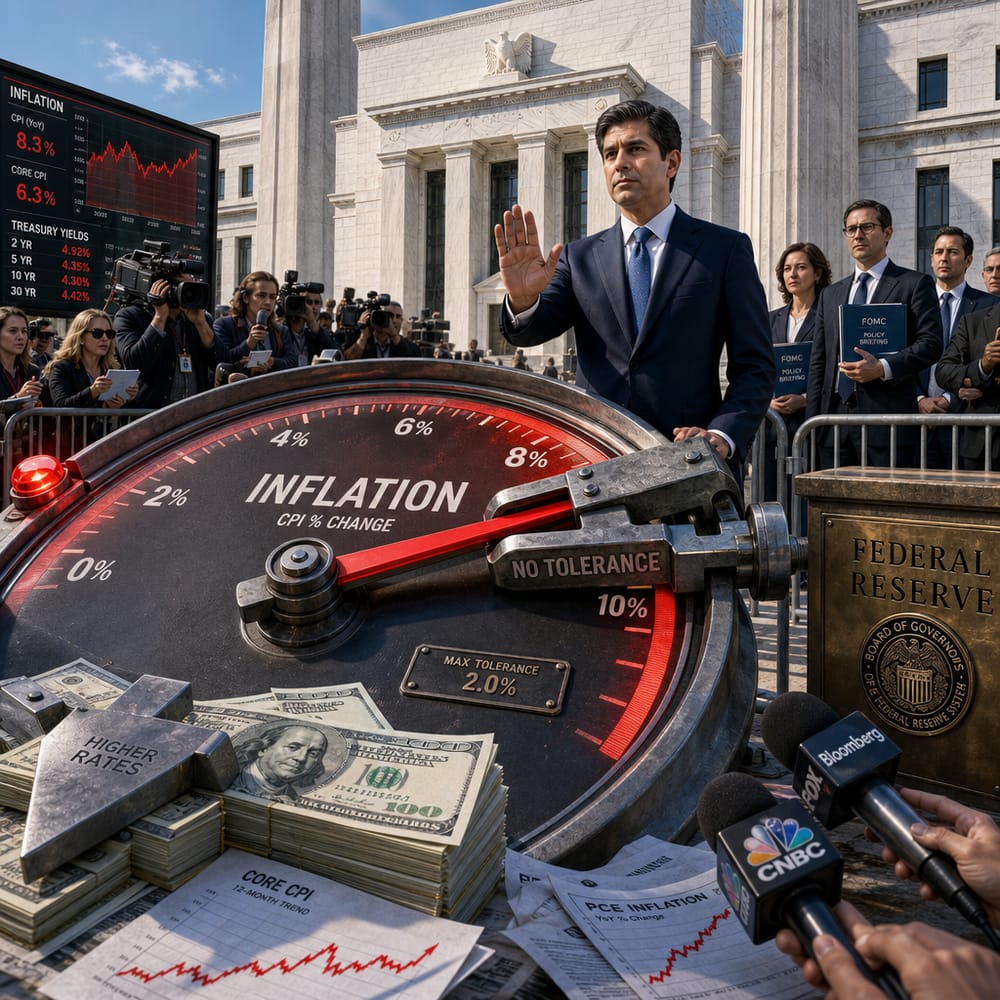
FED CHAIR WARSH EMPHASIZES NO TOLERANCE FOR HIGH INFLATION
Prepare yourself, because the new Fed Chair Kevin Warsh just dropped the mic on inflation. He made it crystal clear that the Federal Reserve has "no tolerance" for inflation going off the rails on his watch. But hold your horses — his speech came without a roadmap for what happens next. It's like he announced the menu but forgot to cook the meal. So, what's really cooking? Let's dig into the implications of this strong stance on inflation for future policy and your wallet.
The Federal Reserve's stance on inflation isn't just a piece of economic theater; it’s the backbone of financial stability. When inflation heats up, your dollar buys less and less, which isn’t ideal for anyone trying to save, invest, or just enjoy a cup of coffee without wincing at the price tag.
But why did Warsh stop short of laying out a game plan? Well, that’s the million-dollar question. The absence of explicit guidance means the Fed might be keeping its cards close, ready to play them as the economic situation unfolds. Think of it as a high-stakes poker game, where showing your hand too early could lead to a losing bet.
CONSEQUENCES OF A HARD STANCE
Taking the Fed's hard stance at face value suggests that they're ready to slam the brakes on the economy if things get too hot. One straightforward way to do that is by hiking interest rates. Higher rates make borrowing more expensive, whether you're looking to buy a home or expand your business. The idea is to cool down spending and, in turn, prices.
But here’s where things get sketchy. If the Fed goes pedal to the metal with rate hikes, it could slow down economic growth too much, potentially tipping us into a recession. It's the classic balancing act of not crashing the economy while trying to steady it.
RATE HIKE RUMBLINGS
So, how’s this inflation rhetoric going to affect future rate hikes? Let's break it down. If the Fed can't tolerate inflation, then expect more rate hikes to come. The market is already on edge, with investors keeping their eyes glued to Fed meetings like it’s the latest binge-worthy series on Netflix. Each meeting could drop a new bombshell on rates.
For retail investors, this means potential volatility in the stock and bond markets. Stocks generally don't love higher rates because they squeeze corporate profits, which sends investors running for safer pastures. On the flip side, bonds might get a jolt of life, as higher rates often boost bond yields.
As the Fed tightens its grip, sectors reliant on cheap borrowing — think tech and real estate — might feel the heat. Companies that need to borrow money to fuel growth could find themselves in a tighter spot, while those with cash reserves might come out smiling.
WHAT'S NEXT?
Despite the cryptic clues left by Warsh, there's no denying the Fed's commitment to fighting inflation. But whether they can do so without rocking the boat too hard remains to be seen. It’s all about reading between the lines and watching how the market reacts to both the Fed’s words and actions.
Now, here's a curveball: if inflation cools on its own, the Fed might not need to wrench the economic levers as hard. Less aggressive rate hikes could calm the markets, making this whole inflation saga more of a slow-burn than a blockbuster drama.
In the meantime, keep your eyes peeled. Watch how sectors react to whispers from the Fed and adjust your investment strategy accordingly. As Warsh fires the opening salvo in what could be a drawn-out battle against inflation, one thing's for sure: the coming months will be anything but dull.
So, buckle up, stay informed, and get ready for what promises to be a wild ride in the world of economics. After all, in the game of financial chess, knowing the next move is half the battle.
This article is for informational purposes only and is not investment advice. Always do your own research or consult a licensed financial professional before making investment decisions.
© Copyright 2024. All Rights Reserved.
© Copyright 2024. All Rights Reserved.