

Fed Chair Kevin Warsh's Ambiguous Messaging Raises Market Concerns
Monday, August 10, 2026
FED CHAIR KEVIN WARSH'S AMBIGUOUS MESSAGING RAISES MARKET CONCERNS
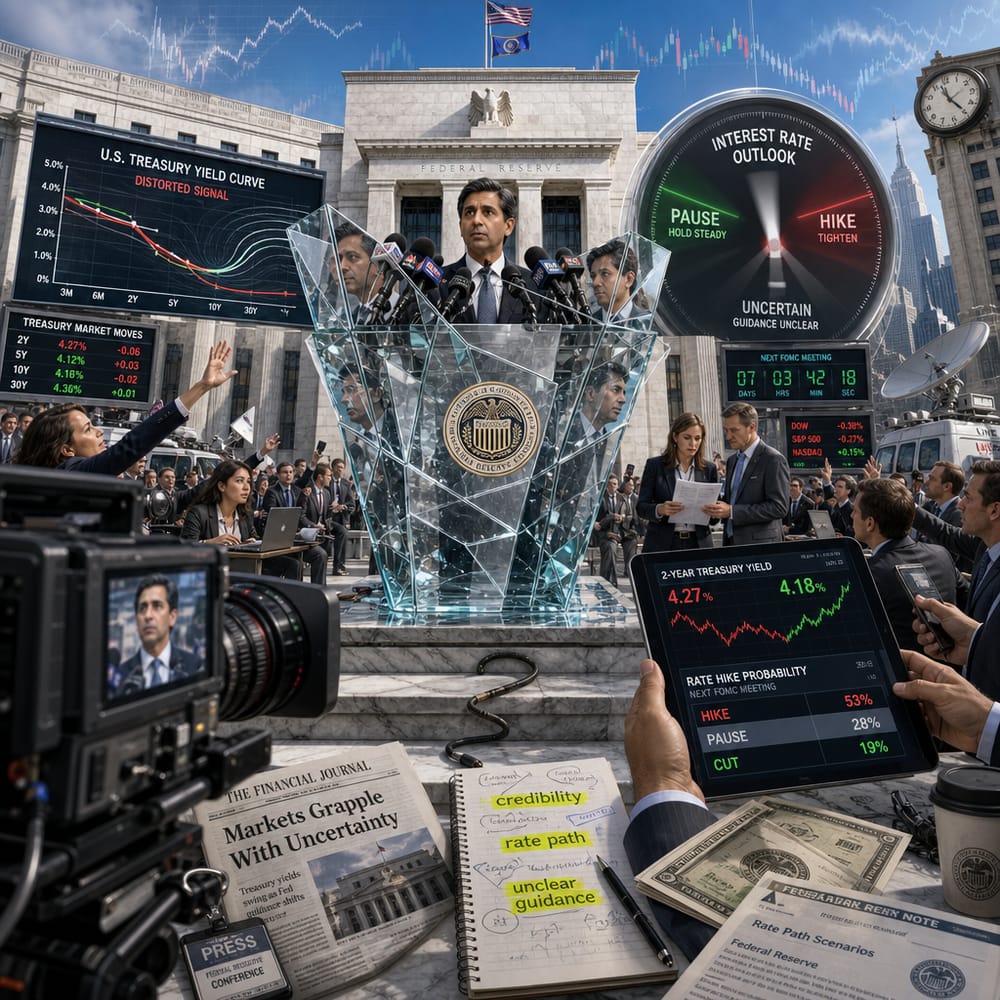
Kevin Warsh, the man at the helm of the Federal Reserve, just dropped a verbal hand grenade into the world of finance — and nobody's quite sure if it was a dud or if it’s set to explode. In a recent press conference, Warsh had Wall Street hanging on his every word, but instead of clarity, he served up a big helping of ambiguity. Now, investors are left scratching their heads, wondering if they're in for more interest rate hikes or if it's time to breathe a sigh of relief.
Let’s face it: the markets thrive on certainty. But Warsh’s latest performance was more of a mystery thriller, leaving us all guessing about the Fed's next move. In typical Fed fashion, he sprinkled in the classic "data-dependent" phrase, leaving us wondering if he’s planning to hike rates further or just keeping the option open to keep us all on our toes.
So why does this matter? In the world of finance, uncertainty is the enemy. Markets react violently to surprises, and when the future of interest rates is up in the air, investors start panicking like cats in a room full of rocking chairs.
Here's the deal: if the Fed chooses to tighten the screws with more rate hikes, borrowing becomes more expensive. That’s bad news for companies that rely on cheap loans to fuel growth and for consumers fond of swiping those credit cards. But if Warsh opts to hold steady, it might give the economy some breathing room, especially with inflationary pressures looming large.
Now, let’s talk about credibility. Warsh’s indecisiveness could erode the Fed's trustworthiness. Investors tend to lose their cool when they suspect that the Fed is playing it by ear. A wobbly central bank can lead to some pretty shaky economic forecasts. Not the kind of thing you want when you’re trying to steer a financial ship through choppy waters.
What’s at stake here is investor confidence, something as fragile as a soap bubble in a windstorm. When confidence dips, the entire market starts looking like it’s got a bad case of the jitters. Stock prices can tumble, bonds might sell off, and even commodities like oil and gold could see wild swings.
In the midst of this uncertainty, some sectors are feeling the heat more than others. Financial stocks, for instance, are typically hypersensitive to interest rate changes. Meanwhile, tech stocks, which have benefitted from a low-rate environment, might face a reckoning if lending becomes more costly.
Investors are now left to play a high-stakes game of chess, trying to anticipate Warsh’s next move. The question is: will he sacrifice the pawn for the long-term gain, or is he bluffing about the bishop? Your guess is as good as mine.
In the short term, everyone’s watching the Fed's every signal, trying to decode the cryptic messages like treasure hunters sifting through ancient maps. Investors are holding their breath for the next economic reports, hoping they’ll shed some light on whether we’re in for more rate hikes or not.
And let’s not forget the global picture. Warsh’s ambiguous messaging doesn't just affect U.S. markets; it's a ripple across the pond. Global investors are also holding their breath, as their own economies are impacted by the Fed's decisions. When Uncle Sam sneezes, the rest of the world often catches a cold.
So, what’s the takeaway here? Until Warsh and his team at the Fed decide to clear the fog with a more definitive stance, the markets will remain on edge. Investors might want to brace themselves for a bumpy ride, with the kind of twists and turns that make a rollercoaster look like a Sunday stroll.
In the grand theater of finance, Kevin Warsh has taken center stage, but it's not clear yet if he’s playing the hero or the villain. For now, we're left with more questions than answers, and the financial world is holding its breath, waiting for the next act. Keep your eyes peeled, folks — it promises to be quite the show.
This article is for informational purposes only and is not investment advice. Always do your own research or consult a licensed financial professional before making investment decisions.
© Copyright 2024. All Rights Reserved.
© Copyright 2024. All Rights Reserved.