

FAA Orders Crack Inspections on Boeing 737 MAX Jets
Friday, August 07, 2026
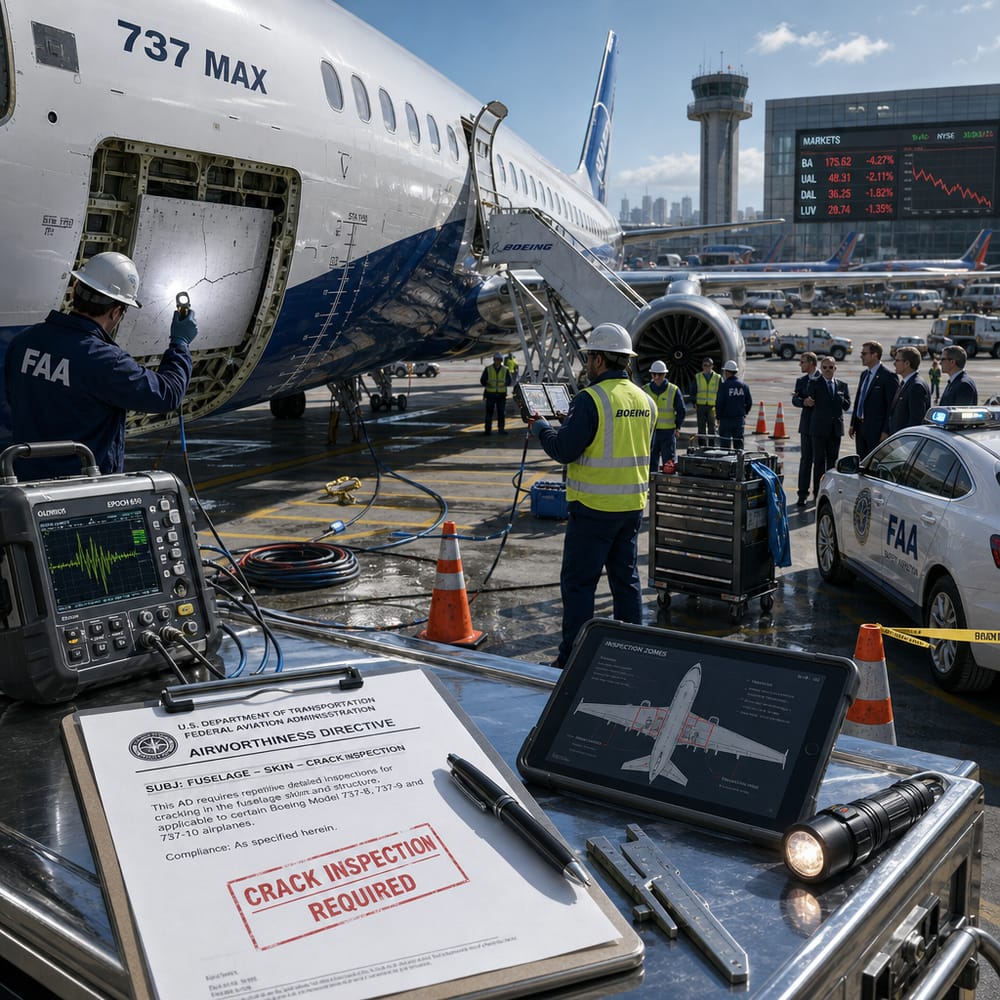
BOEING BUMP: FAA SAYS, "CHECK YOUR STRAPS!" AS 737 MAX FACES NEW INSPECTIONS
Hold onto your peanuts, folks! The aviation world is buzzing with news that’s got Boeing sweating bullets—or should we say, rivets? The Federal Aviation Administration (FAA) just handed down an order that’s set to ground some flights, scramble airline schedules, and possibly give Boeing's stock a bumpy ride. What’s the scoop, you ask? It’s all about those Boeing 737 MAX jets and some pesky little cracks.
THE LOWDOWN ON THE MAX
Let’s cut to the chase: the FAA has directed airlines to inspect hundreds of Boeing 737 MAX jets after discovering cracks in the straps that secure the plane’s doors. Yikes! We’re talking about the kind of discovery that can turn a routine maintenance check into a full-blown drama. While the exact number of affected planes is still under wraps, it’s clear that the 737 MAX is once again under the microscope.
This mandate isn’t just a minor inconvenience. Airlines have been given a tight timeline to complete these inspections. The FAA expects compliance in a matter of weeks, which means round-the-clock work for mechanics, potential flight cancellations or delays, and a bit of a headache for airline schedulers.
BOEING'S BATTLE PLAN
So, what’s Boeing’s play here? The aviation titan hasn’t indicated any plans to ground the entire fleet—yet. But the FAA’s directive is sure to cause some turbulence. If more cracks are found, grounding could become reality, which would then potentially slow down Boeing’s production line like a red light in rush hour.
And let’s not forget the stock market. Boeing's stock needs a hefty dose of resilience right now. Wall Street is keeping a keen eye on the situation, trying to predict if the latest safety scare will push Boeing shares off a cliff or if investors will fly through the storm unscathed.
AIRLINES IN THE HOT SEAT
Which airlines are feeling the heat? Any company flying the 737 MAX is watching the situation like a hawk. Giants like American Airlines, Southwest, and United have a significant number of these jets in their fleets. If these airlines have to pull planes out for inspections, passengers might find themselves on the receiving end of a dreaded “your flight has been cancelled” alert. For those counting on smooth skies for their summer vacations, this news might mean packing a little extra patience.
The wider impact could ripple through the travel industry as well as shipping and logistics sectors. If major airlines face disruptions, the domino effect could delay everything from vacation plans to cargo shipments.
SAFETY FIRST, PROFITS LATER?
For investors, the big question is: could this be a cue to buckle up for a daring investment move, or should you sit tight and wait for the dust to settle? The FAA’s latest order might lead to a brief buying opportunity if Boeing’s stock dips, assuming, of course, that confidence in the Max can be restored quickly.
Boeing, which has been trying to regain trust after previous 737 MAX grounding nightmares, will need to address these safety issues with precision. A swift resolution could help mitigate financial fallout and reassure jittery investors.
THE SKY ISN'T FALLING—YET
In the grand scheme, while the FAA’s order isn’t exactly a sky-is-falling scenario, it’s definitely got industry insiders and investors on high alert. It’s a reminder that in the world of aerospace, safety concerns can clip wings faster than you can say “ready for takeoff.”
So, as you sip your coffee and scroll through your phone, keep an eye on how this unfolds over the next few weeks. It’s a classic case of ‘watch this space’—or in this case, ‘watch this airspace.’ Whether it’s a bump in the road or a bigger flight plan diversion, one thing’s for sure: the world is watching Boeing’s next move very closely.
This article is for informational purposes only and is not investment advice. Always do your own research or consult a licensed financial professional before making investment decisions.
© Copyright 2024. All Rights Reserved.
© Copyright 2024. All Rights Reserved.