

Exxon Mobil Faces Elevated Volatility Ahead of Earnings
Sunday, August 16, 2026
EXXON MOBIL FACES ELEVATED VOLATILITY AHEAD OF EARNINGS
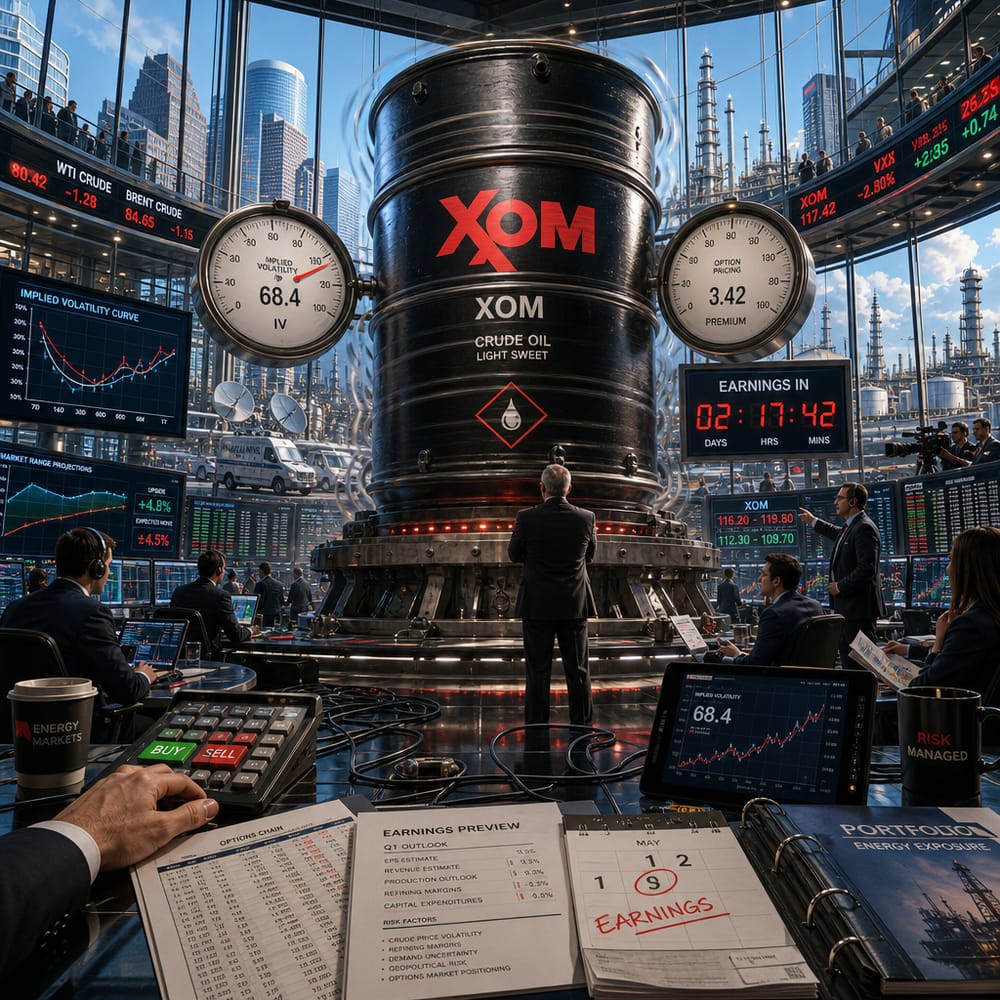
Buckle up, Exxon Mobil investors—things could get bumpy. Wall Street's options market is brimming with anticipation, suggesting that Exxon’s upcoming earnings report might just be a rollercoaster ride for its stock. Forget your typical lazy summer day at the beach; this could be more akin to surfing in a Category 5 hurricane.
Why, you ask, should Exxon Mobil, a storied titan of the oil and gas realm, prepare for such a potentially wild ride? Chalk it up to a cocktail of economic and geopolitical factors that would make even the most seasoned bartender dizzy. Between shifting oil prices, global economic uncertainties, and the ever-looming specter of political turmoil, investors have been left feeling like they’re wandering through a financial funhouse.
First, let's talk about the elephant in the room—oil prices. It’s no secret that Exxon’s fortunes are as tied to the whims of crude markets as a kite is to the wind. A volatile mix of supply chain disruptions and fluctuating demand due to global economic ripples has made predicting oil prices akin to reading tea leaves. And don't forget about those geopolitical uncertainties—whispers of international tensions can send oil prices into a tizzy faster than you can say “strategic reserves.”
The options market is buzzing like a beehive with elevated expectations for volatility. This is a place where investors hedge their bets on how much a stock might swing up or down. It’s basically the financial markets’ mood ring, and it’s signaling that Exxon's stock might take a few sharp turns post-earnings.
What gives? Well, for starters, there's this persistent anxiety about how Exxon will navigate the labyrinth of current market conditions. Will it crank out a profit that makes investors light up like a Christmas tree, or will it serve up a dud that leaves them wincing? These questions are driving the options market to brace for sharp stock movements—either that "reach for the stars" surge or a "hide under the desk" slide.
For the brave souls who have invested in Exxon, this anticipated volatility is both a blessing and a curse. On one hand, significant stock movements could present golden opportunities for savvy traders to cash in. On the flip side, a dramatic downturn could put a dent in their portfolios that not even the slickest of financial wizards could buff out.
So, what’s an investor to do in this high-stakes environment? Well, you might want to consider leaning on some solid risk management strategies, like a financial safety net just in case things go south. Diversifying your investments—spreading your cash across different sectors or asset classes—is like not putting all your eggs in one oil-drenched basket.
And for those with nerves of steel, hedging might be your game plan. This involves purchasing options or other financial instruments to offset potential losses in the event of a stock price dive. It’s like an insurance policy for your portfolio, ensuring that even if the ship hits an iceberg, you’re not necessarily going down with it.
Another option could be dollar-cost averaging, the strategy where you spread out your investment purchases over time. This can help mitigate the risk of diving in headfirst right before a stock takes a nosedive. It’s a way to keep your cool and not panic-buy or sell based on the latest headlines or stock gyrations.
Lastly, consider keeping an eye on the broader energy sector while you’re at it. Exxon's performance is often a bellwether for the industry, and any tremors in its stock price can ripple out like aftershocks across the sector. So, paying attention to the signals from the broader energy market might give you a heads-up on just how intense the ride might be.
In the end, whether you're a thrill-seeker eager for the adrenaline rush of potential gains or a cautious turtle looking to weather the storm, being aware of the market's signals and managing your risk can keep you above water. After all, in the world of investing, knowledge is power—and sometimes, a life preserver.
This article is for informational purposes only and is not investment advice. Always do your own research or consult a licensed financial professional before making investment decisions.
© Copyright 2024. All Rights Reserved.
© Copyright 2024. All Rights Reserved.