

Extended USD Longs Persist Despite Weak Dollar: Futures Positioning
Tuesday, August 18, 2026
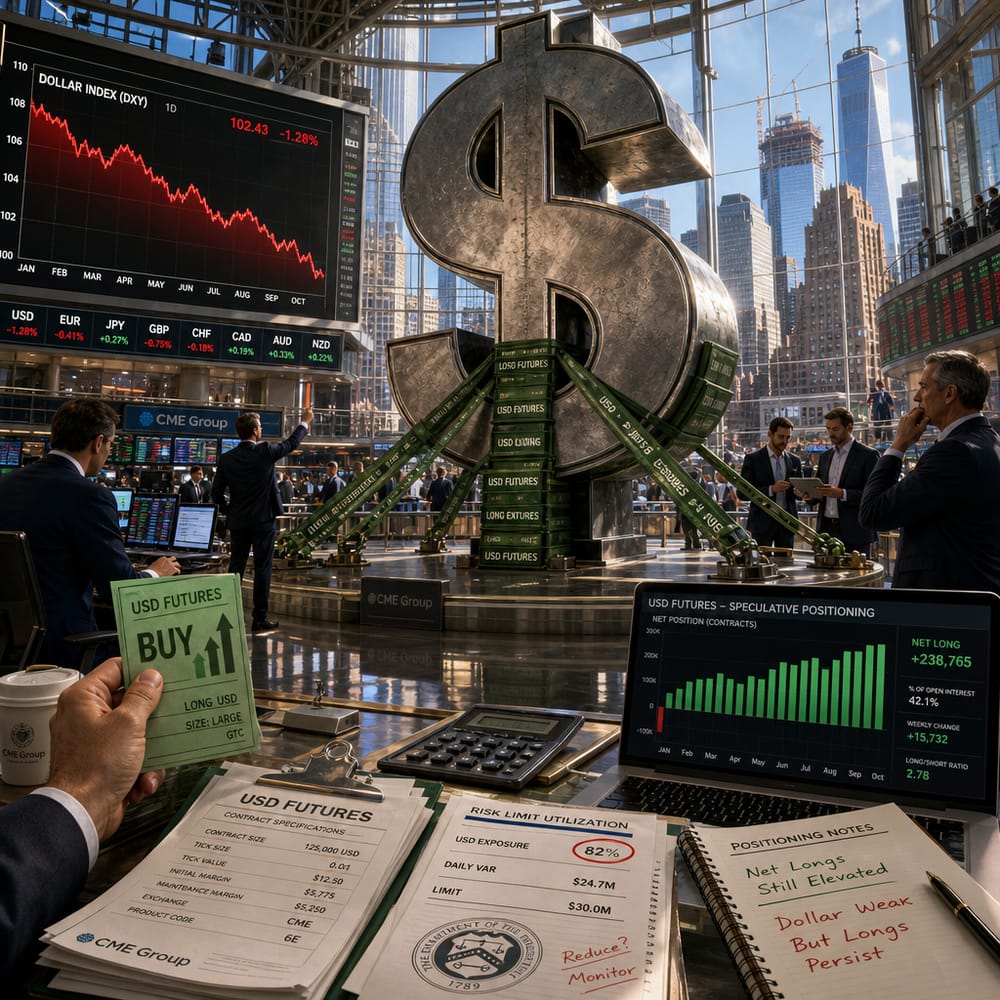
THEY'RE KEEPING FAITH IN THE BUCK: THE PUZZLE OF EXTENDED USD LONGS DESPITE A WEAK DOLLAR
If you thought the dollar was going out of fashion, think again. Traders are still rocking long positions on USD futures, apparently unfazed by the dollar's recent weakness. It's like they're doubling down on a bet you wouldn't expect them to make. So, what's going on in the minds of these currency speculators?
PICTURE THIS
Picture the dollar like a heavyweight boxer, sluggish in the ring, maybe even taking a few hits, but traders in its corner are still betting it’s capable of a comeback. Despite the greenback losing some muscle, traders are bulk buying USD futures, which is a fancy way of saying they're betting the dollar is going to strengthen in the future. This bullish sentiment is like a plot twist in a movie where you thought you had the ending figured out. But why are traders holding their ground when the dollar's down?
WHY THE BULLISH STANCE?
First, let's be real: There's more to this than blind faith. For one, even when the dollar's a bit down, it’s not out. The longer-term economic prospects for the U.S. — think robust consumer spending or the Federal Reserve's potential hawkish moves on interest rates — can keep the dollar-attractiveness meter high. Perhaps traders believe rising U.S. Treasury yields, which have hit peaks not seen in a couple of decades, signal future dollar strength. Higher yields often mean foreign investors buy more USD to snag those juicy returns, boosting the dollar's value.
And let's not forget the geopolitical roller coaster we're on. With tensions simmering in the Strait of Hormuz and economic uncertainty in other parts of the globe, the dollar still basks in its status as the world's safe-haven currency. When the world looks a bit shaky, investors often cling to Uncle Sam's currency like it's a lifeboat in a stormy sea.
THE BIG "WHAT IF"
The current positioning, however, is like walking a tightrope. If traders suddenly decide that their dollar optimism was misplaced, it could trigger a seismic shift. Picture a row of dominoes teetering — if one falls, it could send the others crashing down in chaotic succession. Such a shift in USD futures could lead to swift movements in currency markets, keeping traders and retail investors on their toes.
All it could take is a nudge: maybe inflation numbers come in worse than expected, or perhaps the Fed takes a surprising dovish turn. You know, like when you're driving and that unexpected pothole nearly sends your coffee flying. Any unexpected economic data or policy decision could flip the market sentiment on its head, and suddenly, those long USD positions might start looking as appealing as yesterday’s news.
WHAT'S THE IMPACT ON MARKETS?
If the expectations do shift and long USD positions unwind, we could see more than just currency market jitters. The ripple effects might hit stocks, especially in sectors sensitive to currency fluctuations like technology (where many firms have significant international sales) or commodities that are priced in USD. It’s the kind of domino effect that makes you appreciate just how interconnected the financial world really is.
THE TAKEAWAY
For retail investors, the current futures positioning is a reminder of the volatility lurking beneath the surface of calm market waters. Staying informed and ready to adapt is key. Even when the dollar seems like it’s got a little less pep in its step, the collective mind of the market might have a few tricks up its sleeve. Watching how traders adjust their USD bets will be crucial in anticipating the next big wave in currency markets.
So, whether you’re sipping your morning coffee or keeping an eye on your stock portfolio, remember that these currency plays are more than just numbers — they’re the pulse of a global economy full of surprises. And knowing what to watch for can help you stay a step ahead in the investing game.
This article is for informational purposes only and is not investment advice. Always do your own research or consult a licensed financial professional before making investment decisions.
© Copyright 2024. All Rights Reserved.
© Copyright 2024. All Rights Reserved.