

Export-Control Investigation into Nvidia Shipments
Sunday, August 30, 2026
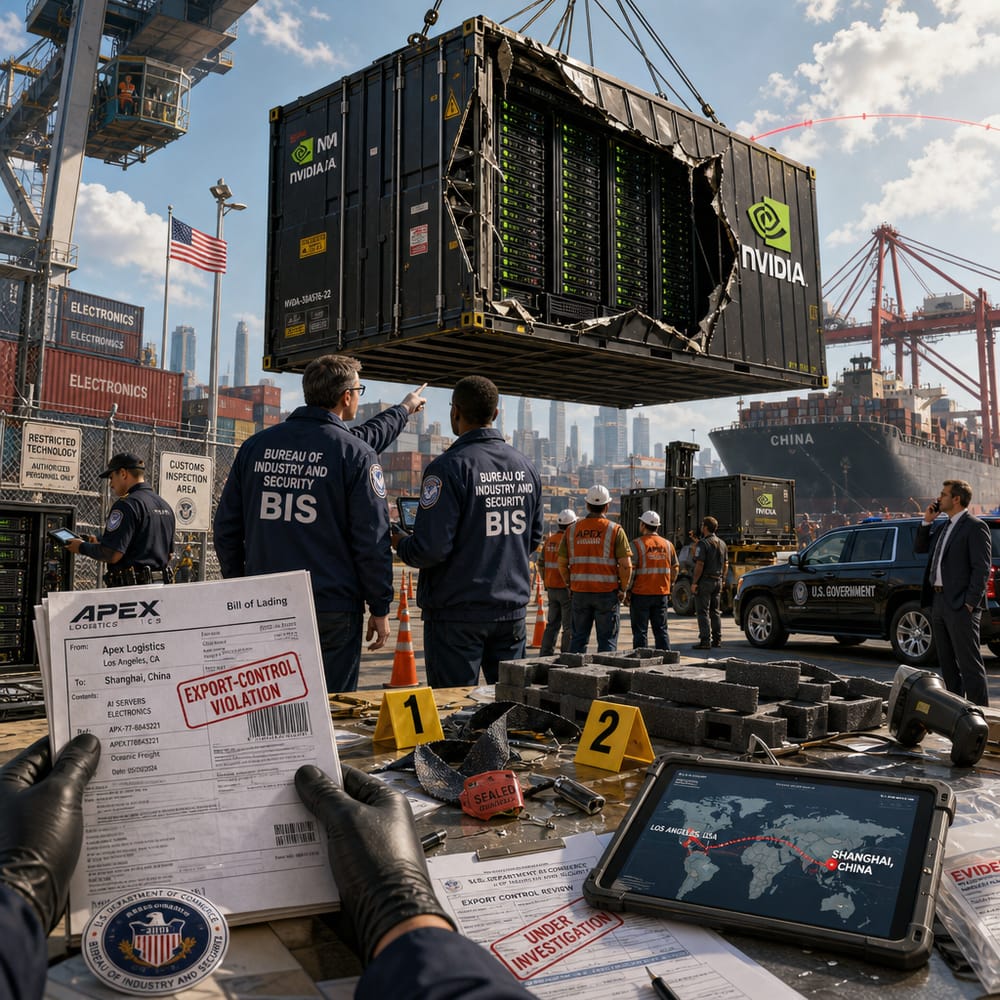
Nvidia and Apex Logistics: A Tech Tale with an Export Control Twist
Imagine getting caught sneaking cookies out of the jar—only, the jar is global tech trade, and the cookie is a cutting-edge Nvidia AI server. The Bureau of Industry and Security (BIS) is now scrutinizing Apex Logistics for allegedly shipping Nvidia’s dazzling AI hardware to China, and it isn’t a small matter. This investigation could spell significant consequences for both Nvidia and other tech exporters caught in the intricate web of U.S. export regulations.
Now, before your eyes glaze over at the thought of bureaucratic paper-pushing, let’s break down why this matters. Export controls are like the bouncers at a high-stakes club, making sure cutting-edge tech stays away from certain parts of the world—think of them as the unsung heroes keeping advanced tech out of potentially nefarious hands. And in today’s world, AI servers are more than just a pricey chip; they’re the backbone of the next leap in technology, and Nvidia is at the front of the line, leading this revolution.
But enough about why we don't want our AI brains playing overseas without supervision. Let's talk about what happens if the bouncers catch someone sneaking in anyway. The consequences for Nvidia could range from hefty fines to tighter regulations, which might make the company rethink who they hand out their state-of-the-art chips to. As for Apex Logistics, well, let’s just say they might need to polish up their legal team and compliance training.
And while everybody loves a little courtroom drama, this investigation is more than just a potential legal showdown—it’s a loud wake-up call to the tech industry. It highlights just how tangled the web of global trade has become when coupled with the rapidly advancing AI sector. Companies dealing in tech exports now have to walk a fine line between staying competitive and adhering to evolving regulations.
For U.S.-China relations, this investigation adds another layer of complexity. While tech has always been a bridge between nations, recent developments have turned it into a battleground. The U.S. and China have been playing a tech tug-of-war, with advances in AI being the ultimate prize. Restricting the flow of technology could further strain diplomatic ties, which are already being tested by trade wars and geopolitical jockeying.
Back on the home front, Nvidia’s recent blockbuster earnings report, boasting a revenue double from the previous year, shows just how hot this company is. But even with their impressive financial growth, a hiccup like this can send investors scrambling. Export restrictions could cast a shadow over Nvidia’s shiny future prospects, reminding Wall Street that even the mightiest tech giants aren’t immune to global politics.
For retail investors scrolling through their phones, the Nvidia vs. Apex Logistics saga is a reminder that the tech market is as unpredictable as it is lucrative. The investigation could impact Nvidia’s stock, but also ripple across the industry, influencing other companies that are similarly exposed to overseas markets. This is an area where keeping an ear to the ground, or perhaps an eye on the news apps, can be as rewarding as it is necessary.
In a world where AI is poised to rewrite the rules of everything from social media to scientific discovery, the stakes couldn’t be higher. Tech companies looking to the future must not only innovate but also navigate the choppy waters of international diplomacy and export regulations. And for investors, understanding these complexities—beyond just the numbers—is crucial for riding the next wave of tech innovation without wiping out.
So, next time you hear about export controls, think twice before you shrug them off as boring bureaucratic noise. They’re the silent sentinels in the tech drama unfolding on the global stage, and their whispers can turn into thunderous roars that shake markets and move mountains—or at least, move microchips.
This article is for informational purposes only and is not investment advice. Always do your own research or consult a licensed financial professional before making investment decisions.
© Copyright 2024. All Rights Reserved.
© Copyright 2024. All Rights Reserved.