

Expectation of No Rate Change in September
Friday, August 28, 2026
THE FED'S GAME OF WAIT-AND-SEE: TO HIKE OR NOT TO HIKE?
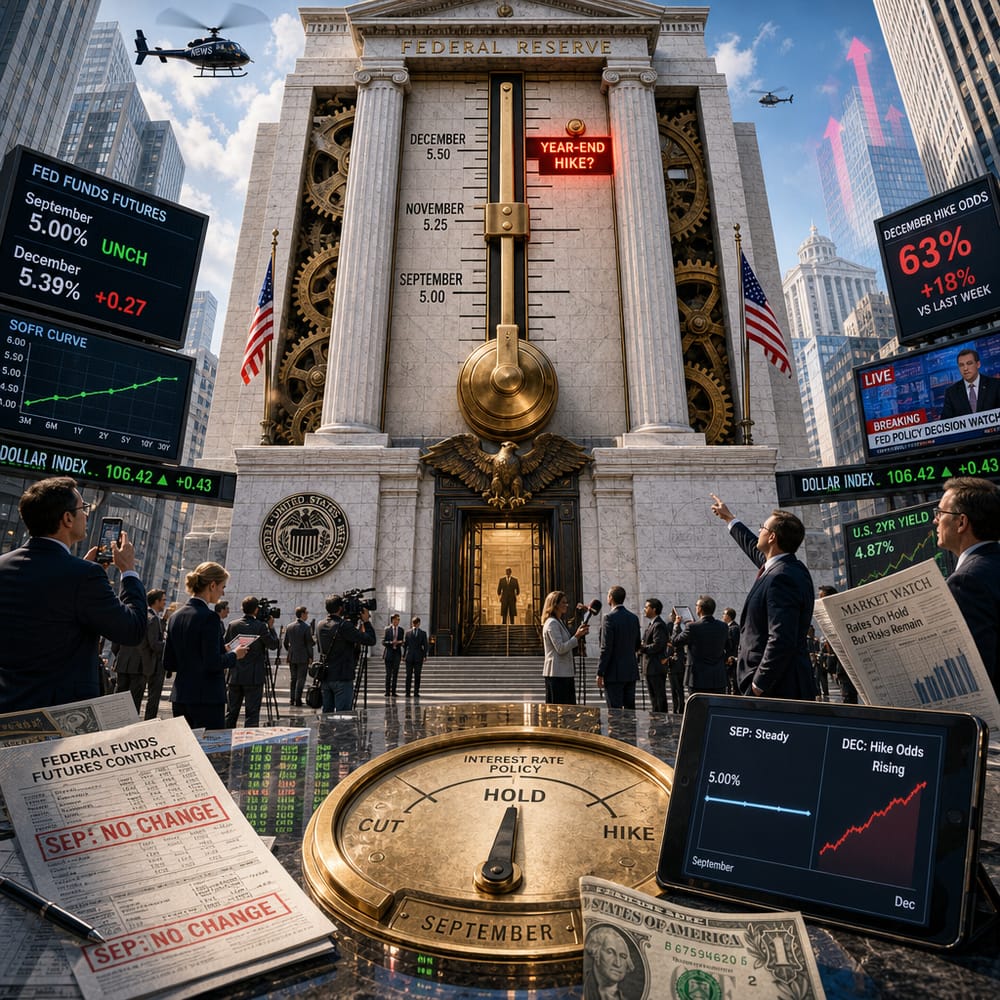
It's the Fed's world, and we're just living in it. With September's Federal Reserve meeting looming, the suspense rivals your favorite crime drama. Will they or won't they raise interest rates? The plot twist? Everyone’s on the edge of their seats because even though most are betting on a no-change outcome this month, the year isn't over yet—and neither is the guessing game.
Most central bankers have been dropping hints like they're auditioning for a role in a mystery movie. Pundits and economic fortune-tellers anticipate the Federal Reserve will keep rates just where they are this September. Yet, like every good thriller, there’s a subplot: a potential hike later this year. Grab your popcorn because this saga is far from over.
DIFFERING EXPERT OPINIONS: A TANGLED WEB
Why the mixed signals? Think of the U.S. economy as a restless teenager — unpredictable and often contradictory. The Fed's decision-making hinges on inflation rates, employment data, and overall economic health. Recently, inflation has been like a stubborn stain, refusing to fade as quickly as hoped. Many economists believe that letting interest rates simmer a bit longer could cool inflation without overcooking the economy.
Still, the devil’s in the details, and those details might include one more rate hike this year. Some market pros are clutching their crystal balls, predicting rates will get a final push upwards before the year ends. It's like deciding if your coffee needs that one extra spoonful of sugar—except that spoonful could impact global markets.
MARKET IMPACT: HOLD ONTO YOUR PORTFOLIOS
Now, this isn't just cocktail party banter for finance folks. When the Fed talks, markets listen. And when markets listen (or overreact), things can get dicey. If investors foresee a rate hike, they might start selling equities or playing it safe with bonds, making your 401(k) look like it's been on a roller coaster.
On the flip side, the U.S. dollar might flex its muscles and strengthen if rates go up, which could impact everything from imported goods' prices to your dream European vacation. In the world of finance, nothing is ever as simple as it seems.
IMPLICATIONS FOR INVESTORS: STRATEGIZE OR STRUGGLE
For the everyday investor, the Fed's decision is like a high-stakes chess match. The moves it makes ripple across portfolios worldwide. So, what should a savvy investor do? First, don't panic. Knee-jerk reactions rarely end well in markets.
Consider diversifying your portfolio to guard against volatility. A mix of stocks, bonds, and perhaps a sprinkle of international investments can help cushion against sudden swings. Keep an ear to the ground and an eye on the news—market conditions can change faster than a celebrity's trending status on social media.
Also, think about interest rate-sensitive sectors. Financials often thrive when rates rise, as banks can charge more for loans. Conversely, industries like real estate might feel the pinch as borrowing costs climb. Understanding these dynamics can help you make informed decisions, rather than relying on your magic eight ball.
THE BIG PICTURE: PLAYING THE LONG GAME
As we brace for September's Fed meeting, remember that market ebbs and flows are part of the financial game. Whether the Fed chooses to play it cool this month or introduce a plot twist later in the year, one thing is clear: being informed is your best asset.
This economic ballet we’re witnessing—between rates, inflation, and growth—keeps us all on our toes. So stay sharp, keep your portfolio balanced, and remember: the Fed’s decisions are just one piece of the larger investment puzzle. The market may twist and turn, but with a strategic mindset, you'll be ready to dance to the Fed's tune, whatever it may be.
This article is for informational purposes only and is not investment advice. Always do your own research or consult a licensed financial professional before making investment decisions.
© Copyright 2024. All Rights Reserved.
© Copyright 2024. All Rights Reserved.