

Ex-Fed Advisor Sentenced for Lying About China Ties
Thursday, July 16, 2026
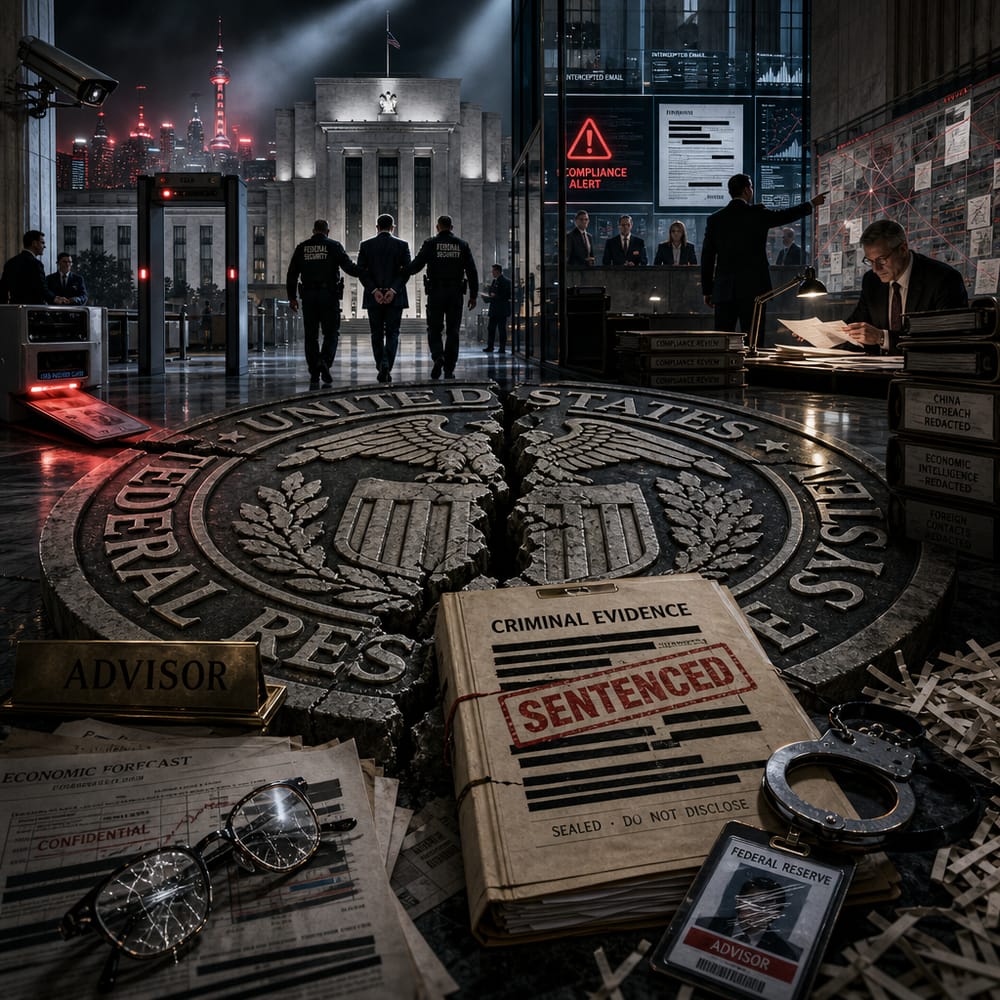
EX-FED ADVISOR SENTENCED FOR LYING ABOUT CHINA TIES
Extra, extra, read all about it! A former Federal Reserve advisor will be trading in his pinstripes for prison stripes after being sentenced to over three years in the slammer. What did he do to earn this dubious distinction? He lied through his teeth about cozying up with Chinese intelligence. That's right—this isn't some cheap spy thriller. It's real life, where the stakes are high, and the consequences are even higher.
This scandalous saga revolves around John Harold Rogers, a once-respected senior advisor who thought he could pull the wool over Uncle Sam's eyes. Spoiler alert: He couldn't. Caught with his hand in the proverbial cookie jar, Rogers was busted for making false statements about his interactions with the Chinese. While a jury gave him a pass on the more serious charge of economic espionage, they nailed him on the lie. And you know what they say, folks—it's the cover-up, not the crime, that'll get you every time.
So why does this matter to you, dear retail investor scrolling on your phone, coffee in hand? This case is a wake-up call for anyone who has even a smidgen of interest in how our financial institutions operate—or, more accurately, how they should operate. If a high-level advisor can get tangled up in such a web of deceit, it begs the question: What other shenanigans might be happening behind closed doors at the Fed and similar establishments?
Now, before you start stuffing cash under your mattress, let's delve into the broader implications. For starters, this incident casts a glaring spotlight on the need for airtight security and transparency within financial institutions. If the Fed, a cornerstone of global economics, can be infiltrated in such a manner, you can imagine the jitters this sends through the world of finance. It’s a harsh reminder that even the highest echelons aren’t immune to international tomfoolery.
But wait, there's more! This case also throws a wrench into the already complicated machinery of U.S.-China relations. As if they weren't fraught enough, right? Rogers' espionage escapade is likely to fan the flames of suspicion and tension between the two powerhouses. The Trump administration has already been gunning for Beijing, intensifying crackdowns on what it perceives as economic espionage. This could very well lead to more stringent measures and increased scrutiny of potential saboteurs lurking in the shadows.
Now you might be wondering, what steps are being taken to prevent a repeat performance? The Fed and other financial bodies are likely doubling down on their security protocols, dusting off the cobwebs from the rulebook, and ensuring that guidelines are followed to the letter. Expect more rigorous background checks, tighter information-sharing policies, and a whole lot of internal audits. The goal? To make sure that someone like Rogers doesn't slip through the cracks again.
In a world where financial espionage is as much a reality as your next Amazon delivery, vigilance is key. For us everyday folks, it's a reminder to keep a watchful eye on the institutions we trust with our money and our future. So, as you digest this tale of intrigue and deception, let's all be a little kinder to our financial advisors. They have a tough job, and hopefully, most are doing it with integrity. But a little skepticism never hurt anyone, right?
In the meantime, let’s cross our fingers that Rogers' story serves as a cautionary tale—one that prompts financial institutions and governments alike to tighten their security nets, foster transparency, and ensure that the only surprises in the world of finance are pleasant ones. After all, the last thing we need is another headline about financial espionage. Let's leave the spies to the movies, shall we?
This article is for informational purposes only and is not investment advice. Always do your own research or consult a licensed financial professional before making investment decisions.
© Copyright 2024. All Rights Reserved.
© Copyright 2024. All Rights Reserved.