

Europe’s Rare Earth Rush Faces a Reality Check
Friday, November 28, 2025
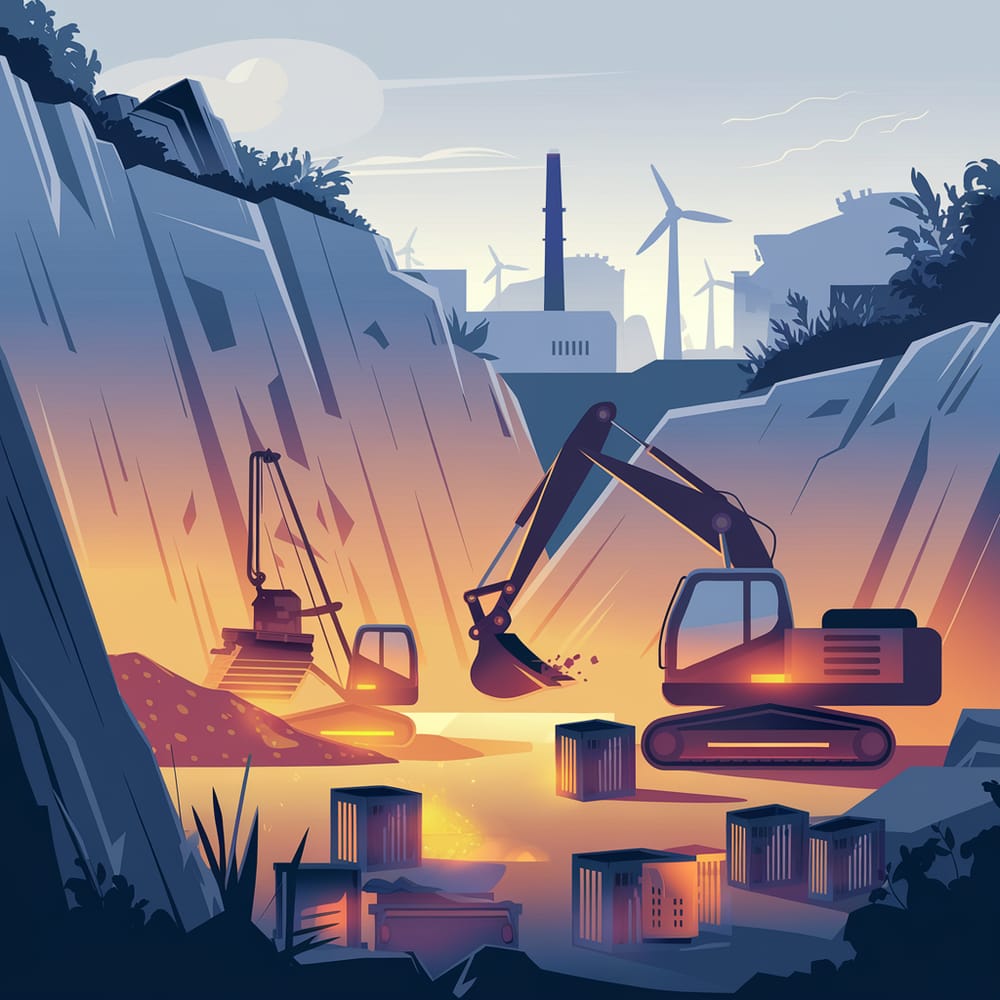
Europe Finds a Treasure Chest — and a Giant To-Do List
Europe has finally stumbled onto rare earth reserves big enough to matter. The kind of discoveries that make politicians talk about “strategic autonomy” and make industries dream of supply chains that don’t run through Beijing.
But finding rare earths is the easy part. Turning them into a working, profitable, socially acceptable supply chain? That’s where the real battle starts — and Europe is only at mile one.
Norway’s “Invisible Mine” Tries to Win Over the Locals
In southern Norway, Rare Earths Norway is sitting on what it calls Europe’s biggest known deposit. The Fen site is estimated to hold 8.8 million metric tons of rare earth oxides, including around 1.5 million tons of magnet-critical metals like neodymium and praseodymium — the stuff that makes EV motors spin, wind turbines hum, and defense tech work.
The company knows Europe’s environmental standards are tough, so it’s pitching a slick-sounding solution: an “invisible mine.” Instead of ripping up the surface, it plans to drill a long tunnel beneath the town, extract the minerals, then backfill the empty space to limit disruption.
It’s a careful, almost stealth approach meant to prove you can mine rare earths without turning the neighborhood into a moonscape. The catch is time. The company says production won’t realistically reach the market until the early 2030s.
Sweden’s Arctic Project Comes With a Moving City
Far north in Sweden, LKAB is tackling rare earths from a completely different angle. The company discovered a major deposit near Kiruna, close to the world’s largest underground iron ore mine. That iron operation is already forcing a dramatic urban relocation — thousands of residents are being moved, along with homes and even historic buildings.
LKAB says the relocation isn’t caused by the rare earth discovery, but the symbolism is unavoidable: Europe wants minerals, and sometimes the cost isn’t just financial — it’s physical, social, and deeply human.
Europe Wants Independence, but China Still Owns the Game
The European Union is pushing a new resource-security agenda aimed at breaking China’s chokehold on critical minerals. By 2030, the EU wants to extract 10%, process 40%, and recycle 25% of the rare earths it consumes each year. It also wants to cap dependence on any single foreign supplier at 65%.
The ambition is clear. The problem is speed. China and the U.S. are moving fast, pouring money into mines, refineries, and magnet plants like it’s an industrial sprint. European miners warn that if permits and funding move too slowly, Europe will stay stuck watching from the sidelines — rich in rocks, poor in results.
Fast-Track Permits and Price Guarantees: The Ask
Both Norway’s and Sweden’s projects are lobbying for help. Not fluffy support, but structural muscle: faster permitting, investment incentives, and price guarantees that make these hugely expensive projects viable.
Mining executives argue that even with deposits in hand, rare earth production is not automatically a good business case in Europe. Costs are higher, rules are stricter, and the public scrutiny is intense. Without policy backing, the projects could stall — and Europe’s “mineral sovereignty” dream goes with them.
Bottom Line
Europe’s rare earth discoveries are real, massive, and strategically priceless. But extraction is only half the story. The continent still has to build processing, win community trust, move through regulation faster, and prove the economics work.
Right now, Europe has the minerals and the motivation. What it’s missing is the momentum — and in a global race, that’s the part you can’t afford to lose.
© Copyright 2024. All Rights Reserved.
© Copyright 2024. All Rights Reserved.