

Europe’s Big Drag: Dimon Sounds the Alarm
Monday, December 08, 2025
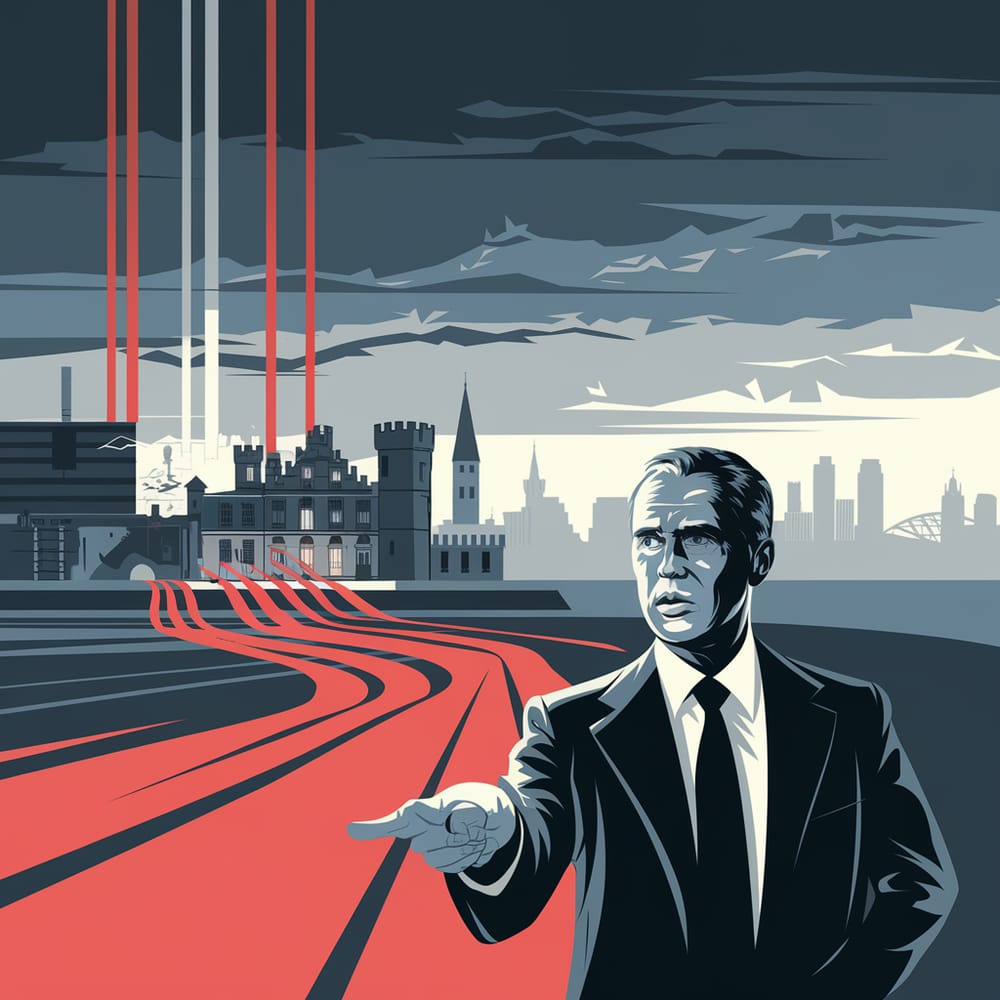
Dimon drops a blunt verdict
Jamie Dimon took the stage and didn’t bother with diplomacy. Europe, he said, has a “real problem.” Not a minor headache — a drag-parachute problem. His main gripe: the continent’s slow, tangled bureaucracy is squeezing out business, investment, and innovation. Europe’s social safety nets are admirable, he noted, but the regulatory swamp has pushed too many companies to look elsewhere.
Why America should care
This wasn’t just a European scolding session. Dimon’s warning came with a U.S. flag attached: a weak Europe is bad news for America. The two economies are deeply intertwined, and Europe remains a major ally economically, militarily, and culturally. If Europe stumbles, the U.S. doesn’t get to skip the fallout — it catches it full in the face.
Fragmentation is the nightmare scenario
Dimon’s biggest fear isn’t just sluggish growth. It’s Europe splintering further — politically and economically — because it can’t agree on big decisions inside the European Union. If that fragmentation accelerates, he argues, the whole “America First” idea collapses anyway, because the U.S. needs strong partners behind it. A divided Europe would weaken the West’s leverage in the world and undercut shared values that Dimon called crucial.
He gives Europe some flowers — then adds urgency
To be fair, Dimon wasn’t all doom. He praised the euro as a historic achievement and credited Europe’s long push for peace. But he says the continent is letting those wins erode by dialing back military efforts and moving too slowly on reforms. Politics, he admitted, is brutally hard — and Europe’s current pace isn’t keeping up with the world’s speed.
Dimon wants the U.S. to help rebuild muscle
His prescription is simple: don’t let Europe fade into weakness. The U.S., he says, needs a long-term strategy to help Europe regain strength. Not out of charity — out of self-interest. Strong Europe means stable alliances, healthier trade, and a sturdier global economy. Weak Europe means America inherits bigger risks.
Meanwhile, JPMorgan is betting on national security at home
Dimon also highlighted how his bank is leaning into defense and economic security. JPMorgan plans to funnel about $1.5 trillion over the next decade into areas tied to resilience — things like supply chains, advanced manufacturing, defense and aerospace, energy independence, and frontier technologies. The bank may also invest up to $10 billion of its own capital to accelerate strategic manufacturing. Translation: Dimon sees a world getting rougher, and he wants the U.S. ready for it.
He actually likes the U.S. bureaucracy crackdown
In sharp contrast to his Europe critique, Dimon praised the Trump administration’s push to cut government red tape. He framed it as bringing an “axe” to needless bureaucracy while still keeping important protections intact — safe food, safe banks, safe systems. In his view, trimming the fat doesn’t have to mean gutting safety.
Bottom line: Europe’s slowdown isn’t just Europe’s problem
Dimon’s message lands like a cold splash of espresso: Europe needs to speed up, de-clog its system, and stop bleeding innovation. And the U.S. should care enough to help — because if Europe stays weak, America’s economic and strategic position weakens with it.
© Copyright 2024. All Rights Reserved.
© Copyright 2024. All Rights Reserved.