

Euro Weakness Intensifies Amid French Fiscal Tensions
Wednesday, October 07, 2026
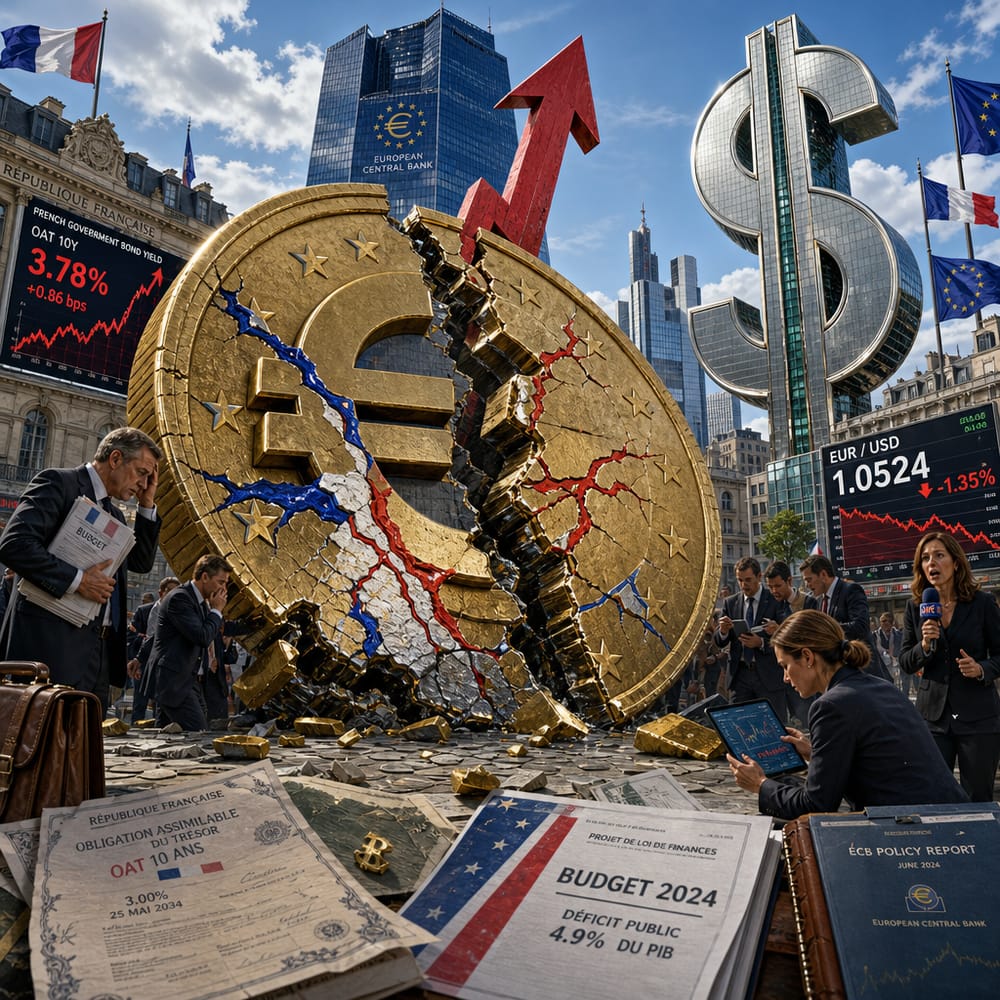
EURO WEAKNESS INTENSIFIES AMID FRENCH FISCAL TENSIONS
Hold onto your berets, because the euro is taking a nosedive, and it all starts with some turmoil in France. The beloved single currency of the Eurozone is now weaker than a Parisian café's lukewarm espresso. But what's got the euro feeling like it's just been given a one-way ticket to Splitsville? Look no further than the French fiscal scene, where soaring government bond yields are setting off alarm bells.
The saga begins with France, that charming country known for its baguettes and fine wine, now also making headlines for its fiscal instability. The International Monetary Fund (IMF) is not mincing words, sending a stark warning to French policymakers: "Get your financial house in order!" Political unrest, student protests, and a fractured parliament have all added a dash of drama to this French fiscal fiasco. Investors are keeping a wary eye on French government bonds, better known in the biz as OATs. The yields on these bonds are climbing higher than the Eiffel Tower, demanding more compensation for taking on the risk of lending to the French government.
But what's the big deal about high bond yields, you ask? When yields rise, it signals that investors are getting nervous about the government's ability to pay back its debts. It's like your credit card company suddenly hiking your interest rate because they're worried you might max out your card on too many croissants. This nervous energy has sent investors scurrying away from the euro, making the dollar look like a safe haven in comparison.
Now, let's zoom out and consider the role of the European Central Bank (ECB) in this currency conundrum. The ECB, much like that mysterious friend who gives cryptic advice but never a straight answer, has been cagey about its future policies. As inflation rates perform an awkward dance, the ECB is caught in a tricky waltz between raising interest rates to combat inflation and keeping them low to support economic growth. This indecision leaves markets feeling a tad jittery, further dragging down the euro.
So, why is a weakened euro such a bad souvenir for Europe? Well, it has broader implications for economic stability across the continent. A floundering euro means pricier imports, which could stoke the inflationary flames that the ECB is desperately trying to keep under control. And while a weaker euro might seem like a boon for European exporters, it’s not a one-size-fits-all solution. Some companies might revel in competitive pricing, but others could see costs skyrocket due to more expensive imported materials.
Back to the French drama, it's more than just yields that have investors on edge. The government's task of convincing a fractured parliament to agree on significant spending cuts is about as easy as herding cats. With tensions running high, and the streets of France witnessing protests reminiscent of a particularly bad episode of a reality TV show, the road to fiscal stability is paved with obstacles.
The euro’s current weakness highlights the delicate balance between fiscal policy – the government's use of taxes and spending to influence the economy – and monetary policy – the central bank's control over the money supply and interest rates. When France stumbles, it sends ripples across the entire Eurozone, affecting everything from German manufacturing to Italian wine exports.
As retail investors watch this financial soap opera unfold, it’s crucial to keep an eye on EUR/USD, the most traded currency pair globally. It's not just a measure of economic health but also an indicator of investor sentiment. A further weakening of the euro could mean that more investors are fleeing to the dollar, seeking solace in its perceived stability.
In conclusion, while the beautiful châteaux of France remain as picturesque as ever, the country's fiscal picture is less of a masterpiece and more of a messy watercolor. Until France can stabilize its finances and the ECB takes a clear stance, the euro will continue to catch a cold every time France sneezes. So, dear investors, keep your eyes peeled and your strategies flexible, because the euro’s journey through troubled waters is far from over.
This article is for informational purposes only and is not investment advice. Always do your own research or consult a licensed financial professional before making investment decisions.
© Copyright 2024. All Rights Reserved.
© Copyright 2024. All Rights Reserved.