

Euro Under Pressure Amid France’s Rising Borrowing Costs and ECB QT Pause Calls
Tuesday, October 06, 2026
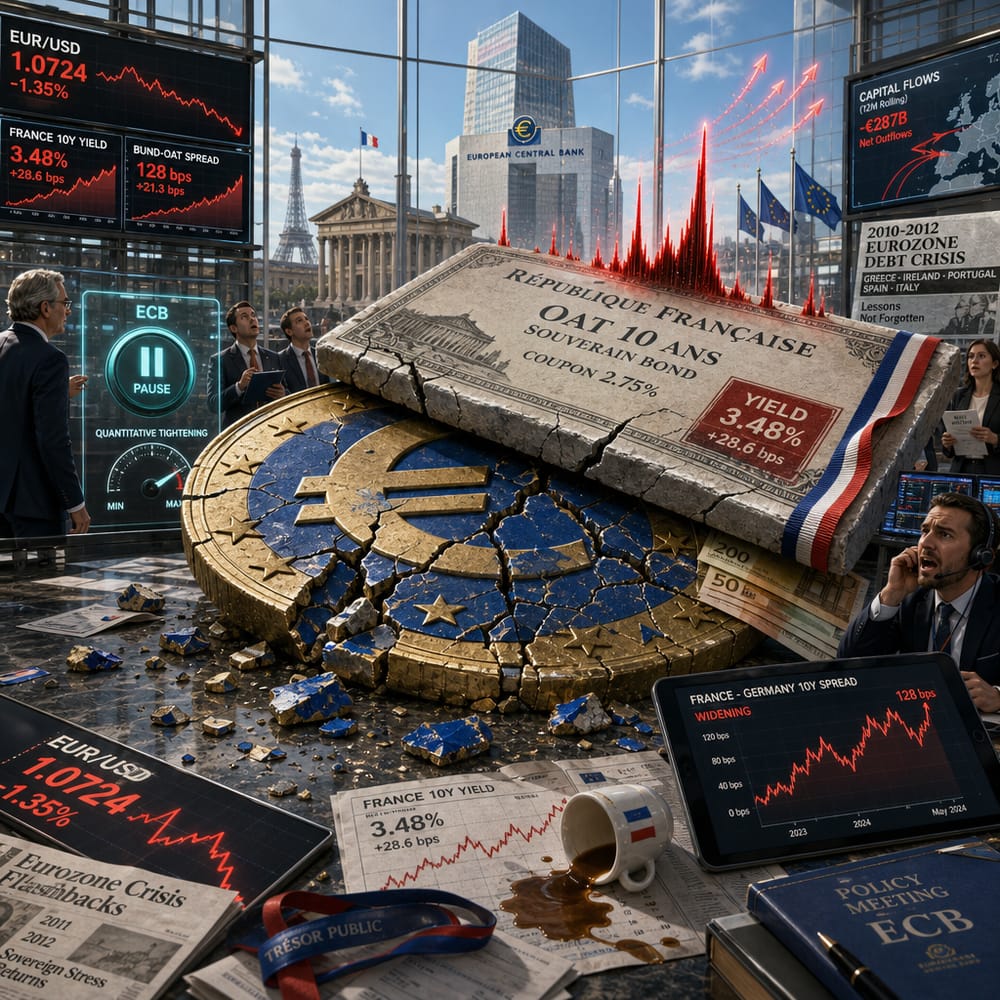
You know that friend who always seems to breeze through life's chaos with a grin and a shrug? The euro? Yeah, not so much these days. Picture it in a headlock, courtesy of France's burgeoning borrowing costs and some nostalgic jitters reminiscent of the Eurozone's past debt debacles. Oui, ça craint!
So let’s dive into the happenings across the pond. France, the land of baguettes and brasseries, is grappling with something less appetizing: rising borrowing costs for its government. Investors are now demanding higher returns to hold French government bonds, akin to them saying, "Hey, this fiscal diet plan isn’t working, and we need more assurance.” The euro, naturally, is feeling the heat. On a recent Monday, it plummeted to its lowest since May 2025 as fears of financial upheaval spread like an unfortunately-timed soufflé collapse.
But why does France's fiscal indigestion matter to the euro? Well, like a game of financial Jenga, one country's wobble can ripple across the Eurozone, nudging the entire structure toward an uncertain future. With France being a major player, its economic hiccups can't help but affect the euro's stand. Investors, seeing France sweating under its debt, are hedging their bets elsewhere, causing capital outflows that further weaken the euro.
Now, the ECB—our trusty European Central Bank—is caught in a bit of a pickle. A Financial Times commentary has rung an alarm bell, suggesting that maybe, just maybe, it's time to hit pause on quantitative tightening (QT). For the uninitiated, QT is where central banks sell off assets to suck excess money out of the financial system, aiming to keep inflation in check. However, halting QT sounds like stopping in the middle of a marathon to catch your breath while your competitors speed past.
But what would a QT pause do, you ask? Picture the ECB like a DJ at a dance party, controlling the beats. By pausing QT, it keeps the music—or rather, the flow of money—going. This would likely stabilize interest rates, reassuring jittery investors that the Eurozone isn't about to descend into another debt crisis playlist.
Of course, the Eurozone has been here before. Cast your mind back to the early 2010s, when debt crises were as common as croissants in Paris. Greece, Italy, Spain—they all took turns making headlines with their fiscal woes. The current situation isn't quite the full-blown drama of those years, but the underlying tensions are giving everyone a serious case of déjà vu.
For the euro itself, the stakes are high. A skittish euro can lead to more than just currency traders breaking a sweat. It means increased volatility in trade and investment decisions. Companies calculating deals in euros might find themselves redoing their math. Importers and exporters across continents will be checking exchange rates like a nervous student checking exam results. A weak euro also invites inflationary specters as imported goods become pricier.
But let's not hit the panic button just yet. It's not all doom and gloom. While France reshuffles its fiscal deck, other economic players—like Germany—remain relatively stable. And despite the financial jitters, some markets are dancing to a different tune. The S&P 500 recently hit a record high, suggesting that investors are finding pockets of prosperity even amidst European turmoil.
Still, this serves as a wakeup call. For U.S. retail investors, the message is clear: Keep an eye on Europe. The euro's journey affects more than just those sipping espresso in Parisian cafes. It's an integral part of the global economic tapestry, influencing currencies as far flung as the USD and impacting sectors like international trade and finance.
In this game of financial chess, every move and countermove matters. As France contemplates its fiscal future and the ECB considers its next steps, the euro's path forward remains a tale of suspense. For now, the eurozone must hold its nerve, hoping its economic revival isn’t left standing in the rain without an umbrella. Stay tuned: this is one European saga that’s far from its final chapter.
This article is for informational purposes only and is not investment advice. Always do your own research or consult a licensed financial professional before making investment decisions.
© Copyright 2024. All Rights Reserved.
© Copyright 2024. All Rights Reserved.