

Euro Surges to Two-Month High vs. U.S. Dollar
Tuesday, August 18, 2026
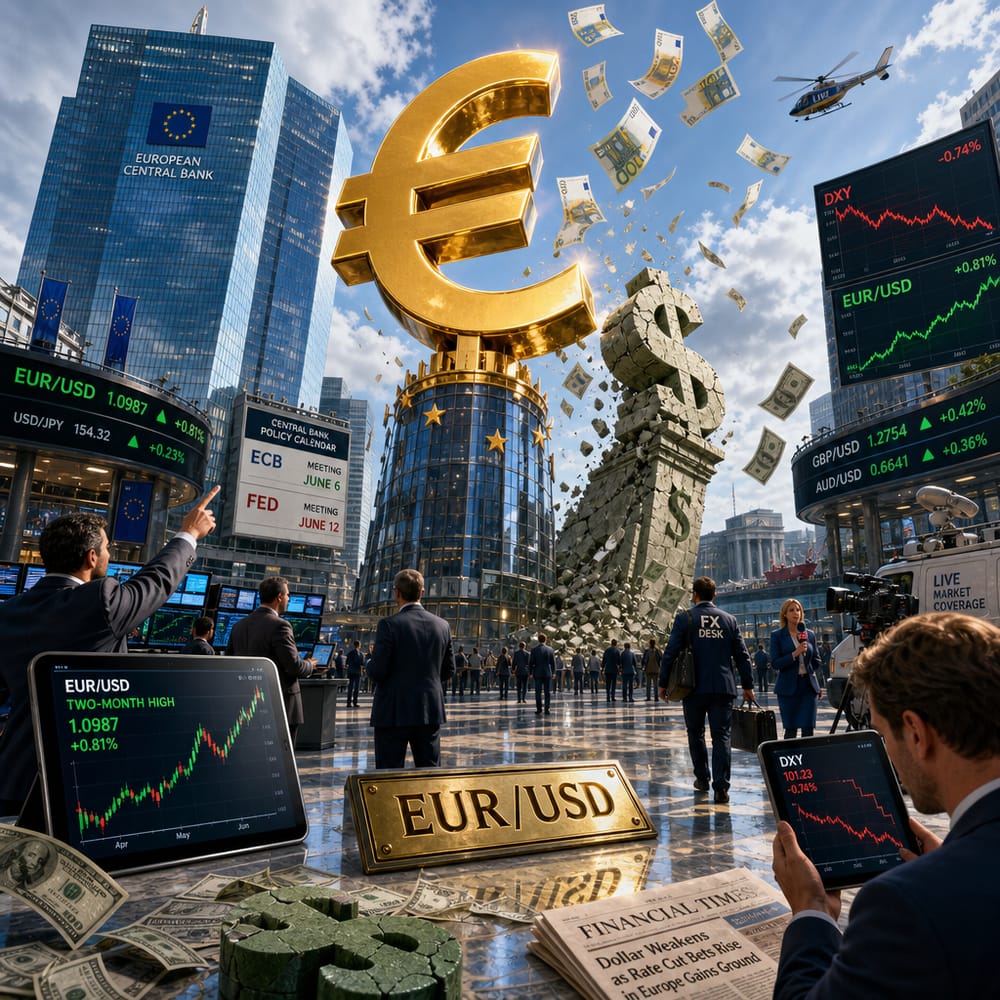
EURO SURGES TO TWO-MONTH HIGH VS. U.S. DOLLAR
Hold onto your wallets, folks, because the euro is flexing its muscle in a way that might make even Schwarzenegger jealous. This week, the euro hit its highest mark in two months against the U.S. dollar, and there's more than a bit of financial wizardry behind this feat.
What's driving this European currency to cash in on a seemingly formidable dollar? The answer involves a cocktail of factors, including a weakening dollar index and whispers of central bank maneuvering. Pour yourself a cappuccino and let's break it down.
WHY THE EURO'S STANDING TALL
First, let’s talk about the dollar index—a metric that pits the dollar against a gang of global currencies. Recently, it’s been on a bit of a snooze-fest, sliding in value and giving the euro room to rise like a dough in a warm kitchen. A softer dollar index means each euro can buy more greenbacks than it did a month ago, and this seesaw effect is what currency traders live for.
But it's not just the dollar's losing streak that's beefing up the euro. The European Central Bank (ECB) might be ready to hustle. Rumor has it, they're considering a pause on interest rate hikes due to the fragile economic growth across Europe. No more tightening the monetary belt could mean more cash flow, and more cash often means a stronger currency.
So, where does this leave the ECB? Well, they’re walking a tightrope. A strong euro might sound like a win, but it could rain on the export parade. European goods become pricier for international buyers when the euro is too powerful, which could mean fewer exports and a grumpy bloc of manufacturers. On the flip side, a stronger euro helps curb inflation—every economist’s nemesis—by making imported goods cheaper. It’s a precarious balance, and the ECB is the circus performer without a net.
IMPLICATIONS FOR EUROPEAN MARKETS
Now, let’s take this continental currency party to the stock markets. A resurgent euro may send mixed signals to the European Central Bank, compelling them to rethink their monetary Doritos—err, mandates. If the euro continues its upward trajectory, we might see the ECB dialing back its hawkish tones on further rate hikes. That's financial-speak for keeping interest rates low to encourage spending and investment.
Why should you care? Because European markets might react like a teenager denied their car keys. Investors could flock to buy stocks in anticipation of a more relaxed monetary policy, but sectors dependent on exports might face headwinds. Say goodbye to rock-bottom giveaways from European luxury brands if the euro keeps its muscle gains.
The ripple effects don’t stop in Europe. Over in the land of Uncle Sam, a euro flex could potentially affect the dollar's purchasing power abroad. American tourists in Europe might find their dollar doesn’t stretch as far. Good luck finding that perfect Parisian croissant that doesn't cost a small fortune.
KEEPING AN EYE ON THE FUTURE
What should retail investors like you do with this info? Keep your eyes peeled on how the ECB responds to this euro surge and the dollar’s dollar-daze. Currency movements can disrupt more than just vacation plans—they can impact stocks, bonds, and commodities faster than you can say "exchange rate."
So, whether you’re holding onto European equities or merely considering how the currency catfight across the Atlantic might affect your portfolio, stay informed. Remember, in the world of finance, knowledge isn’t just power—it’s your ticket to making informed decisions that could keep your portfolio thriving amidst the currency chaos.
And there you have it, the euro’s been lifting weights, and it’s showing. Keep watching; the next episode in this financial saga promises to be a real thriller.
This article is for informational purposes only and is not investment advice. Always do your own research or consult a licensed financial professional before making investment decisions.
© Copyright 2024. All Rights Reserved.
© Copyright 2024. All Rights Reserved.