

Euro Struggles Amidst Eurozone Economic Concerns
Friday, August 14, 2026
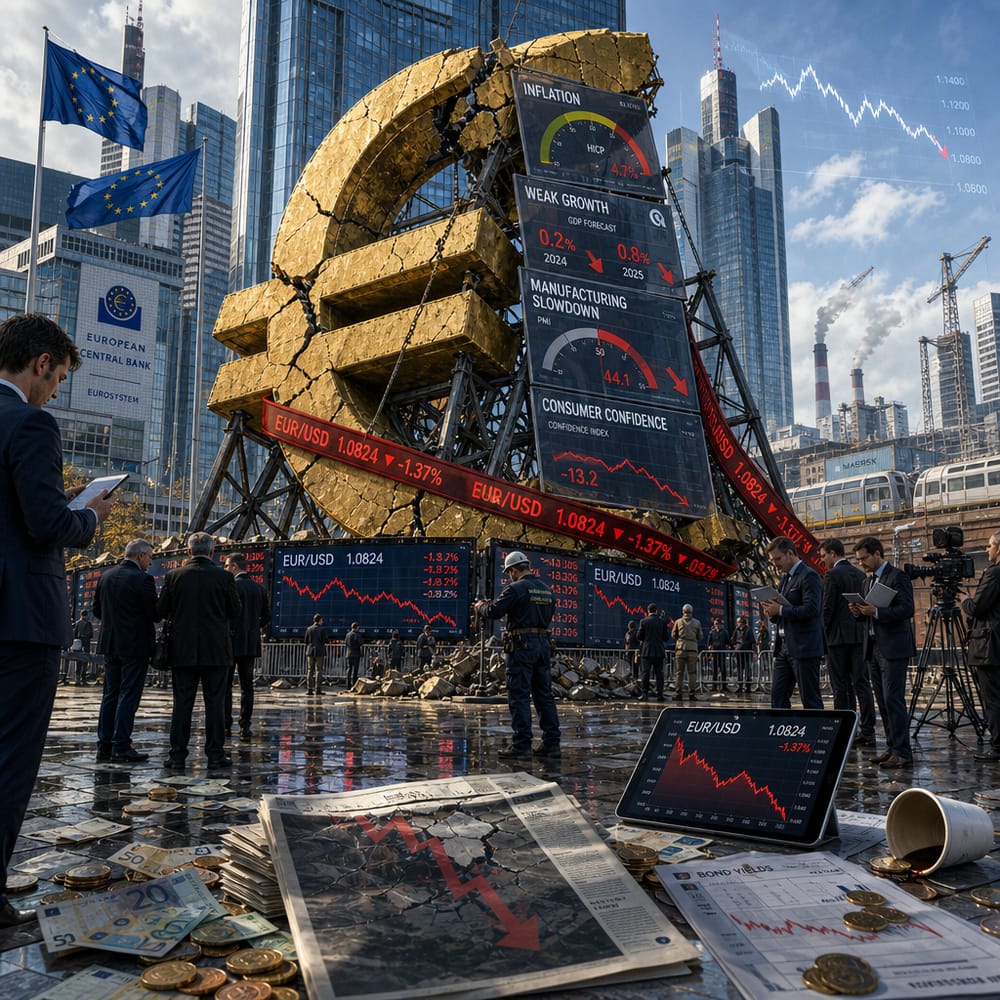
EURO STRUGGLES AMIDST EUROZONE ECONOMIC CONCERNS
Have you ever watched a heavyweight boxer taking hits round after round, only to wonder how much longer they can stand? Well, the euro is that boxer right now, and the Eurozone's economic concerns are the jabs it can't seem to dodge. Currency traders are eyeing the euro with a mix of skepticism and concern, as it faces downward pressure like a piñata at a kids' party. Here's what’s throwing the euro against the ropes and why it matters to you.
First up, the laundry list of economic headaches facing the Eurozone. We're talking inflation, stagnant growth, and some financial instability in member countries that could make even the most optimistic investor break out in hives. Inflation rates are acting like they're headlining a rock concert—way too high and leaving everyone with an economic hangover. Then, there's the sluggish growth. It’s like the Eurozone is trying to run a marathon with ankle weights. Add to that the simmering political unrest in places like Italy and Greece, and you've got yourself a perfect recipe for currency indigestion.
The European Central Bank (ECB) has been responding to these challenges like a firefighter with a leaky hose. They're trying to tamp down inflation by raising rates, but it's a risky game. Higher rates mean borrowing in Europe gets more expensive, further stifling growth. It’s a bit like trying to fix a flat tire with duct tape—you hope it holds, but deep down you know you're one speed bump away from disaster.
Amidst all this, the implications for Eurozone trade can’t be ignored. A weak euro makes European goods cheaper and more attractive to buyers outside the Eurozone. That's great news if you're a European exporter of schnitzel or fine Italian leather, but it comes with strings attached. The flip side is that imports become more expensive, which can fuel inflation even more. Picture a seesaw with trade balance on one side and inflation on the other—right now, that seesaw is looking pretty wobbly.
For investors, this turbulence in the euro is the kind of thing that keeps you up at night. Euro weakness could mean volatility for those involved in currency markets globally. If the euro sneezes, close-cousin currencies like the Swiss franc might just catch a cold. And let’s not forget the domino effect it could have on investing strategies. Traders might pivot towards safer currencies like the U.S. dollar, causing ripples—or perhaps more accurately, tsunamis—in financial markets.
So, what’s next for the euro? The European Central Bank is likely to keep juggling solutions like a circus performer with one too many balls. If they keep pushing interest rates higher, they risk freezing economic growth entirely. But if they ease up, inflation could spiral further out of control. They’re walking a tightrope without a net, and nobody's quite sure whether they’ll make it to the other side.
As for the rest of us, it’s about keeping a keen eye on how this plays out. The euro's performance impacts global trade dynamics and could very well influence markets closer to home. Imagine trying to navigate a racetrack while the car in front of you is shedding parts—every twist and turn can set off chain reactions.
In conclusion, the euro is in a precarious position, and how it fares in the face of these economic concerns will have widespread ramifications. Whether you're a currency trader, an investor, or just someone who likes to see the eurozone flourish, there's no denying that the euro's current plight is the heavyweight bout worth watching. So, keep your gloves up, folks. This fight is far from over.
This article is for informational purposes only and is not investment advice. Always do your own research or consult a licensed financial professional before making investment decisions.
© Copyright 2024. All Rights Reserved.
© Copyright 2024. All Rights Reserved.