

Euro Strengthens Against Dollar Following U.S. Treasury Buyback Announcement
Tuesday, August 25, 2026
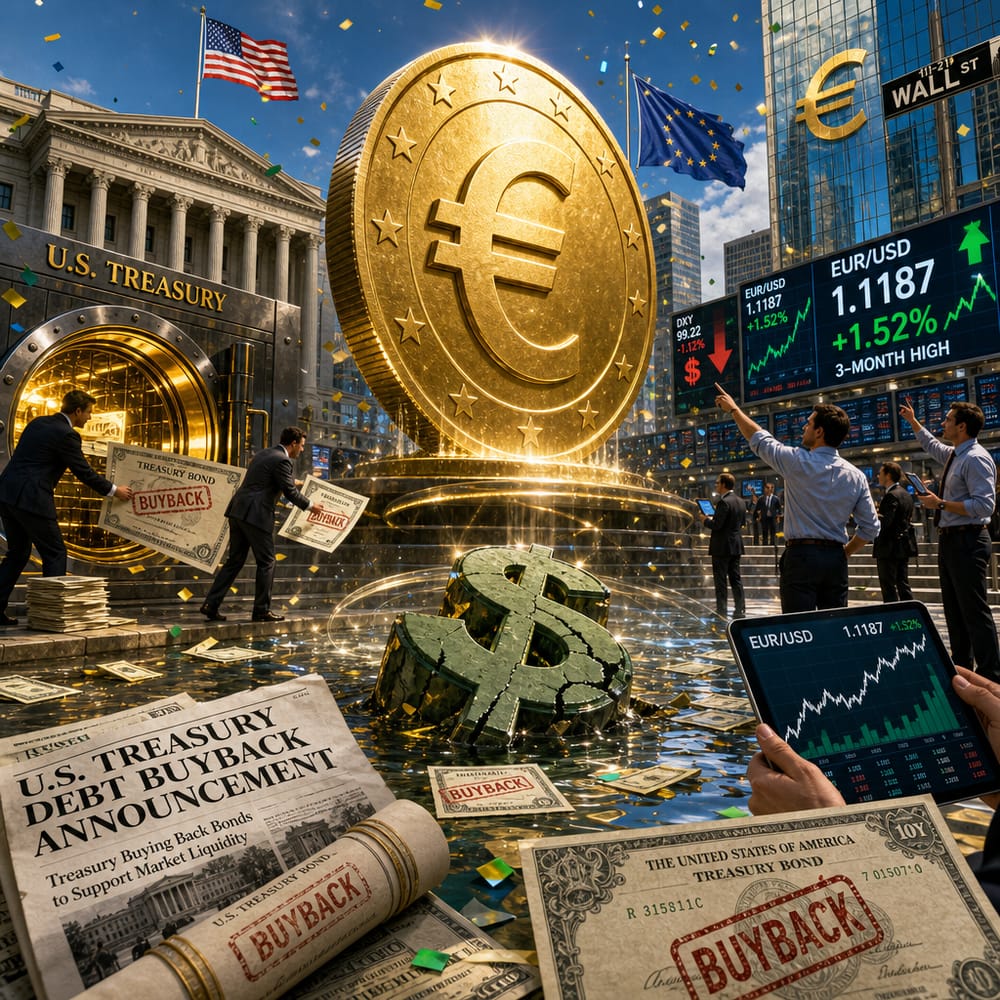
EURO GAINS MUSCLE AGAINST DOLLAR: THANK YOU, U.S. TREASURY BUYBACKS!
Hold onto your Euros, folks, because the currency that once seemed more fragile than a croissant in the hands of a clumsy American tourist is flexing its muscles against the U.S. dollar. The euro has just hit a three-month high against its American counterpart, and it’s all thanks to a surprising ally—U.S. fiscal policy. Yes, you heard that right: The U.S. Treasury’s decision to ramp up debt buybacks is shaking up the currency landscape, and the euro is reaping the benefits.
First things first: Why exactly is the U.S. Treasury buying back its own debt? Picture this as Uncle Sam going on a diet to shed some pounds off his debt belly. By repurchasing existing bonds, the Treasury aims to trim down its debt profile, making it leaner and meaner. While this might sound like a page from a monetary policy textbook, it’s a fiscal move—meaning it’s more about government spending and debt management than interest rate magic from the Federal Reserve.
Now, how does this debt buyback fiesta impact our favorite European currency? When the U.S. Treasury buys back bonds, it reduces the supply of those bonds in the market. With bond supply down, yields (or interest rates, if you’re keeping score) tend to follow suit. Lower yields make the U.S. dollar less attractive to investors seeking returns, turning the spotlight onto the euro, which starts strutting like it's on a Milan runway.
For European exporters and importers, the euro’s newfound strength is a mixed bag. On one hand, exporters are feeling the pinch. A stronger euro makes their goods more expensive for American buyers, which could dampen sales. Importers, on the other hand, are likely cracking open the champagne, as their purchasing power increases. That means cheaper materials and goods from abroad, which could lead to fatter profit margins or lower prices for consumers back home. Either way, the shift in currency value is reshaping the competitive landscape for businesses across the continent.
So, is this euro rally here to stay, or are we in for a plot twist? Predicting currency trends is about as easy as guessing the next viral TikTok dance, but there are a few things to keep an eye on. If the U.S. continues down this buyback path, we might see this trend persist. However, any shifts in the political winds, especially with midterm elections on the horizon, could change the fiscal policy playbook. And let’s not forget global economic dynamics—anything from oil price shocks to geopolitical tensions (hello, Iran) could throw a wrench into the works.
But wait, there’s more! While the Treasury buybacks are certainly a headline act, we can't ignore other supporting players—like the European Central Bank (ECB). If the ECB decides to tighten its own monetary policy, say by increasing interest rates to combat inflation, that could add more fuel to the euro's fire. But let's not put the cart before the horse; central bankers, much like cats, tend to be unpredictable creatures.
In short, the euro's rise against the dollar isn't just a blip; it's a testament to the power of fiscal policy in the global financial theater. The U.S. Treasury’s buyback strategy has inadvertently given the euro a lift, demonstrating that currency markets are as much about government spending and debt strategies as they are about interest rates and economic data.
For you, the everyday investor sipping your pumpkin spice latte while scrolling through these updates, this development serves as a reminder to keep an eye on the global stage. Currency fluctuations might seem like a niche game for Forex traders, but they can ripple through the stock market, influence import and export prices, and even impact your portfolio returns. So, next time someone mentions fiscal policy, remember: It might just be the backstage drama that sets the stage for your investment success.
This article is for informational purposes only and is not investment advice. Always do your own research or consult a licensed financial professional before making investment decisions.
© Copyright 2024. All Rights Reserved.
© Copyright 2024. All Rights Reserved.