

Euro Sinks Below Key Levels Amid Energy Pressures and Fed/ECB Divergence
Friday, November 20, 2026
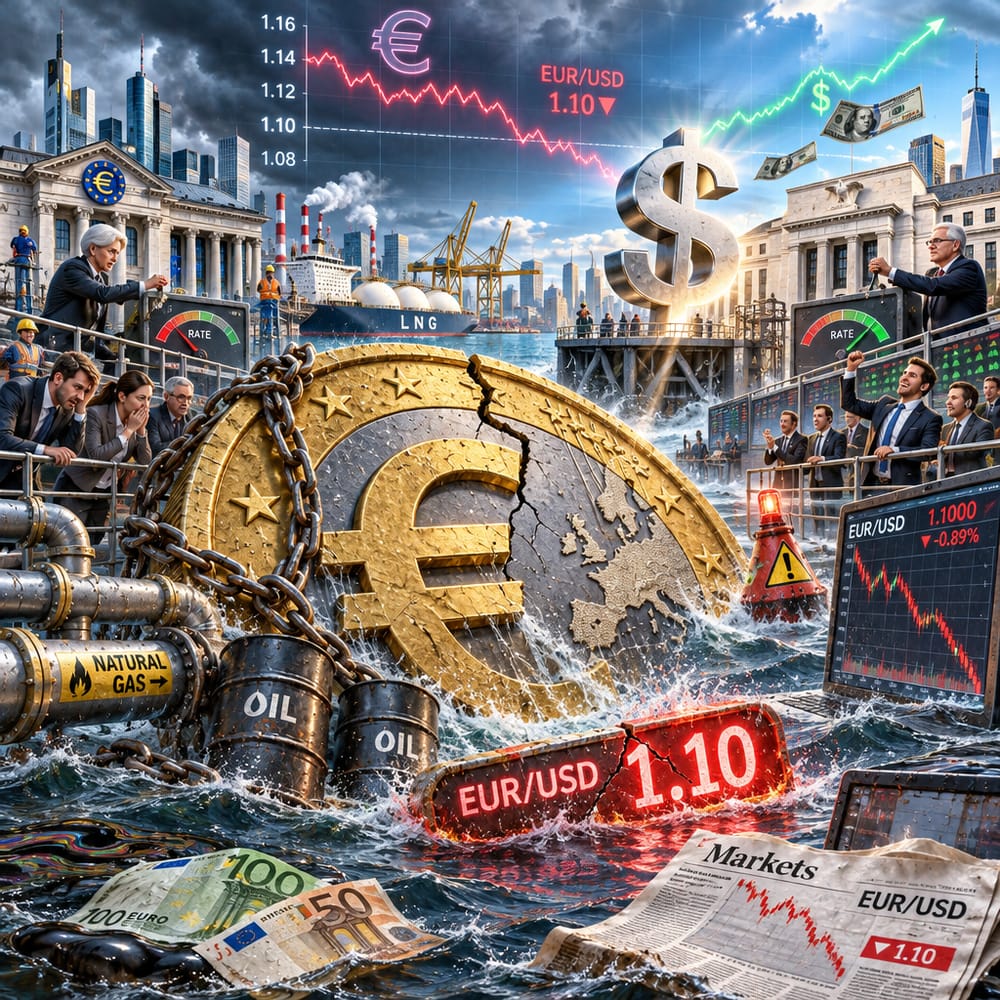
EURO SINKS BELOW KEY LEVELS AMID ENERGY PRESSURES AND FED/ECB DIVERGENCE
Here’s a plot twist: the once-mighty euro just slipped below the $1.10 mark, hitting levels not seen since April 2025. Why, you ask? Well, it seems like the euro is dealing with a bit of an existential crisis, grappling with energy prices that refuse to take a chill pill and a central bank that’s playing a very different tune than its American counterpart.
The heart of the drama lies in the divergence between the European Central Bank (ECB) and the U.S. Federal Reserve. Imagine a dance floor where the Fed is breaking it down with a high-energy cha-cha, aggressively raising rates to tame inflation, while the ECB is more like, “Can we just do a gentle waltz?” Translation: The Fed’s hawkish moves are making the dollar more attractive, leaving the euro feeling like the wallflower at the currency party.
But wait, there’s more. Energy costs are acting like that annoying guest who won’t leave. Europe is still reeling from skyrocketing energy prices that have been sizzling hotter than a summer BBQ. Since energy is a big deal for the eurozone, these elevated prices are fueling inflation, making things expensive across the continent, and putting the squeeze on consumers and businesses alike. It’s a classic case of, “Why buy the cow when you can get the milk for free?” Except in this scenario, the cow is natural gas, and it’s anything but free.
So, how exactly are these energy prices and ECB policies tagging the euro? For starters, high energy costs mean higher inflation, which usually prompts central banks to hike interest rates. But the ECB, stuck between a rock and a hard place, is wary of raising rates too quickly for fear of stalling economic growth. It’s like watching a tightrope walker balance above a pit of lava — one wrong move, and it could all come crashing down.
This cautious approach means the euro is less appealing to investors seeking higher yields, making the dollar the belle of the ball. The greenback’s rally has it flexing like a bodybuilder on Instagram, while the euro is left questioning its life choices.
Now, what does this all mean for the eurozone’s growth? If the euro keeps losing ground, imports become more expensive, increasing costs for businesses and consumers alike. This can stifle economic activity, and let’s face it, nobody likes paying more for their morning croissant. Moreover, a weak euro means inflation keeps its foot firmly on the gas pedal, forcing policymakers to get creative with their economic playbook.
Political risk is the wildcard in this European saga. The region’s politics can often resemble a soap opera, with plot twists and dramatic showdowns aplenty. From Brexit hangovers to rising populism, the eurozone is no stranger to political upheaval. This uncertainty can add fuel to the fire, further weakening the euro and making investors think twice before putting their money into the region.
So, where do we go from here? Without a drop in energy prices or a shift in central bank policies, the euro might find itself locked in this downward spiral for a while. And while that might sound like a bummer, it’s not all doom and gloom. A weaker euro can make European exports cheaper and more competitive in the global market, potentially giving a much-needed boost to the eurozone’s manufacturing sector. Think of it as a silver lining in an otherwise cloudy sky.
For everyday U.S. retail investors scrolling through this little drama on their phones, it’s a moment to ponder the global economy’s interconnectedness. The Euro’s woes are a stark reminder that what happens across the pond can ripple through markets and portfolios back home. So, whether you’re a seasoned trader or just curious, keeping an eye on these currency shifts might just help you navigate the financial seas with a bit more savvy.
In the grand scheme of things, the euro’s struggle is a chapter in a much larger story. As energy prices, Fed policies, and political uncertainties continue to play their part, the currency world watches with bated breath. Who knows? Maybe the euro will have its own comeback story. Until then, it’s just another day in the thrilling, unpredictable world of global finance.
This article is for informational purposes only and is not investment advice. Always do your own research or consult a licensed financial professional before making investment decisions.
© Copyright 2024. All Rights Reserved.
© Copyright 2024. All Rights Reserved.