

Euro’s Equilibrium: Holding Steady Post-Intervention—What’s the ECB’s Next Move?
Wednesday, August 19, 2026
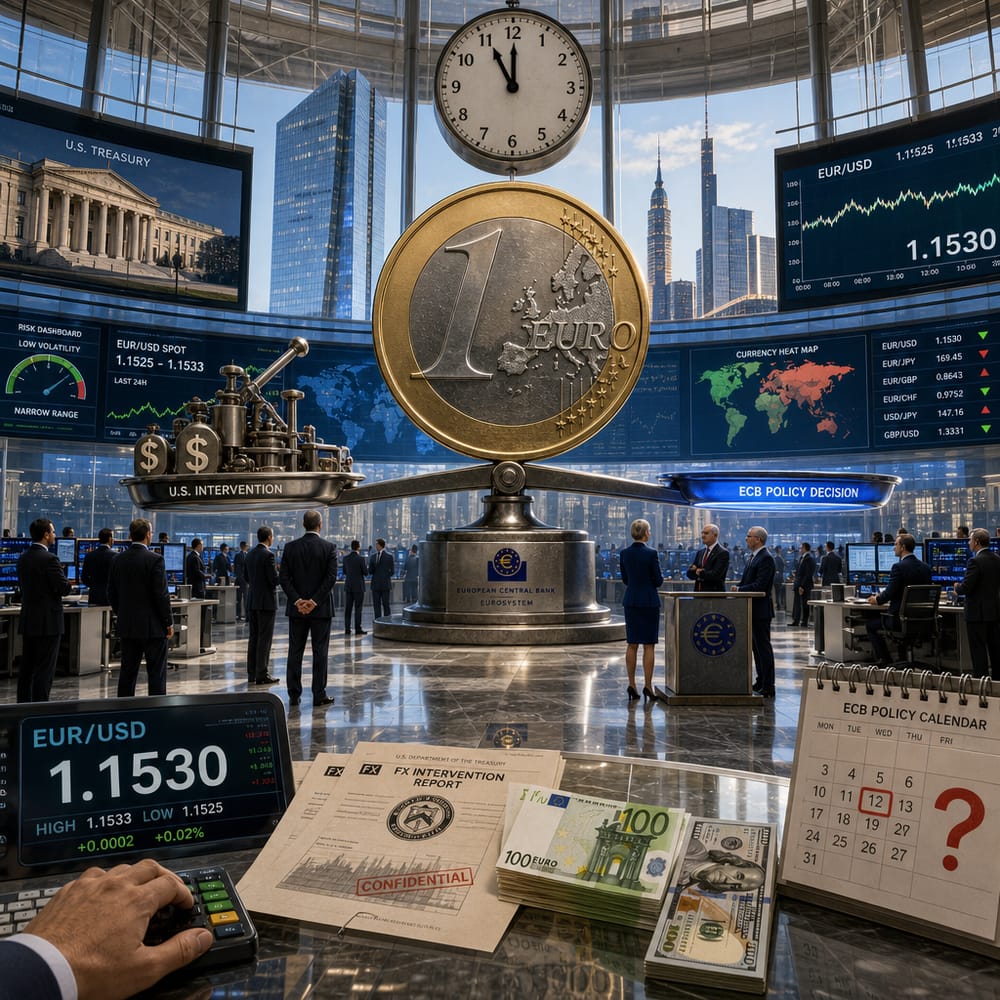
THE EURO'S NOT-SO-ANXIOUS BALANCE: WHAT'S NEXT FOR THE ECB?
Picture this: the currency markets are like a high-stakes poker game, and everyone’s watching the players’ every move. In the latest round, the euro has coolly maintained its poker face, hovering in the $1.1525–$1.1533 range. Meanwhile, across the table, the U.S. made an unexpected play with what some might call "unconventional" foreign exchange operations. Yet, like a seasoned card shark, the euro didn’t flinch. How did it manage to keep its composure, and what is the European Central Bank (ECB) planning next?
The euro’s stability amid this commotion isn’t just a fluke; it's a testament to the ECB’s prowess in maintaining currency equilibrium. Let’s break down the drama that’s playing out.
THE EURO'S STABLE SHOW
Imagine the U.S. as that overzealous poker player who just tossed a wild card into the mix. In this case, the wild card came in the form of unconventional foreign exchange operations involving euros. But the euro, the cool operator, has held its ground thanks to a mix of market expectations and the ECB’s steady hand on the tiller.
Why so steady? Well, the ECB has been preparing for this type of scenario. They’ve been on a mission to manage inflation and ensure financial stability across the Eurozone. This has involved a delicate dance of interest rates adjustments and asset purchase programs — a few fancy dance moves to keep everyone on their toes.
IT'S ALL ABOUT THE PERCEPTION
The markets, like a bunch of gossipers at a poker table, are always driven by perception. Right now, the ECB's perceived resolve to manage inflation and stability is keeping everyone calm. You can thank ECB President Christine Lagarde for that. When markets believe the ECB is ready to step in if things get dicey, the euro gets to sit back and enjoy its stable position.
WHAT COULD THE ECB DO NEXT?
Now, about those potential next moves. The ECB is playing a careful game, where any sudden moves could send the currency markets into a tizzy. However, if the U.S. continues its unorthodox tactics, the ECB might have to shuffle its cards.
One possibility is further interest rate tweaks. Tightening or loosening monetary policy could be on the table depending on how the economic data unfolds. If inflation starts heating up, expect the ECB to consider raising rates to cool things down.
Another card up the ECB’s sleeve is asset purchases, or what the insiders call quantitative easing. This move pumps liquidity into the economy to encourage spending and investment if things start looking sluggish.
KEEP CALM AND CARRY ON
The euro’s poise in the face of foreign exchange shenanigans highlights its resilience and the ECB’s deft management. But keep this in mind: the stability we see now doesn’t mean the currency is immune to future swings. The ECB will need to remain vigilant, keeping an eye on economic indicators like inflation, unemployment, and trade balances.
As the drama unfolds, the key for the ECB is to keep everyone guessing without losing control of the game. They’ve got to balance the Eurozone’s diverse economies, manage expectations, and ensure that no one player gets too dominant.
So, for now, as retail investors scrolling through their feeds, we can watch this high-stakes poker game with interest. The euro’s current stability is comforting, but like any good game, the next twist could be just around the corner.
In the world of currency markets, it pays to be prepared. Keep an eye on the ECB's moves, and enjoy the euro’s steady ride while it lasts. It's all part of the thrilling game of global finance where everyone’s hoping for a winning hand.
This article is for informational purposes only and is not investment advice. Always do your own research or consult a licensed financial professional before making investment decisions.
© Copyright 2024. All Rights Reserved.
© Copyright 2024. All Rights Reserved.