

Euro Gains on U.S. Economic Data Slump
Tuesday, August 18, 2026
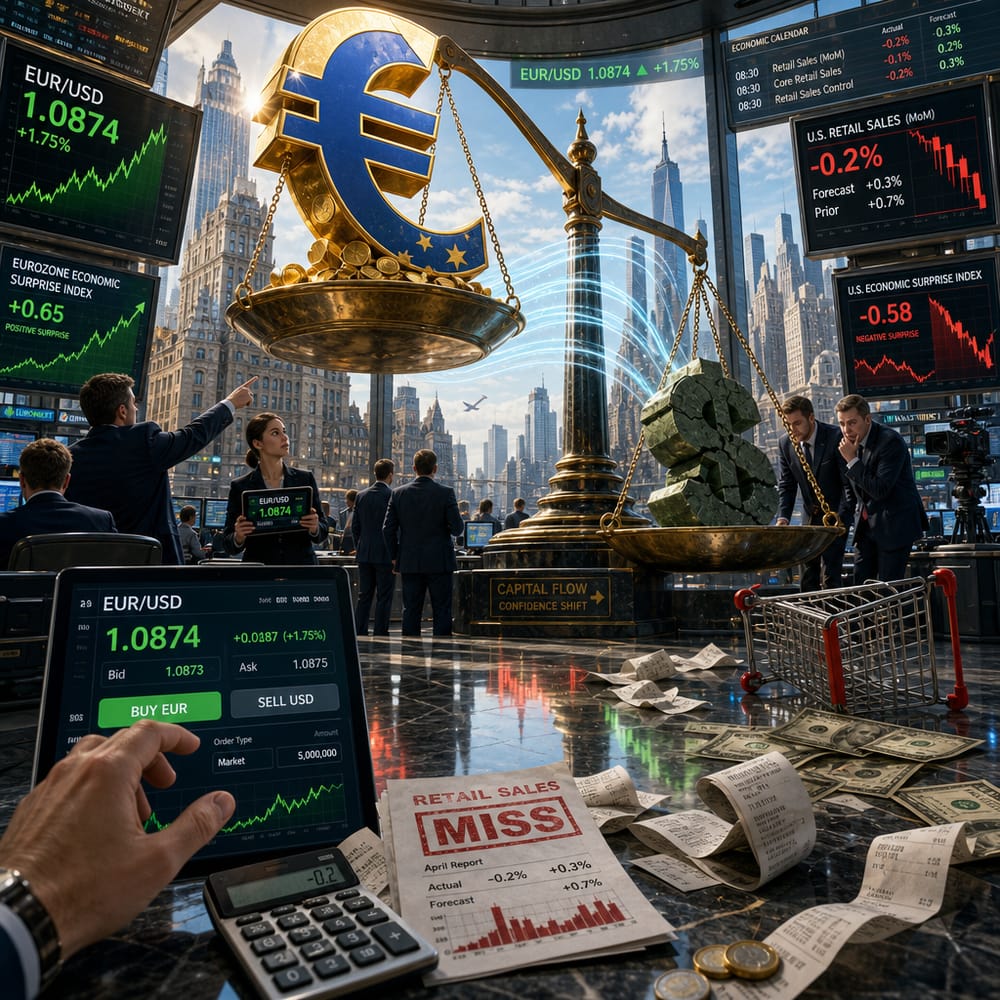
If you’ve been intently watching the euro and dollar as they shuffle their way through the global economic dance floor, you might have noticed a surprising tempo change. The euro has managed to snag the spotlight, performing an impressive twirl against the dollar. How did this happen? Well, the latest U.S. retail sales data tripped over its own feet, leaving the dollar gasping for breath while the euro sashayed ahead.
It’s hard not to imagine the European Central Bank (ECB) eyeing this development with a mix of intrigue and trepidation. For the ECB, a stronger euro can be a double-edged sword. On one hand, a robust euro showcases the relative strength of the Eurozone economy; on the other, it spells potential heartache for European exporters. A pricier euro means European goods are more expensive abroad, potentially slowing down exports. A Eurozone that can't sell its goods is like a bakery that can't sell its bread—eventually, it all goes stale.
You might be wondering: How exactly does this set the stage for the ECB's policy dance? The euro’s bullish move could force the ECB to re-evaluate its game plan. Traditionally, stronger currencies lead to lower inflation as imports become cheaper. While that might sound like a good thing, in an economy already grappling with low inflation, this could nudge it closer to dreaded deflation territory.
The ECB, much like an anxious parent at a talent show, might now be thinking about how to tweak its performance. Will it tighten its purse strings and keep interest rates where they are? Or could it loosen up, eyeing the future with a dovish tilt to stimulate growth if exports take a hit? There’s a lot to consider, especially with major economies playing a global game of economic musical chairs.
Let’s dive deeper into the consequences of the euro’s newfound pep. For American tourists eyeing European adventures, a stronger euro might dampen dreams of leisurely strolls through Paris or Rome. The exchange rate would mean less bang for their buck, or should I say, fewer baguettes for their bucks?
From a trade perspective, however, the euro’s surge complicates things for the Eurozone’s export heavyweights like Germany. German automakers, who already face stiff competition globally, might find their cars a tougher sell in a market that could opt for cheaper alternatives. Think of it as trying to sell a Mercedes in a world where everyone suddenly fancies a ride in a Hyundai.
Then there’s the ECB’s monetary maneuvering to consider. With inflation being the ultimate bad word in central banking, the ECB’s immediate concern may shift from tightening to keeping economic fires stoked. If the euro remains strong and export woes escalate, it might necessitate a policy pivot to ensure growth doesn’t take a vacation.
But let’s not get ahead of ourselves. The euro’s current strength doesn’t spell an end-all situation. The ECB has a track record of strategically managing unexpected economic twists and turns. The coming months will likely witness a balancing act that would make even the most seasoned tightrope walker envious.
In the grander scheme, this interplay between the euro and the dollar is more than just a currency kerfuffle. It’s a reflection of shifting economic tectonics that could redefine trade relations and drive central banks back to their drawing boards. As avid market-watchers, the challenge is to understand the potential ripple effects and what they could mean for the ECB’s future choreography.
So, gear up and keep your eyes peeled—this currency dance is far from over, and the next move could change everything. Will the euro stay at center stage, or will the dollar reclaim its title as the belle of the ball? Stay tuned, folks. This is one show you won’t want to miss.
This article is for informational purposes only and is not investment advice. Always do your own research or consult a licensed financial professional before making investment decisions.
© Copyright 2024. All Rights Reserved.
© Copyright 2024. All Rights Reserved.