

Euro Gains Amid Data Divergence and DXY Weakness
Monday, August 17, 2026
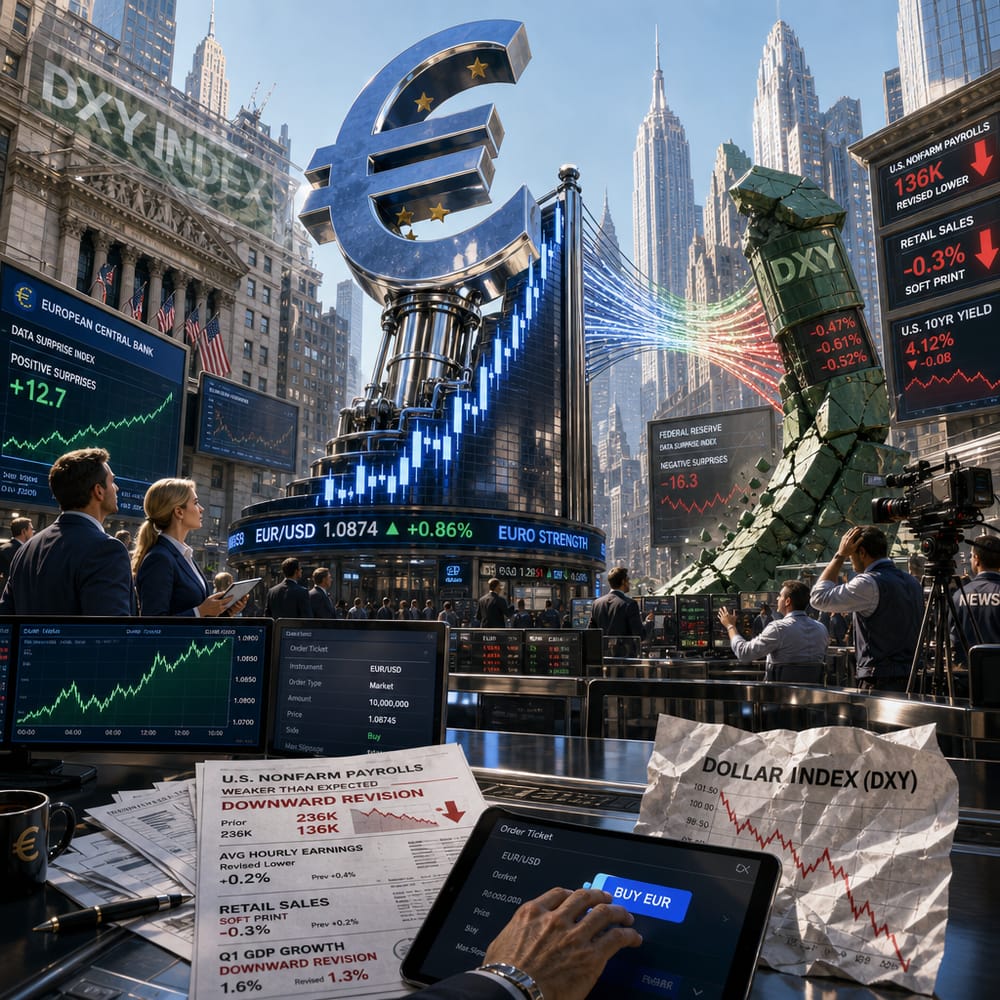
THE EURO'S ON A DOLLAR DIET: HERE'S WHY IT MATTERS
Is the euro drinking a protein shake? It's bulked up in recent weeks, flexing its muscles against the almighty U.S. dollar. The big question is: what gives? The short answer is a mix of economic soft spots in the U.S. and a shifting symphony in central-bank communication. Let’s dive into the nitty-gritty of this transatlantic currency tango and why it's got investors on both sides of the pond biting their fingernails—or cheering, depending on which side of the trade they're on.
So, what's fueling the euro’s recent renaissance?
It all starts with the U.S. economy showing some cracks. Recent data is painting a less-than-rosy picture, leading to a decline in those oh-so-critical Treasury yields. Higher yields usually mean a more attractive dollar, but with the recent dip, the dollar's charm offensive is losing steam. Couple this with the eurozone economy that’s been throwing off sparks of resilience, and you've got a recipe for euro appreciation.
The U.S. Federal Reserve (Fed) and the European Central Bank (ECB) have been playing a monetary duet, but lately, it’s been sounding more like jazz than classical. With the Fed dropping hints that future rate hikes might be off the table, investors are starting to look at the euro with fresh eyes. The ECB, on the other hand, is still in the game of rate hikes, keeping the euro lively on its feet.
Now, how might future Fed and ECB policies influence this pas de deux?
Think about it like this: If the Fed decides to sit on its hands and keep interest rates as they are, while the ECB opts to keep tightening, the euro could continue to gain ground. It’s like a seesaw where the heavier side (in this case, the ECB’s hawkish stance) tips the balance. However, the situation is as fluid as a salsa dance—one unexpected economic report or geopolitical event could quickly change the tune.
Despite its recent strength, there are still a few banana peels that could send the euro slipping. The first is the ever-looming specter of a eurozone recession. You know, that party crasher no one invited but keeps hinting they might show up? If economic data starts to sour, all bets could be off for the euro. Moreover, any unexpected moves by the Fed could quickly change the dynamics. An unexpected hike from the Fed would likely send the dollar surging once more, leaving the euro in its wake.
For euro investors, it’s not just about watching the central banks like a cat eyeing a toy mouse. Global trade and investment flows are just as crucial. A stronger euro can mean more expensive European exports, potentially dampening the continent's trade surplus. On the flip side, a weaker dollar can boost U.S. exports, narrowing the trade gap and adding another layer of intrigue to the currency chess match.
But let's not get ahead of ourselves. The market is a fickle beast, and investor sentiment is as changeable as the weather. The euro’s recent gains are significant, but they're not set in stone. Investors need to keep an eye on the horizon for any thunderstorms—be it geopolitical tensions or new economic data—that could upset the current balance.
So, what should you do if you're sitting on some euros or thinking of diving into the forex pool?
First, stay informed. Keep an eye on economic reports and central bank whisperings—they’re the tea leaves of the financial world. Second, diversify. Just like you wouldn't put all your eggs in one basket, don’t bet your entire portfolio on one currency’s movements. And finally, remember to breathe. The currency market can be a rollercoaster, and sometimes the best move is to hold tight and enjoy the ride.
In the grand scheme of things, the euro and dollar dance will continue to fascinate and frustrate investors around the globe. As each currency takes its turn in the spotlight, savvy investors will stay nimble, ready to adapt to the next shift in tempo. After all, in the world of finance, the only constant is change.
This article is for informational purposes only and is not investment advice. Always do your own research or consult a licensed financial professional before making investment decisions.
© Copyright 2024. All Rights Reserved.
© Copyright 2024. All Rights Reserved.