

Euro and Pound Hold Near Multi-Month Highs as Fed Tightening Expectations Fade
Friday, August 21, 2026
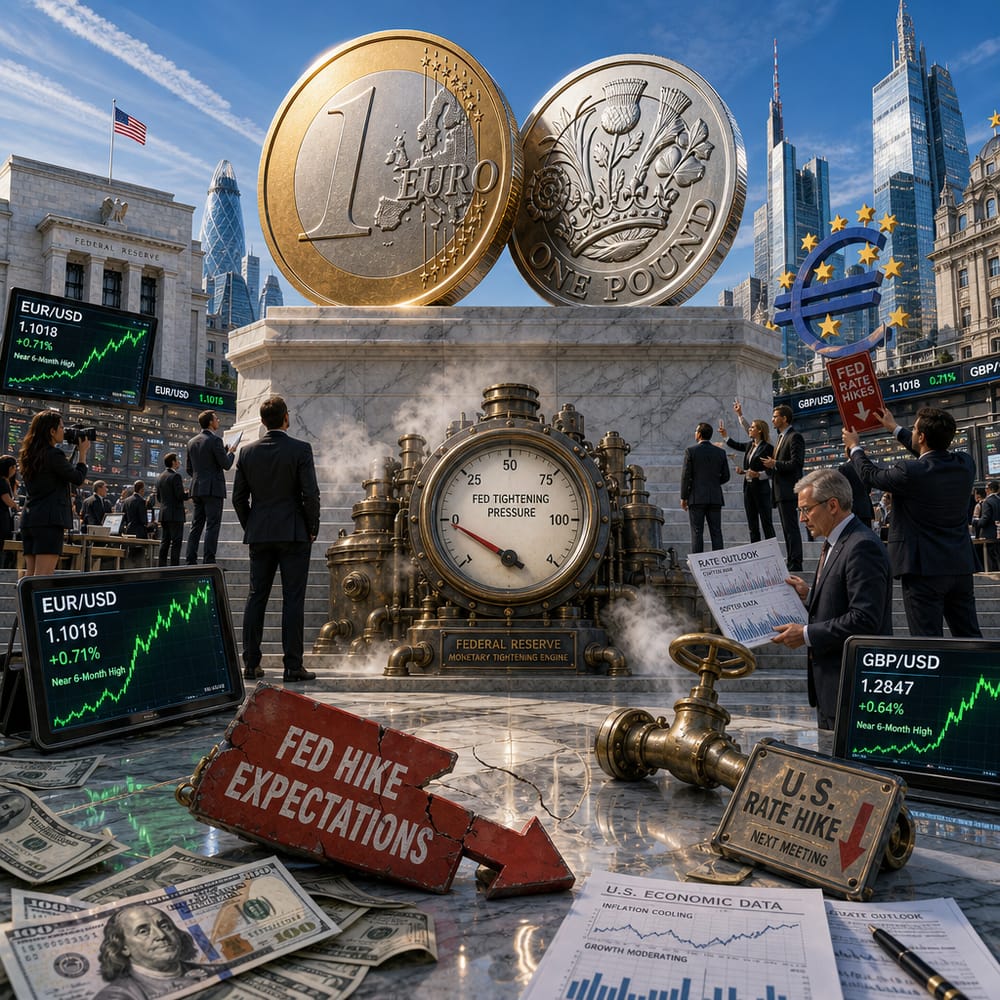
THE EURO AND POUND ARE PARTYING LIKE IT'S 1999 WHILE THE FED IS HITTING SNOOZE
It looks like the euro and the British pound have finally found their groove, and it’s not because they hired an expensive dance instructor. These two currencies are waltzing around multi-month highs, and it’s got everything to do with the Federal Reserve showing all the enthusiasm of a teenager being asked to do chores. With the Fed cooling on the idea of near-term rate hikes due to some lackluster U.S. economic data, forex investors are all ears—and maybe a bit of side-eye.
So what's got the euro and pound feeling so spry lately?
THE FED'S SOFTER STANCE
Let’s get this straight: the Federal Reserve, America's go-to for monetary policy, is taking a more relaxed approach these days. Recent U.S. economic data has been about as exciting as watching paint dry—unemployment figures are lukewarm, and inflation isn't running as wild as it was last summer. In simple terms, this means the Fed isn't rushing to raise interest rates. And when the Fed hits the brakes on rate hikes, the U.S. dollar often loses some of its swagger.
Enter the euro and pound, strutting in to fill the vacuum left by the sagging dollar. With the Fed dialing down its hawkish tone, the euro and pound have more room to shine. This isn’t just a local dance-off; this is a global market move. And any forex investor worth their salt is keeping a keen eye on the proceedings.
The ECB AND BoE: THE OTHER PLAYERS ON THE DANCE FLOOR
Of course, it’s not just about the Fed. The European Central Bank (ECB) and the Bank of England (BoE) are also key players in this currency shindig. The ECB has been hinting at a steady approach to its own interest rate policies. With the European economy showing signs of resilience, the ECB might decide to hold the line on rates, offering the euro some much-needed stability.
Meanwhile, over in the UK, the BoE has its hands full with inflation that just won’t take a hint. British inflation has been more persistent than a clingy ex. But if BoE decides to hike interest rates to tackle this, sterling could get a boost, adding another reason for the pound's current strength.
RISK FLOWS AND MARKET MOODS
Let’s not forget the risk flow dynamics. Global investors, always in search of a safe or profitable haven, are keeping a watchful eye on where to park their money. With the U.S. market being a bit of a snooze-fest and U.S. Treasury yields doing the cha-cha, investor interest shifts to the euro and pound. They’re betting that these currencies could offer more stable returns than U.S. assets in the short term.
WHAT'S NEXT FOR THE EURO AND POUND?
Here's the million-dollar question: what happens moving forward? For the euro and pound, a lot depends on how the Fed, ECB, and BoE play their cards. If the Fed continues its wait-and-see approach, the dollar might keep hitting the snooze button, giving the euro and pound more room to prance about.
But keep your eyes peeled for any surprises. If the ECB and BoE decide to shake things up with unexpected rate moves, it could send ripples through the forex waters faster than you can say 'exchange rate.'
For retail investors scrolling through the latest market news, it's essential to stay informed and be nimble. Currency markets can flip on a dime, and the dance between these major players is far from over. Whether you're betting on the euro, the pound, or the dollar, keep your dance card open—because in the world of forex, there's always another song waiting to play.
This article is for informational purposes only and is not investment advice. Always do your own research or consult a licensed financial professional before making investment decisions.
© Copyright 2024. All Rights Reserved.
© Copyright 2024. All Rights Reserved.