

EUR/USD: Narrow Trading Range as Divergent Central Bank Expectations Persist
Sunday, August 16, 2026
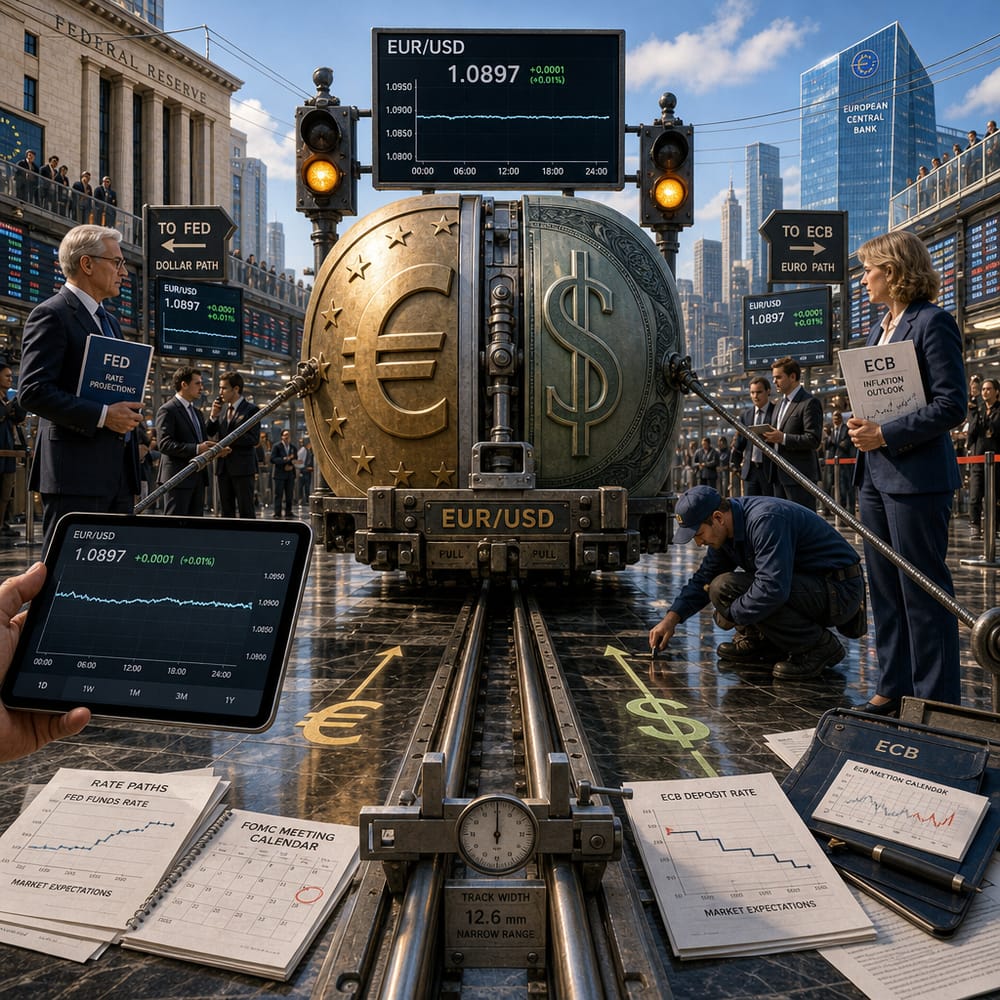
WHAT’S UP WITH EUR/USD? THE TALE OF TWO CENTRAL BANKS
Imagine a see-saw in the playground of global finance, except neither end is quite touching the ground. That’s the EUR/USD currency pair right now, stuck in a narrow trading range while everyone holds their breath, waiting to see if the European Central Bank (ECB) or the U.S. Federal Reserve (the Fed) is going to drop any heavyweight policy changes. The euro and the dollar are like two heavyweight boxers in the ring, circling each other and waiting for the other to make the first move.
For now, the market is all ears, eyes, and tea leaves, trying to predict what these two financial powerhouses will do. Will the ECB tighten its belt with more interest rate hikes, or will it take a cue from the Fed and hold steady? The answer to this could swing the EUR/USD either way, making it a hot topic for traders and investors.
CURRENT EXPECTATIONS: WILL THEY OR WON'T THEY?
The ECB’s compass has been pointing toward tighter monetary policy, kind of like a parent telling their teenager to start saving for college. Inflation’s still out there throwing its weight around in Europe, and the ECB doesn’t seem ready to let its guard down. But does this mean more hikes are coming? Well, the ECB has been known to keep its cards close to its chest, leaving the market to chew on hints and cryptic statements like it's the latest mystery novel.
On the other side of the Atlantic, the Fed is playing the “wait and see” game. They’ve been on an interest-rate hike spree like it’s going out of style, but now they’re slowing down and eyeing the economic data more closely than a cat watches a mousehole. The latest signals suggest the Fed might keep rates steady, at least for a while, to see if the economy can handle the pressure cooker of past increases without burning.
INFLUENCING THE EUR/USD TRADING RANGE
So, how do these high-stakes guessing games affect the EUR/USD trading range? Well, if the ECB decides to go all hawkish with more rate hikes while the Fed hits pause, we could see the euro climbing the ropes like the hero in a sports movie. The logic? Higher interest rates in Europe might attract more investments, making the euro more appealing — kind of like a shiny new gadget everyone wants to get their hands on.
Conversely, if the Fed surprises us with more hikes while the ECB remains cautious, the dollar could flex its muscles, keeping the euro in check. Investors love chasing higher returns, and if the U.S. offers a better interest rate dessert menu, it’s hard to resist.
WHY SHOULD YOU CARE?
Now, if you’re wondering why any of this matters to you while you’re scrolling through your phone in line at the coffee shop, here’s the scoop. The EUR/USD exchange rate isn’t just a back-and-forth for forex traders; it’s a barometer of economic health and sentiment. A weaker euro could make European imports cheaper for U.S. consumers, while a stronger euro might mean European vacations get pricier. On the flip side, a stronger dollar could benefit American travelers but make U.S. exports more expensive.
Moreover, the EUR/USD is like the weather vane of global finance. If the winds of central bank policy changes start to blow in one direction, it might signal shifts in economic strategies and even consumer confidence around the world.
THE BOTTOM LINE
So, what’s the takeaway from this economic chess game? For now, the EUR/USD pair is in a holding pattern, like a plane waiting for clearance to land. But once either the ECB or the Fed decides to show its hand, you might see some turbulence. Keep your eyes peeled for updates from these financial giants, as their next moves could bring some big changes to this currency pair’s storyline.
In the meantime, keep that popcorn handy and stay tuned. In the world of finance, change is the only constant, and the EUR/USD is right at the center of it all. Will it be a euro resurgence or dollar domination? Only time — and a few central bank meetings — will tell.
This article is for informational purposes only and is not investment advice. Always do your own research or consult a licensed financial professional before making investment decisions.
© Copyright 2024. All Rights Reserved.
© Copyright 2024. All Rights Reserved.