

EUR/USD Gains Modestly on Hawkish ECB vs. Softening Fed Expectations
Saturday, August 29, 2026
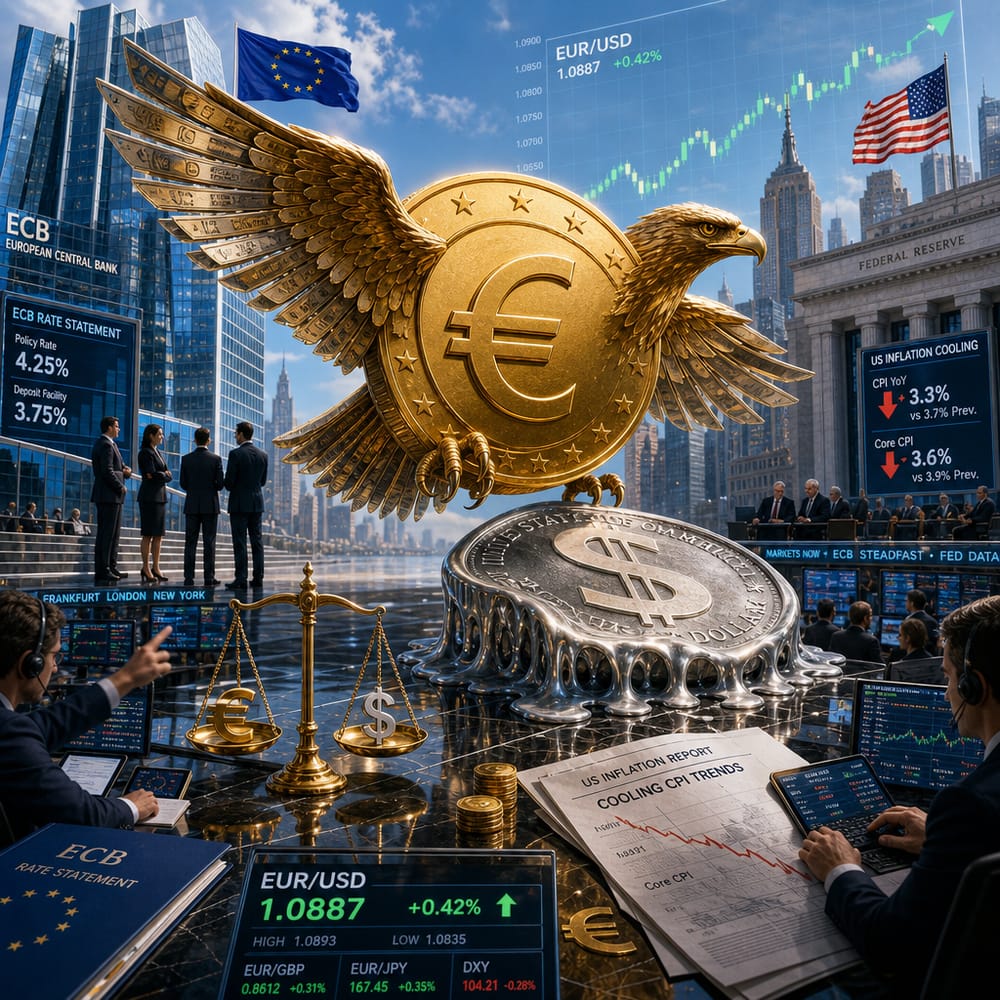
THE ECB AND FED FACE OFF: HOW POLICY SHIFTS ARE ROCKING THE EUR/USD
In the world of international finance, not all central banks are created equal. Right now, two of the biggest heavyweights, the European Central Bank (ECB) and the U.S. Federal Reserve (Fed), are having a not-so-quiet spat about interest rates, and the euro and dollar are caught in the crossfire. If you're wondering why the EUR/USD currency pair is behaving like a moody teenager, look no further than these two institutions' diverging policies.
Let's start with the ECB, the eurozone's monetary captain. They've got a reputation for being hawkish lately—think of them as a stern parent who believes in tough love. The driving force? Inflation. The eurozone is currently wrestling with inflation levels that refuse to take a chill pill. As a result, the ECB is talking tough and keeping interest rates high to put a lid on inflation. By higher rates, we mean they are making it more costly to borrow money, which, in theory, should slow down spending and cool off rising prices.
In contrast, the Fed is taking a more dovish approach—like that one friend who's always telling you to relax. With U.S. inflation showing signs of cooling, the Fed's been giving off signals that they're in no rush to crank up interest rates further. Instead, they're watching, waiting, and probably checking the weather forecast to see if inflation is indeed retreating. This softer stance has been nudging the dollar down a peg or two.
So, what's this mean for the EUR/USD? Well, the euro's gaining strength against the dollar. Picture the euro as a sprinter fueled by Red Bull—thanks to the ECB's firm grip on rates, it's hitting the track with some serious energy. Meanwhile, the dollar, like a marathon runner pacing itself, isn't exactly sprinting to catch up. This divergence is making the euro more attractive, sending the EUR/USD rate edging higher.
But hold your horses before you start betting the farm on euros. There's more at play here than just central bank policies. Inflation trends in both the U.S. and EU are also key players in this drama. If U.S. inflation stays cool and collected, the Fed might just keep rates low, keeping pressure on the dollar. On the flip side, if eurozone inflation decides to break bad, the ECB might double down, giving more juice to the euro.
Looking ahead, there are a few potential scenarios for the EUR/USD. If the ECB continues its hawkish stance and the Fed stays dovish, we might witness the euro further strengthening against the dollar. However, global economic conditions are never static. Should the situation flip—with U.S. inflation creeping back up, prompting the Fed to get hawkish, or European inflation easing—then we could see the dollar flexing its muscles again.
In the coming weeks, all eyes will be on those inflation reports and central bank meetings. Investors and traders will dissect every word from ECB President Christine Lagarde and Fed Chairman Kevin Warsh, looking for clues about the next moves. Will the ECB stick to its guns, or will the Fed make a surprise hawkish turn?
The real question for everyday investors scrolling through their feeds is: Should you care? Absolutely. Currency pairs like the EUR/USD don't just affect traders and big banks—they impact international business, travel expenses, and even the cost of imported goods. Whether you're planning a European getaway or just trying to understand why your favorite imported cheese has jumped in price, keeping an eye on these monetary policy moves is worthwhile.
In the end, the dance between the ECB and the Fed is a reminder that in the world of finance, nothing is set in stone, and sometimes, it's the smallest nod or wink from a central banker that has the power to shake things up. So, grab your popcorn and stay tuned. The currency markets are putting on quite a show.
This article is for informational purposes only and is not investment advice. Always do your own research or consult a licensed financial professional before making investment decisions.
© Copyright 2024. All Rights Reserved.
© Copyright 2024. All Rights Reserved.