

EUR/USD Edges Higher as ECB Outpaces Fed in Hike Pricing
Tuesday, August 25, 2026
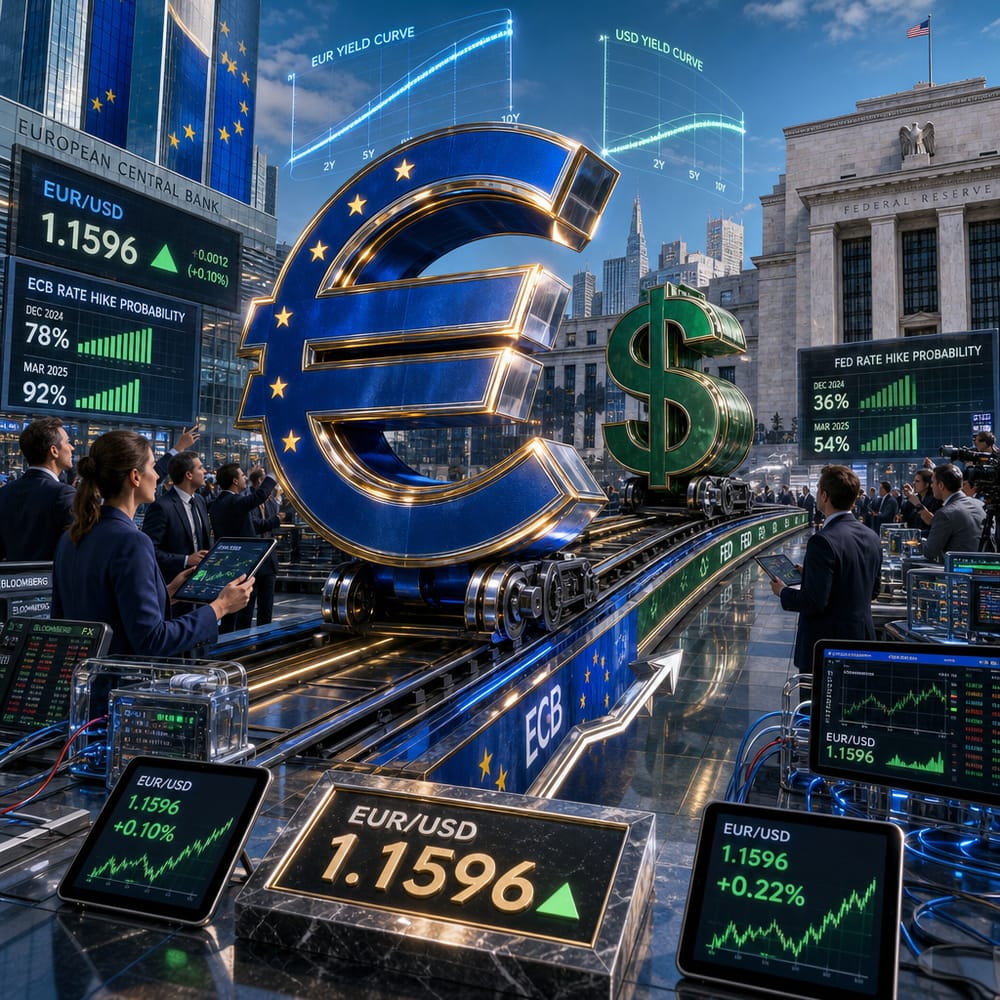
ECB Outpaces Fed: The Euro's Secret Weapon Against the Dollar
Hold on to your hats, currency aficionados, because the euro is making waves in the forex world like a caffeine-fueled trader on a Monday morning. The EUR/USD pair has nudged up by 0.10-0.22% to a sprightly 1.1596. But what's behind this currency tango? Two words: central banks. The European Central Bank (ECB) and the U.S. Federal Reserve (Fed) are playing a game of monetary chicken, and it looks like the ECB is revving its engines for a rate-hike race. Here's why it matters and how it's shaking up the currency markets.
DUELING MONETARY MAESTROS
In the blue corner, we have the Fed, America's monetary heavyweight. It's been doing its best to cool down inflation by raising interest rates — think of it as a very expensive air conditioning unit for the economy. But recently, the Fed's been dropping hints that it might ease off the rate-hike pedal. Meanwhile, in the red corner, the ECB's president, Christine Lagarde, is doing her best impression of a hawk, signaling more aggressive rate hikes are on the horizon. The ECB seems intent on outpacing the Fed, betting on a future where inflation isn't just tamed — it's positively caged.
SHOWDOWN IN FOREX TOWN
So, what's a retail investor to make of this central bank melodrama? The divergent policies are driving the euro up against the dollar. Picture two athletes: one slowing down (the Fed), and the other sprinting ahead (the ECB), and you'll get a sense of the dynamics at play. The ECB's more aggressive stance is making the euro look like a more attractive bet compared to the dollar. When central banks crank up interest rates, it generally attracts investment in that currency, pushing up its value. Hence, the euro's recent flexing of muscles in the forex ring.
FOR THE LOVE OF TRADING
For traders, this news isn't just watercooler chit-chat. It's a potential game-changer. The EUR/USD pair is one of the most traded currency pairs in the world. A shift in its value affects everything from your European vacation budget to the balance sheets of multinational companies. Traders betting on the euro might see this as an opportunity to capitalize on the ECB's hawkish signals. Conversely, those with dollar-heavy portfolios might be feeling a bit like being caught in a downpour without an umbrella.
So, what are the potential impacts on EUR/USD trading? With the ECB outpacing the Fed in rate hikes, we could see more volatility in this currency pair. For those daring enough to ride the forex rollercoaster, this means potential gains if they can time the market right. But, as any seasoned trader will tell you, the forex market is about as predictable as a cat on catnip. You'll want to keep your eyes glued to those central bank announcements.
A SHIFT IN STRATEGIES
The diverging policies between the ECB and the Fed might also shift trading strategies. Traders could pivot towards a strategy known as carry trading, where they borrow in currencies with low interest rates to invest in those with higher rates. With the euro looking more attractive due to potential rate hikes, the dollar might just find itself the less charming wallflower at the forex party.
In short, while central banks are doing their best to keep inflation in check, their differing approaches are stirring up the currency markets. As retail investors, it's crucial to keep an eye on these developments — they could affect everything from travel expenses to investment portfolios. So whether you're a seasoned currency trader or just someone with a keen interest in where your next paycheck might stretch further, keep those market alerts on and stay sharp.
As the ECB gears up for more hikes and the Fed takes a breather, the euro's dance with the dollar could have more twists and turns than a ballroom floor. Happy trading, and may your forex bets be as bold as a central banker’s rate hike!
This article is for informational purposes only and is not investment advice. Always do your own research or consult a licensed financial professional before making investment decisions.
© Copyright 2024. All Rights Reserved.
© Copyright 2024. All Rights Reserved.