

EUR/USD Drops Toward 16-Month Low as French-Spanish Fiscal Risk Mounts
Tuesday, October 06, 2026
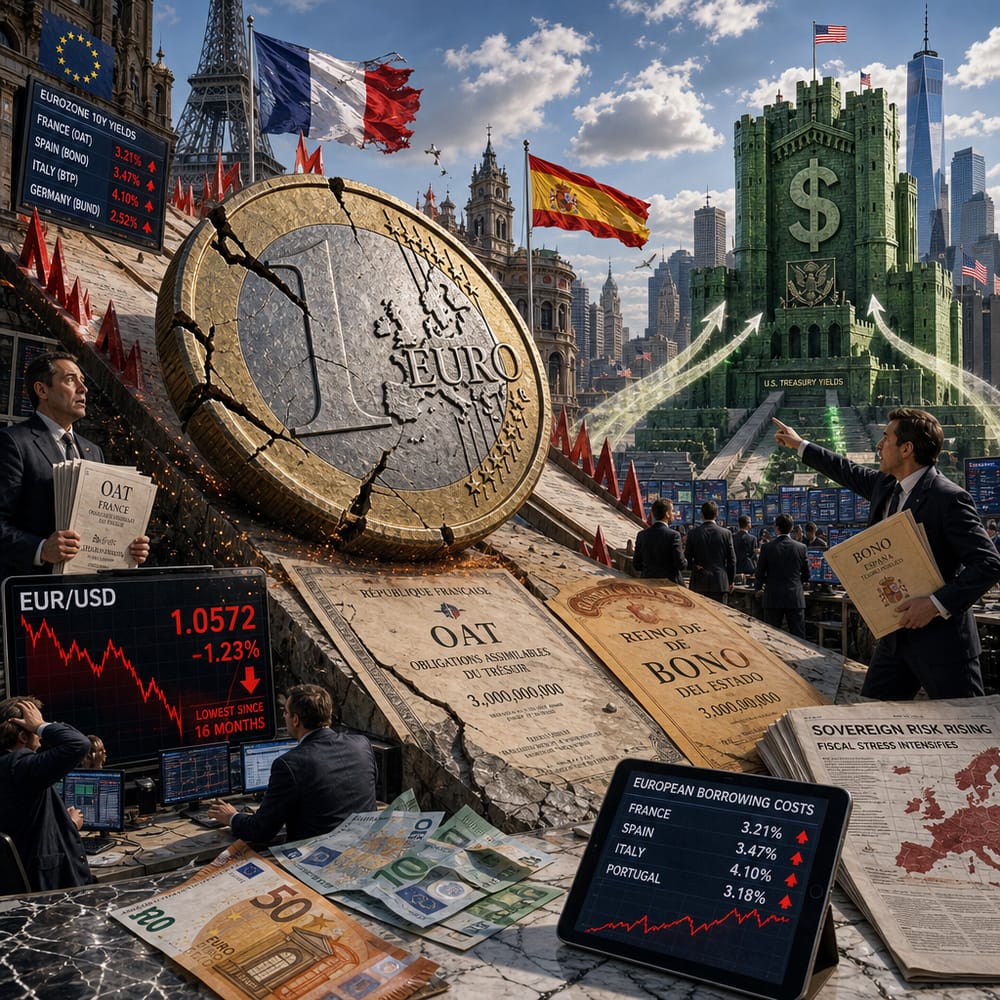
WHAT'S SINKING THE EURO? BLAME BORROWING AND POLITICS
Hold on to your wallets, everyone. The euro is taking a plunge, and it’s not a ride you want front-row seats for. The euro-dollar exchange rate is slumping, hitting its lowest level since way back in May 2025. Yes, you read that right—16 months of steady decline. But what's behind this nosedive? Let’s just say it’s a cocktail of political chaos and fiscal follies with a dash of U.S. economic muscle.
If you’ve been snoozing, here's a wake-up call: Political tensions in France and Spain are ratcheting up risk factors in the European Union's backyard. In France, President Emmanuel Macron's government is wrangling with labor unions over pension reforms, making Parisian streets the new battleground. Meanwhile, Spain is juggling coalition instability, with political parties changing alliances faster than you can swap your Netflix password.
But it’s not just the political soap opera that's undermining the euro. Borrowing costs are climbing to discouraging heights. Eurozone countries that were once able to borrow cheaply are now facing the music, and it's not a pleasant tune. The bond spreads—that's the difference in yields between safe government bonds and riskier ones—are widening. This means investors are demanding higher returns to hold onto riskier debt, a clear sign that they're jittery about Europe’s financial health.
Now, why should you care? Because this isn’t just a European problem. It's a global ripple effect. When borrowing costs climb, it tends to scare off investments and stifle growth. And let's face it—no one wants to see their international portfolios turn into a puddle of declined returns.
Then we've got the U.S. throwing its heavyweight around. Over in America, bond yields are strutting higher as Treasury yields rise, thanks to the Federal Reserve’s tighter stance on monetary policy. Translation: The U.S. is looking like the more stable, attractive option for global investors. They're flocking there faster than you can say "risk-free rate," ditching the euro in droves.
But where's the European Central Bank (ECB) in all this? Well, they’re between a rock and a hard place—or an economic Scylla and Charybdis, if you’re feeling classical. The ECB is trying to combat inflation without strangling growth. They’ve been cautious about hiking rates too aggressively, worried it might choke off what's left of the eurozone’s economic recovery. But with fiscal risks rising, the bank’s balancing act is getting trickier by the day.
One might wonder, is the ECB planning to diverge from its current policy? While there's talk of future rate hikes, any drastic moves could have drastic consequences. The bank's cautious approach might need some ramping up if they’re to contain the fiscal flares lighting up Europe.
So what does this mean for the average Joe or Jane with euros in their portfolio? Well, if political tensions boil over and borrowing costs continue to climb, the euro might keep suffering. A weak euro could make European exports cheaper, but it also means import prices could skyrocket, adding to the inflation woes already gripping parts of the continent.
And don’t think the U.S. markets are watching from the sidelines. The strong dollar might make American exports more expensive, potentially putting a damper on corporate profits overseas. But it also means that, for now, American bondholders are sitting pretty, enjoying the relative safety and return of U.S. securities.
In a nutshell, this isn’t just a European drama. It’s a global financial thriller with consequences spilling across borders. Keep your eyes on the bond spreads, political headlines, and ECB press releases—because the euro isn't done with its rollercoaster yet. Whether it will swoop back up or dive further down is anybody's guess. If you're a betting person, now might be the time to hedge your bets.
This article is for informational purposes only and is not investment advice. Always do your own research or consult a licensed financial professional before making investment decisions.
© Copyright 2024. All Rights Reserved.
© Copyright 2024. All Rights Reserved.