

EUR/USD Dips Amid Fed Hike Speculation and ECB Dovishness
Sunday, October 04, 2026
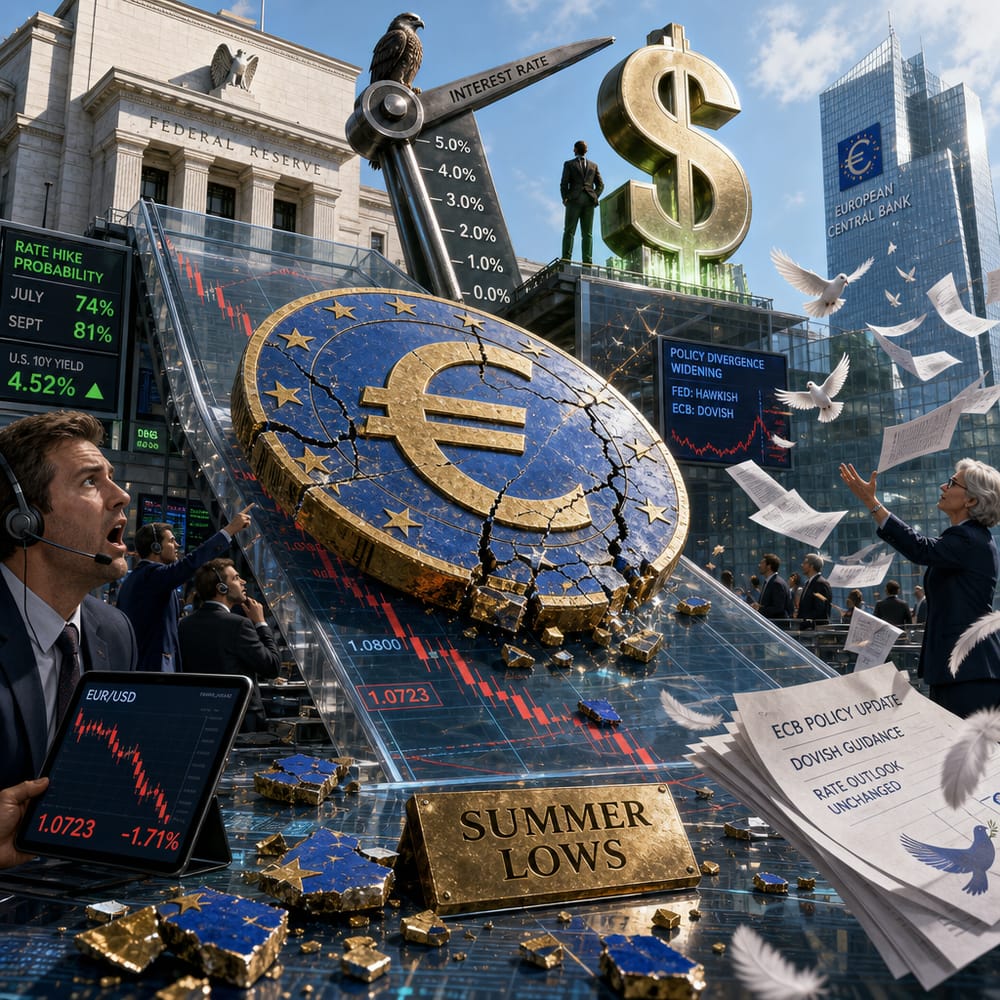
EUR/USD Dips Amid Fed Hike Speculation and ECB Dovishness
If currency pairs were contestants in a reality TV show, the EUR/USD would be the drama queen of the group. This pair has slipped to its lowest levels since summer, and it seems like everyone in the financial world is buzzing about it.
At the heart of this currency drama is a classic story of a long-distance relationship going awry: the Federal Reserve (Fed) and the European Central Bank (ECB) are just not on the same page. It’s like the Fed is planning a hardcore gym regimen while the ECB is still hitting the snooze button. Let’s dive into why this matters for your money and what you might do about it.
THE FED: HAWKISH RUMBLINGS
The Fed is like that overachieving friend who just never stops. They're focused on keeping inflation in check, with Jerome Powell sending signals that interest rates could go up again. Imagine the Fed as a hawk — always watchful, ready to swoop and keep the economy from overheating. Higher interest rates can make the dollar juicier to investors, which means more people want to buy dollars, and more demand means a stronger dollar.
ECB: THE DOVISH VIBE
On the other side of the pond, the ECB seems to have adopted a more relaxed, dovish stance. Think of them as the chill friend who wants to keep borrowing costs low to boost economic growth. But here’s the catch: while borrowing costs stay low, the euro might not look as attractive compared to the dollar, causing the euro to slide. It’s like the ECB is offering a sale, but everyone’s busy shopping somewhere else.
WHY THIS MATTERS
This divergence in central bank policies isn’t just a spectacle for financial wonks. It has real-world implications. A strong dollar can make American exports more expensive and imports cheaper, which impacts businesses from tech giants to mom-and-pop stores. Meanwhile, a weaker euro can hurt European exporters, as their goods become pricier on the global market.
For traders, this policy mismatch creates a playground full of risks and opportunities. A strong dollar might mean there's room for a euro bounce — if the ECB decides to wake up and smell the inflationary coffee. On the flip side, if the Fed continues with its hawkish game plan, the euro might have further to fall.
TRADING STRATEGIES TO CONSIDER
So, what’s a retail investor to do? If you’re feeling brave, consider a few strategies. Short-selling the euro could be tempting if you think the divergence will continue. This means betting on the euro falling in value. High risk, high reward — but not for the faint-hearted.
Alternatively, if you believe the euro is oversold, buying on dips could offer opportunities if the ECB changes its tune or if a surprise economic report boosts euro sentiment. Of course, remember that playing the currency market is like walking a tightrope, and it’s crucial to have a safety net — in this case, a solid risk management plan.
FINAL THOUGHTS
The EUR/USD pair is more than just a number on a screen. It reflects the push and pull of two economic giants with divergent paths. While central banks play their high-stakes chess game, traders and investors must stay sharp, ready to move with the ever-shifting winds. Whether you're bullish, bearish, or somewhere in between, the real currency is knowledge. Keep your eyes on the prize, and let’s see what the next chapter holds for this currency saga.
This article is for informational purposes only and is not investment advice. Always do your own research or consult a licensed financial professional before making investment decisions.
© Copyright 2024. All Rights Reserved.
© Copyright 2024. All Rights Reserved.