

EUR/USD Could Rebound Toward 1.17 if Fed Holds Off in September
Wednesday, July 29, 2026
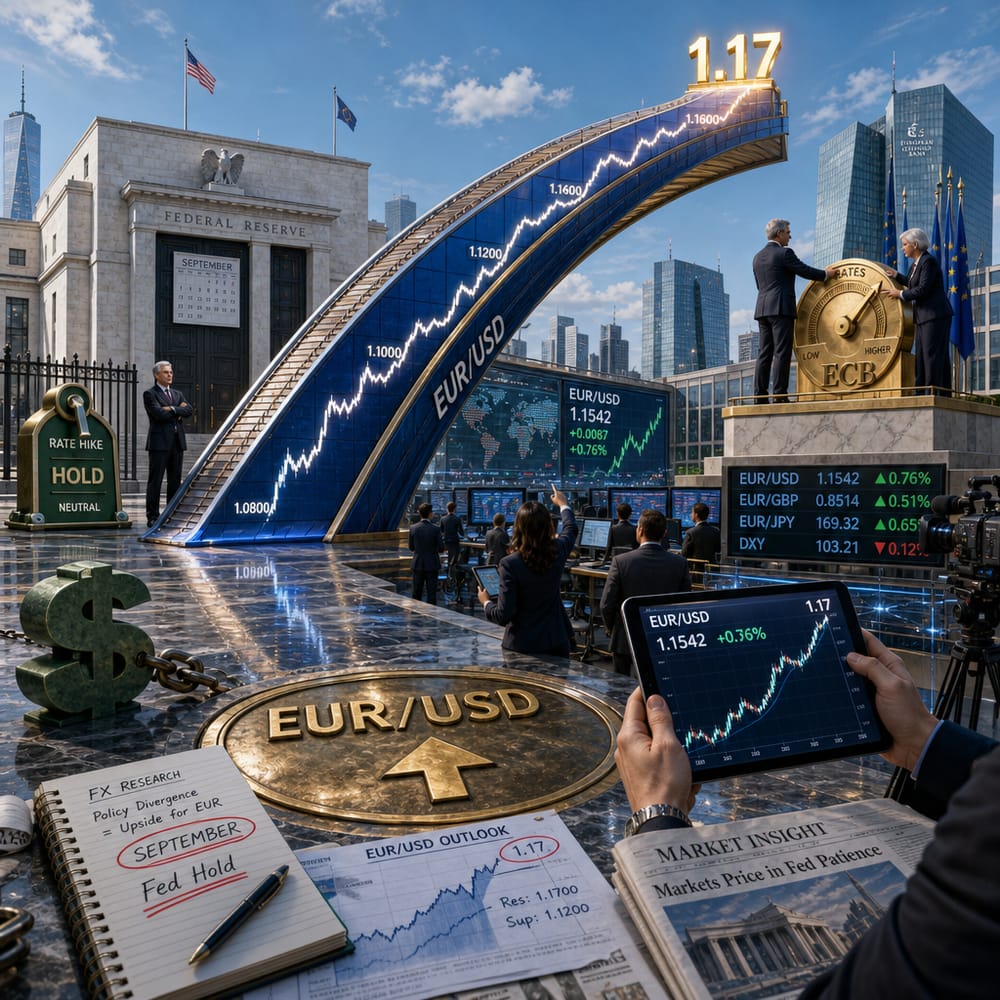
In the world of forex, the EUR/USD pair is like that irresistible ex who keeps sliding back into your DMs. Just when you think you’ve got them figured out, they’re back with a new trick. This time, the buzz is all about a potential rebound towards 1.17, if—and it's a big if—the Federal Reserve decides to sip its coffee and take a breather from rate hikes in September. But hold your horses, because the European Central Bank (ECB) might just be the party crasher here.
So, what’s the scoop on this potential rebound? Picture this: the Federal Reserve, aka the Fed, is sitting on its hands rather than raising interest rates, while the ECB might just decide to spice things up with a rate hike of its own. This divergence in monetary policy could light a fire under the euro, pushing it closer to the 1.17 mark against the U.S. dollar.
THE FED’S CHILL VIBE
Let’s talk Fed first. The central bank’s rate hikes have been the talk of the town, with the Fed raising interest rates to tackle inflation. But if they decide to hit pause in September, this could keep the U.S. dollar from flexing its muscles too much. Why? Lower interest rates in the U.S. make the dollar less attractive to investors who are chasing higher yields. It’s like going to a party and realizing the DJ has switched from pumping beats to elevator music—you’re suddenly looking for a livelier spot.
ECB’S ROCKSTAR MOVE
Meanwhile, over in Europe, the ECB could be cooking up a different strategy. If they decide to raise rates while the Fed kicks back, the euro could get a boost. Higher interest rates in Europe make the euro more appealing, kind of like offering free drinks at a club when the bar next door is charging double. Investors might start hopping over to the euro, driving up its value against the dollar.
WHY CENTRAL BANK RATES MATTER
Now, you might wonder why we’re all nose-deep in central bank tea leaves. Well, think of it like this: interest rates are like the puppet strings of the currency world. When a central bank raises rates, it usually means its economy is doing well, so its currency gets more attractive. It’s like when a new restaurant gets great Yelp reviews—everyone wants to try it out. Conversely, lower rates might mean the economy isn’t as hot, and the currency takes a backseat.
POTENTIAL HURDLES
But before you start dreaming of Euro Disney vacations getting cheaper, let's pump the brakes. This rebound is hanging by a thread of "ifs." The Fed has been a bit of a wildcard, with members alternating between hawkish, ready-to-hike tones, and dovish, keep-it-steady sentiments. And Europe? Well, they’ve got their own economic drama, balancing inflation with growth concerns. If the ECB decides not to hike, it’s like the bartender calling last call—it dampens the euro's prospects.
THE GLOBAL SCENE
Toss into this mix the ongoing geopolitical drama—Middle Eastern tensions, Ukraine’s strategic moves on Russia’s wartime economy, and global tech stock sell-offs—and it’s clear that forex markets aren’t just driven by central banks. These broader issues can shake investor confidence, which in turn, can send currencies swinging in unexpected directions.
IMPACTS ON YOU
So, why should you care about this potential EUR/USD move? If you’re a traveler, a shift in currency value could make your European escapades more affordable—or not. For businesses engaged in international trade, currency fluctuations can impact costs and pricing. And for investors, these moves might open up new opportunities or risks in currency trading.
THE BOTTOM LINE
In the high-stakes poker game of forex trading, keeping an eye on the major players—the Fed and the ECB—is crucial. If the Fed sits out the September hike and the ECB makes its move, we might just see the euro making a comeback dance towards 1.17. But, as always in the world of finance, stay tuned and keep your strategy flexible—because just like that unpredictable ex, the forex market loves to keep you guessing.
This article is for informational purposes only and is not investment advice. Always do your own research or consult a licensed financial professional before making investment decisions.
© Copyright 2024. All Rights Reserved.
© Copyright 2024. All Rights Reserved.