

ETF Inflows Surge, Setting Stage for Broad Market Support
Friday, September 25, 2026
ETF Inflows Surge, Setting Stage for Broad Market Support
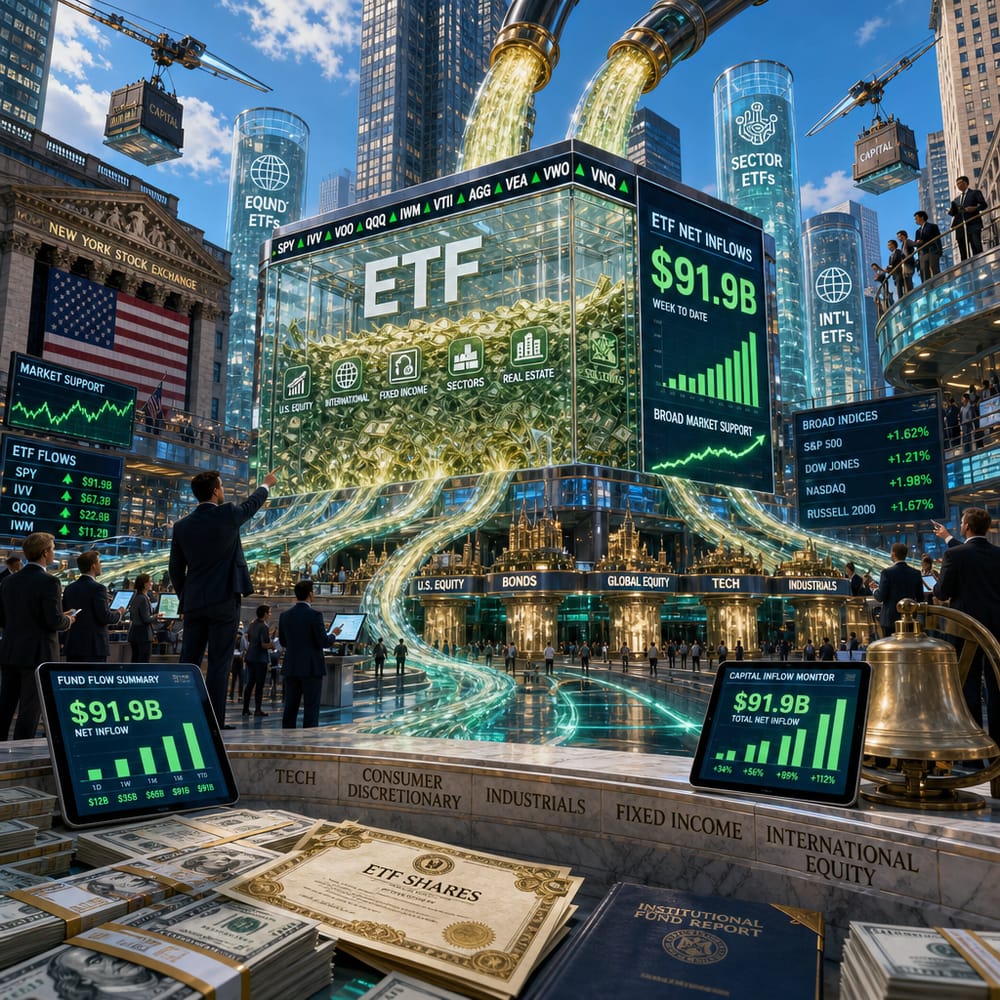
Picture this: the financial equivalent of a blockbuster movie, except instead of Bruce Willis saving the world, we've got a tidal wave of investor cash flooding into U.S.-listed ETFs, to the tune of $91.9 billion in net inflows just last week. You read that right — we're a mere whisper away from a record year. So what’s driving this cash tsunami, and more importantly, what does it mean for those of us not living in the Wall Street penthouse?
First things first, let’s break it down like your favorite DJ at a summer festival. ETFs, or exchange-traded funds for the uninitiated, are basically baskets of assets like stocks or bonds that trade on exchanges, just like a company's stock. They’re the financial equivalent of a sampler platter — a little bit of everything, without the commitment of a full entrée. And right now, that sampler platter is more popular than pumpkin spice in October.
U.S. equity ETFs are leading the charge, and it's not hard to see why. With the S&P 500 and Dow Jones Industrial Average rising like a hot air balloon, investors are betting big on American stocks. It's a vote of confidence in the U.S. economy, even as it navigates the choppy waters of high treasury yields and inflationary pressures. It's almost like investors are saying, "Hey, we still believe in the home team!"
But the surge isn't just about patriotism and apple pie. Dig a little deeper, and you'll find major inflows into tech and consumer discretionary sectors. Tech stocks, always the darlings of the market, are drawing investors like moths to a flame, buoyed by innovation and a relentless drive for the next shiny gadget. Meanwhile, consumer discretionary stocks — think retail and leisure — are banking on a spending spree as Americans look to splurge on non-essential goodies, perhaps buoyed by a little less doom and gloom in the economic forecast.
So, what does this cash avalanche mean for market volatility? When vast sums of money flow into ETFs, it can stabilize markets, like a financial cozy blanket. More money means more liquidity, which usually translates to less wild market swings. However, don't get too comfortable. If ETFs start to see massive outflows, it could trigger the opposite effect, making the markets as unpredictable as a reality TV show reunion.
And what about the retail investors, those of us not wading through Scrooge McDuck-style money vaults? There's a silver lining here. These massive inflows could hint at where the big institutional players see future growth, offering a sort of financial roadmap. If you’re a retail investor playing the long game, tracking ETF flow patterns can give you clues into sector rotations and where the smart money might be heading next.
But let's not forget, while ETFs provide a way to ride the coattails of market movers, they're not magic carpets that guarantee a smooth ride. Markets can be fickle, and today's hot sector could be tomorrow's cautionary tale. So while it's tempting to dive headfirst into the latest trend, remember the golden rule of investing: diversify, diversify, diversify. Or as grandma might say, don't put all your eggs in one basket — especially if that basket happens to be full of tech stocks.
In the grand tapestry of global finance, these ETF flows are akin to the opening notes of a symphony. The melody suggests confidence, growth, and a touch of optimism for the future. But just like any good composition, it's subject to change, influenced by global factors like U.S.-China trade negotiations and geopolitical tensions playing out in oil markets.
In short, while the inflows are promising, savvy investors should keep their eyes peeled and their ears tuned. The market may not be a perfect science, but with a little observation and a touch of intuition, retail investors can make informed choices — and maybe even catch a wave or two along the way.
So, grab your financial surfboard and stay sharp. The ETF tide is rising, and those who paddle out now might just catch the next big wave.
This article is for informational purposes only and is not investment advice. Always do your own research or consult a licensed financial professional before making investment decisions.
© Copyright 2024. All Rights Reserved.
© Copyright 2024. All Rights Reserved.