

ETF Inflows Break Record Amid Equity Demand Surge
Thursday, October 08, 2026
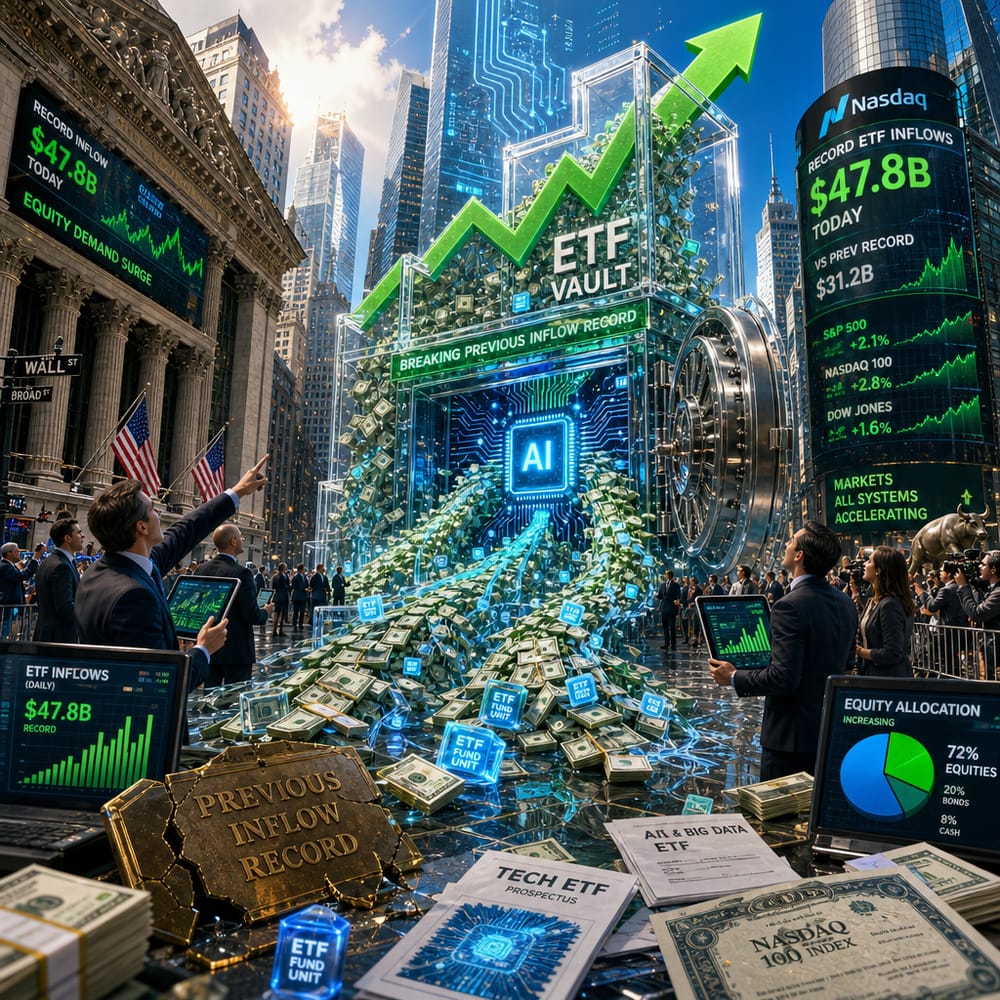
ETF INFLOWS BREAK RECORD AMID EQUITY DEMAND SURGE
Picture this: Wall Street is the world's grandest casino, and the hottest chips on the table are ETFs, or Exchange-Traded Funds if you want to be formal. This year, these bundles of stocks have broken their own records, and it’s all thanks to retail investors like you and me. The U.S.-listed ETFs have attracted more money than ever before, like a Kardashian at a sale on designer handbags. But what's fueling this shopping spree, and why should you care? Buckle up; we’re diving in.
First things first: Why are these ETFs so darn popular all of a sudden? Well, it's all about chasing the shiny things in the market. With stocks on a roller-coaster ride recently, retail investors are piling into equity ETFs, betting on sectors like technology to deliver big returns. The buzz around Artificial Intelligence (AI) is like catnip for investors, driving them to scoop up AI-heavy ETFs with the same fervor as tech fans grabbing the latest iPhone.
What’s more, these funds are attractive because they let you buy a basket of stocks without having to pick each one individually. Imagine trying to bake a cake by picking out the flour, sugar, and eggs one by one at the store. ETFs are the pre-mixed batter — all you need to add is your investment.
This ETF mania isn’t just about tech, though. Broad equity ETFs are seeing massive inflows too. It's like a party where everyone’s invited, but the tech stocks are the ones everyone wants to sit next to. Whether it's due to sector-specific optimism or just a plain old fear of missing out (FOMO), investors are betting big on funds that cover a wider range of industries as well.
But here's the kicker: While passive investing through ETFs is having its moment in the sun, don’t count out the old-school stock pickers just yet. Active strategies, where fund managers handpick stocks, are still holding their own. The battle between passive and active investing is like a heavyweight boxing match — and right now, ETFs are landing some serious punches. That said, active strategies offer the chance to outperform the market, but they come with the risk that your manager might have a bad day.
Now, what does this all mean for the markets at large? With ETFs taking in cash faster than a Vegas slot machine, major stock indexes are getting some extra oomph. More money pouring into these funds can lead to more volatility, as ETFs need to buy or sell their underlying stocks according to inflows and outflows. Think of it like a tide — as money comes in, it lifts all stocks higher. When it flows out, though, watch out for the quick dip.
The shift could also mean recalibration for index dynamics. As equity ETFs draw in more capital, it might tilt the scales from active stock picking toward a more automated, index-driven market landscape. For retail investors, this could mean more predictable trends in the broader market, but it’s also a reminder that relying on a single strategy can be as risky as betting all your chips on red.
But is it all too good to be true? Some say we’re seeing a bit of a gold rush mentality here. As the AI hype slows down — prompted by recent setbacks like OpenAI's revenue hiccup — tech-heavy ETFs that have been darlings of this influx might start losing their shine. It’s vital to remember that markets tend to overreact, both on the way up and the way down.
So, what should you do as an investor scrolling through this on your lunch break? Stay informed. Keep an eye on sector trends, and don’t be afraid to adjust your strategies. Remember, the goal is to grow your money, not just chase after the latest trend. ETFs might be the flavor of the month, but smart investing is always in style.
In the end, whether you're betting on ETFs or sticking with an active strategy, the key is to stay nimble and informed. As always, the market is full of sound and fury, with its ups and downs. Navigate it wisely, and you might just come out on top. Happy investing!
This article is for informational purposes only and is not investment advice. Always do your own research or consult a licensed financial professional before making investment decisions.
© Copyright 2024. All Rights Reserved.
© Copyright 2024. All Rights Reserved.