

ETF Flows Overshadow Weak Retail Momentum as Fear Persists
Tuesday, August 18, 2026
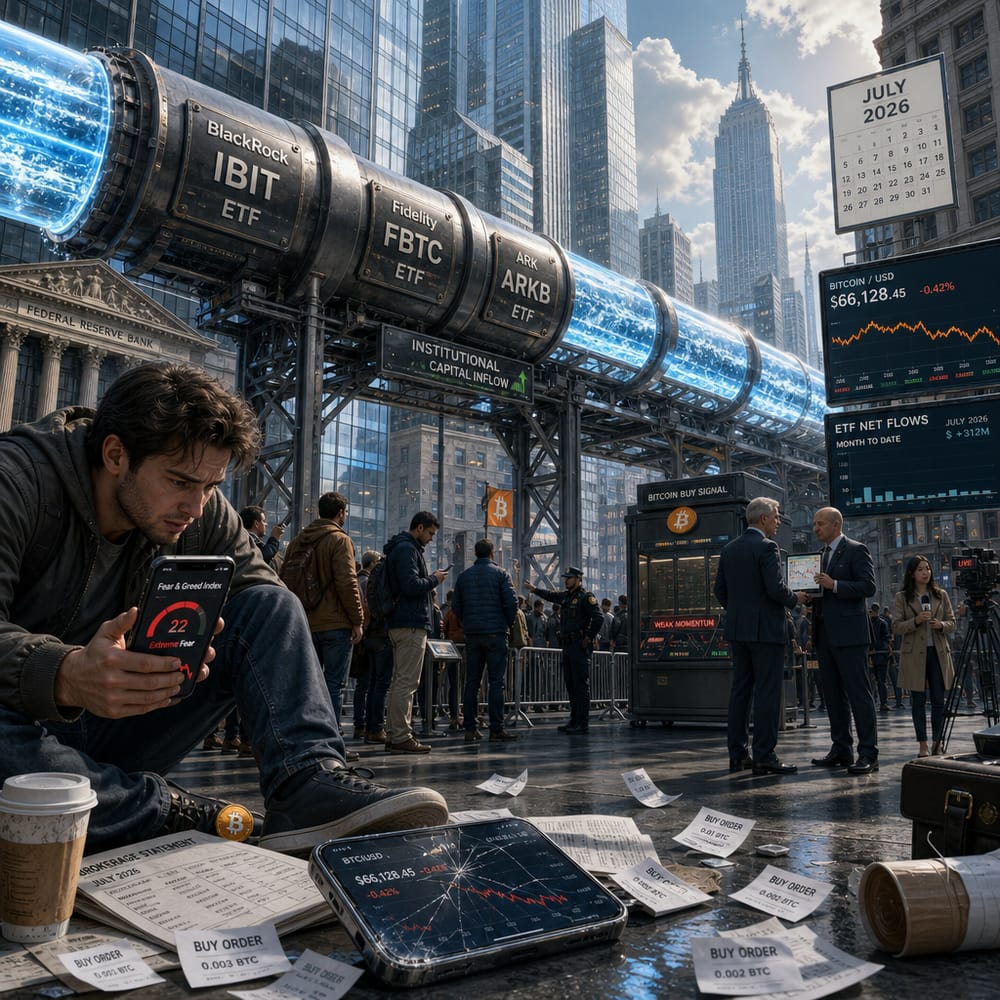
The world of investing is like a rollercoaster—there are ups, downs, and plenty of twists to keep you on the edge of your seat. Recently, the ride took an interesting turn: while institutional investors are throwing their weight behind Bitcoin ETFs like it’s the latest must-have gadget, retail investors are holding their wallets a little tighter. In July 2026, Bitcoin ETF flows hit a low point, and it seems like retail investors just aren't feeling the love. So, what gives?
INSTITUTIONAL INFLOWS VS RETAIL HESITATION
First, let’s talk about the big shots. Institutional investors—think pension funds, hedge funds, and other entities that manage a lot of money—have been pouring cash into Bitcoin ETFs. It’s like they’ve decided Bitcoin is the superstar of the crypto world, and they need to buy backstage passes before the concert sells out. This enthusiasm suggests that they’re betting on long-term gains, seeing Bitcoin as a hedge against inflation or other economic woes.
But here’s the kicker: retail investors are less convinced. July wasn’t just a summer lull; it was the weakest month for Bitcoin ETF inflows from retail traders this year. So why the cold feet? Well, for starters, there's a looming sense of uncertainty that’s got everyone a bit spooked—rising Treasury yields, global tensions, and fiscal deficits are like dark clouds hanging over the economy.
THE FEAR FACTOR
Retail investors aren't just sitting on the sidelines because they're in a doomsday mood. They’re cautious, maybe even a little freaked out. The Federal Reserve’s interest rate decisions, inflation, and a staggering national debt are enough to make anyone a bit jittery. Moreover, high Treasury yields—like the 30-year topping 5.33%, a peak not seen in almost two decades—act like a siren song, pulling savings away from riskier assets like Bitcoin into the warm, predictable embrace of bonds.
Plus, let’s face it, the rollercoaster of the crypto market can be nauseating. One minute Bitcoin is through the roof; the next, it's plummeting. Combine that volatility with a dose of inflation anxiety, and you can see why retail investors might be clutching their purse strings a little tighter.
THE INSTITUTIONAL IMPACT
Now, those institutional investors tossing money into the market should, theoretically, boost confidence. After all, if the money moguls are in, why shouldn’t everyone else be? However, the story isn’t so straightforward. Retail investors watch these moves with a skeptical eye, wondering if they’re just being led to a cliff. There's also the perception that institutional investors have resources and information that the average Joe doesn’t, creating a sense of imbalance.
The diverging paths of institutional and retail investors could shape market trends in intriguing ways. If institutions continue their love affair with Bitcoin ETFs, this might buoy prices despite retail hesitance. On the other hand, if retail sentiment doesn't pick up, it could signify a broader lack of faith in the market, which might dampen the bullish momentum.
POTENTIAL OUTCOMES: THE CRYSTAL BALL
So, where does this leave us? The gap between institutional and retail sentiment is more than just a fascinating tidbit; it could be a bellwether for the wider market. If retail investors decide to jump back in, buoyed perhaps by some favorable economic news or a shift in Fed policy, it could signal a new wave of enthusiasm. This would mean more money flowing into Bitcoin ETFs, potentially lifting prices.
Conversely, if the malaise continues, it might suggest that retail investors are playing a longer game, waiting for clearer signals before they commit. This could keep price fluctuations sharp and frequent, making it a market for the bold and the brave.
In the end, keeping an eye on these trends is like watching a drama unfold. Will the retail investors have a change of heart? Will institutional confidence waver? The answers could shape the future of not just Bitcoin, but the broader crypto market. So, buckle up and keep your eyes peeled; this ride is far from over.
This article is for informational purposes only and is not investment advice. Always do your own research or consult a licensed financial professional before making investment decisions.
© Copyright 2024. All Rights Reserved.
© Copyright 2024. All Rights Reserved.