

ETF Flow Surge Stutters: Heavy Drop-Off on Friday Highlights Fragility
Wednesday, August 26, 2026
CRYPTO ETFS: ALL THAT GLITTERS ISN’T BITCOIN
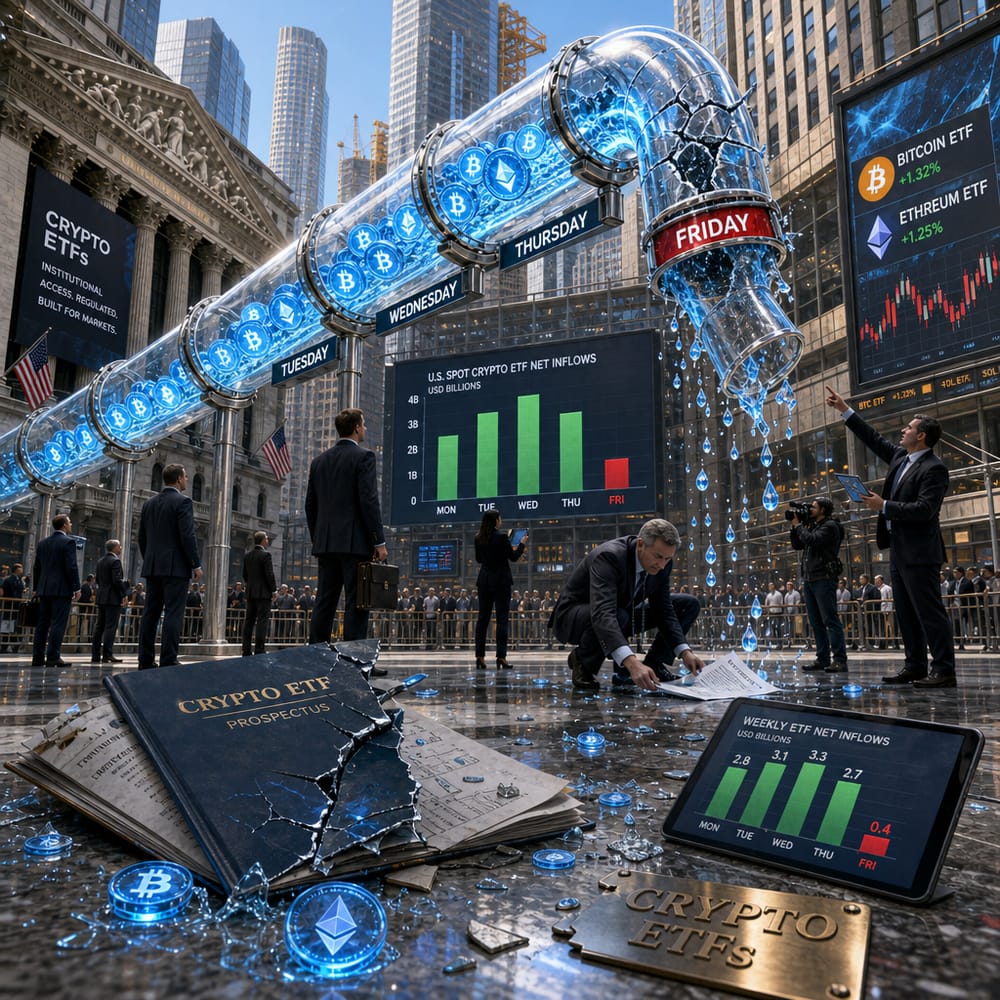
Crypto ETFs. Just a flash in the pan, or a sign of the times? This week kicked off with a tantalizing flurry of excitement among the crypto crowd—like a toddler spotting candy—thanks to hefty inflows into crypto-themed exchange-traded funds (ETFs). But it turns out this party was more short-lived than a TikTok trend, as Friday showed up with a sobering reality check.
On Monday, the crypto corners of Wall Street were buzzing. It was a week that started strong, with crypto ETFs pulling in cash faster than a Black Friday sale. Was everyone suddenly feeling confident? Did Satoshi Nakamoto give us a secret thumbs-up from his hidden bunker? Alas, it seems some folks got cold feet faster than you can say "blockchain."
By the time Friday rolled around, the influx of money had slowed to a trickle, making everyone wonder whether this was a case of early-week optimism deflating like a punctured balloon or a more ominous signal of market fragility.
So, what on earth happened? Well, there are a couple of possibilities. First, let's talk sentiment. Much like the fickle weather in New England, market sentiment can turn on a dime. Early in the week, investors seemed to be gobbling up crypto ETFs amidst whispers of institutional interest and potential regulatory green lights on the horizon. But come Friday, uncertainty reared its ugly head.
Part of this shift in sentiment might be linked to the release of key inflation data and other macroeconomic factors looming over the market. Rumors of potential interest rate hikes make investors twitchy, and few things make a crypto investor more nervous than the possibility of tighter monetary policy. It's akin to finding out your favorite rollercoaster ride just added an extra loop—exciting for some, nauseating for others.
Then there’s the looming specter of the 2026 midterm elections. Political uncertainty isn't exactly a friend to market stability, and with potential shifts in power threatening to turn policymaking into a circus, investors might be pulling back to see how this political theater unfolds.
If you're wondering why Friday’s ETF flow slowdown matters, think of it this way: The rapid rise and fall of inflows serve as a barometer for broader market sentiment. When everyone was diving headfirst into crypto ETFs at the week's start, it suggested a budding confidence or at least a robust appetite for risk. The sudden drop-off, however, hints at underlying jitters that may not be going away anytime soon.
For retail investors, it's a reminder to keep your seatbelt fastened. While crypto ETFs can be a gateway to the notoriously volatile world of digital currencies, they also act as a magnifying glass for market sentiment. Just as quickly as optimism can fuel a rally, fear and uncertainty can slam the brakes on momentum.
What’s the takeaway for anyone sitting at their kitchen table pondering whether to jump into crypto ETFs? Stay informed, stay nimble, and remember that in markets like this, it's not just about riding the waves but knowing when to grab your surfboard and when to steer clear of choppy waters.
If you're already invested, this might be a good time to reassess your risk tolerance and ensure your investment strategy aligns with your financial goals and stomach for volatility. For those on the sidelines, keeping an eye on how these flows ebb and flow could offer insight into when to make your move—or when to sit back with popcorn in hand.
In the end, while the prospect of doubling your money overnight is tempting, remember that in the world of crypto ETFs, what goes up can come down just as dramatically. And as we saw this week, sometimes the best strategy is to keep your cool and wait for the dust to settle before making your next big investment move. After all, in the wild west of crypto investing, being a thoughtful spectator can pay dividends just as much as being an active participant.
This article is for informational purposes only and is not investment advice. Always do your own research or consult a licensed financial professional before making investment decisions.
© Copyright 2024. All Rights Reserved.
© Copyright 2024. All Rights Reserved.