

ETF Flow Data Signals Continued ETF Volatility
Thursday, August 20, 2026
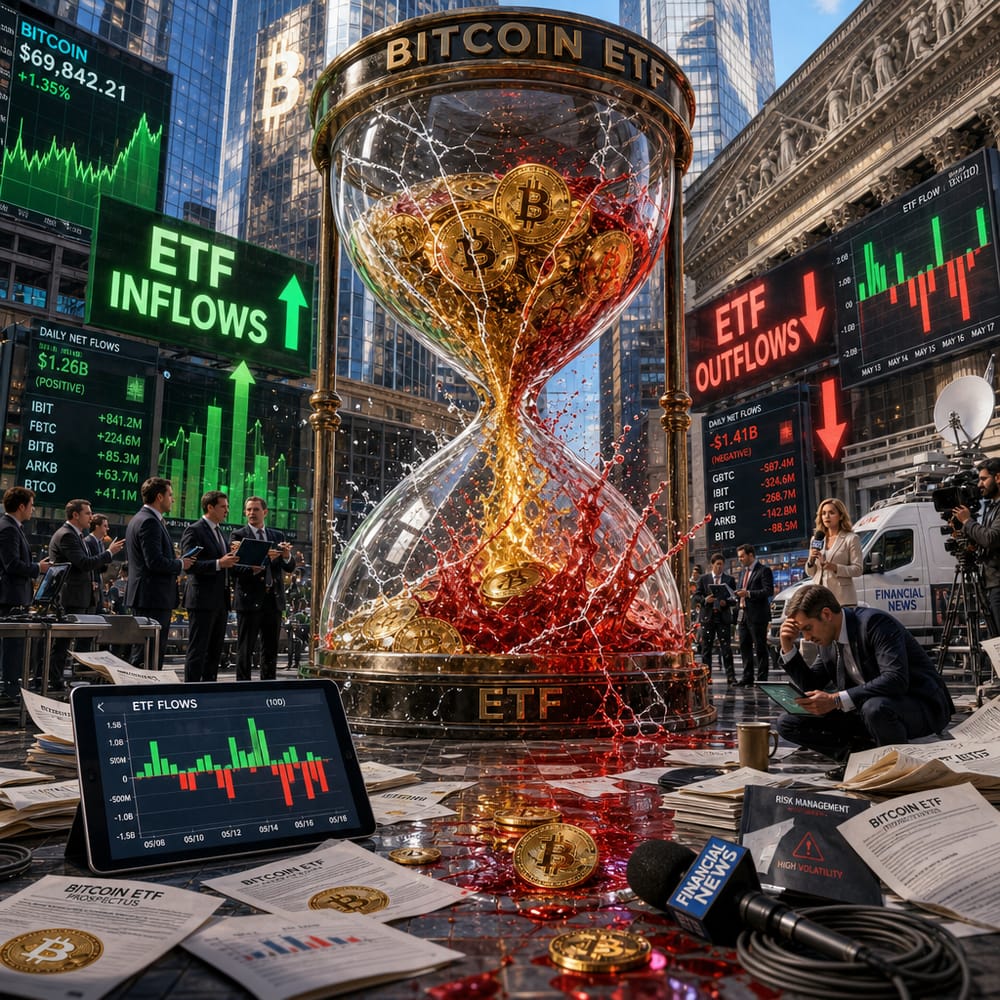
THE BITCOIN ETF ROLLER COASTER: BUCKLE UP FOR A WILD RIDE
If wild rides are your thing, forget Six Flags — just pull up a chair and watch the latest drama in Bitcoin ETFs. It's like watching a financial roller coaster that's been cranked up to full blast. One day, institutional investors can't get enough of Bitcoin ETFs, and the next, they're ditching them faster than a kid who's outgrown their training wheels. This volatility isn't just giving ETF managers whiplash; it's sending shockwaves through the entire crypto market.
Now, let's dive into the heart of the beast and unravel this chaotic wonder. What is driving this turbulence in Bitcoin ETFs, and what does it mean for the everyday retail investor?
BEHIND THE VOLATILITY CURTAIN
Bitcoin ETF flows are as fickle as a cat caught between two bowls of tuna. One minute, they're meowing for more, and the next, they're bolting out the door. The main culprits behind this seesaw? Market sentiment, regulatory chatter, and the good old-fashioned law of supply and demand.
First, there's market sentiment. Bitcoin's price can behave like a moody teenager, swinging from exuberance to despair. When prices are on a tear, everyone wants a piece of the action, leading to massive inflows into Bitcoin ETFs. But when the price goes into a nosedive, investors scramble for the exits, causing those heart-stopping outflows.
Adding another ingredient to this volatile stew is regulatory uncertainty. Every time a government agency so much as whispers about cracking down on crypto, you can bet the market starts jittering like it's had one too many espressos. President Trump's recent musings about regulating decentralized exchanges echo like a thunderstorm over the ETF landscape, leaving investors on edge.
IMPACT ON RETAIL INVESTORS
So what does all this ETF turmoil mean if you're just a regular Joe or Jane scrolling through your phone, hoping to make a savvy investment? Here's the scoop: volatility can be both a blessing and a curse.
On the upside, volatile markets can offer tantalizing opportunities for those with the stomach for risk. If you time it right, buying when others are selling (or vice versa) can yield handsome rewards. But beware — this is not for the faint-hearted. With great volatility comes great risk. The crypto market’s unpredictable nature means prices can turn on a dime, sometimes faster than you can say "blockchain."
The big question is whether you can weather the storm. Retail investors need to proceed with caution, keeping their investment goals and risk tolerance in mind. If you can't sleep at night worrying about your Bitcoin ETF losing value faster than a sandcastle at high tide, it might be time to rethink your strategy.
A REFLECTION OF BROADER SENTIMENT
The volatility in Bitcoin ETF flows isn't just a sideshow. It's a reflection of broader market sentiment and a barometer of how investors feel about crypto as a whole. The crypto market is like a vast ocean, with Bitcoin serving as the mighty current pulling everything along. When Bitcoin ETFs experience turbulence, it's often because investors are reacting to shifts in the wider financial seascape.
So, what’s the secret sauce to navigating these choppy waters? Diversification and staying informed. Don't bet the farm on a single asset, and make sure you're up to speed with the latest market news and trends.
THE BOTTOM LINE
As Bitcoin ETFs continue to swing wildly from one extreme to the other, retail investors face both challenges and opportunities. The key is to stay cool under pressure, assess the risks, and make informed decisions. After all, investing in Bitcoin ETFs is not unlike riding a roller coaster — thrilling if you're prepared for the ups and downs, but stomach-churning if you're caught off guard.
So, before you dive headfirst into the Bitcoin ETF world, remember: hold onto your hats, keep your eyes open, and enjoy the ride.
This article is for informational purposes only and is not investment advice. Always do your own research or consult a licensed financial professional before making investment decisions.
© Copyright 2024. All Rights Reserved.
© Copyright 2024. All Rights Reserved.