

ETF-Driven Volatility and Arbitrage in Leveraged ETF Closings
Sunday, August 16, 2026
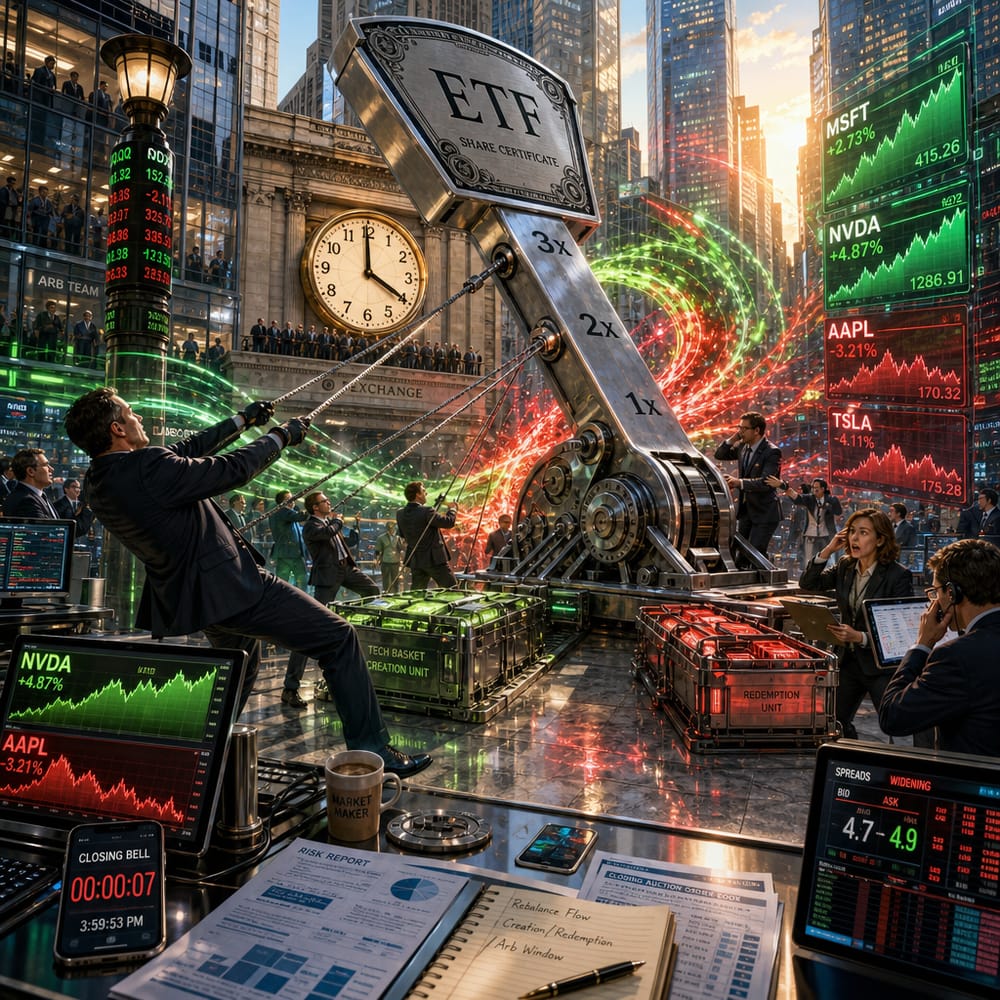
LEVERAGED ETFS: WHEN VOLATILITY GETS A HIGH-OCTANE BOOST
Ever tried to balance on a seesaw during an earthquake? Welcome to the world of leveraged ETFs, where seasoned arbitrageurs are turning market close into a high-stakes game of volatility. Just when you thought intraday trading in the tech sector couldn't get any wilder, a recent study reveals how these leveraged exchang-traded funds (LETFS) crank up the financial rollercoaster, leaving retail investors clinging on for dear life.
First things first, what exactly is a leveraged ETF? Picture a regular ETF—a basket of securities that trades on an exchange—on steroids. These powerhouse funds aim to amplify the returns of the index they track, often seeking to deliver two or even three times the daily return. Sounds like a dream, right? Buckle up. When markets get jittery, LETFs become a double-edged sword, magnifying not just gains but also losses. And right at the center of this storm are the arbitrageurs—those savvy traders who live to exploit price discrepancies for profit.
The magic—or madness—happens during the market's closing moments. As the trading day winds down, leveraged ETFs need to rebalance to maintain their target leverage ratio. This involves buying or selling securities based on the day's performance. If the market has swung wildly, these funds must make substantial trades in the final minutes, which can send shockwaves through already turbulent waters. In fast-moving sectors like tech, this rebalancing act can turn the dial up to 11 on volatility, making the close of trading look like the finale of a fireworks show—brilliant, explosive, and over before you've caught your breath.
So, how do these rebalancing mechanics translate into market chaos? Think of it as a domino effect. As LETFs adjust their holdings, they inadvertently move the prices of the underlying securities. This movement creates a ripple effect, drawing in high-frequency traders and other opportunistic players who smell blood in the water. It's an arbitrage play where the cost of dinner is high-speed algorithms and nerves of steel.
Now, if you're a retail investor watching this spectacle unfold, you might wonder how to navigate this landscape without needing a therapist by the end of the day. Fear not—understanding the dynamics can help you time your trades better, sidestep pitfalls, and maybe even ride the volatility wave to your advantage.
First, consider the clock. Knowing that LETFs rebalance near market close, savvy investors might choose to execute trades earlier in the day to avoid getting swept up in the frenzy. Alternatively, if you're feeling bold, you could use this knowledge to anticipate volatility spikes and plan your entry or exit points accordingly. But remember, this is not for the faint-hearted. Timing the market is a notoriously tricky business, akin to trying to predict the next plot twist in a soap opera.
Another strategy is to diversify your portfolio. While LETFs can be alluring with their promise of outsized returns, they shouldn't be the cornerstone of your investment strategy. Instead, consider them as a spicy side dish—a way to add some zest to your portfolio, provided you can stomach the heat.
For those with a keen eye on minimizing risk, non-leveraged ETFs or individual stocks could serve as a safer alternative. You might miss out on the adrenaline-pumping highs, but you'll also dodge the jaw-dropping lows.
In conclusion, leveraged ETFs are an enticing yet dangerous beast in the world of finance. They represent an opportunity for outsized gains but also require a level of risk tolerance that might not be suitable for everyone. By understanding the mechanics of LETF rebalancing and the ensuing volatility, investors can make more informed decisions that align with their risk appetite and investment goals.
So, next time you're tempted by the siren call of leveraged ETFs, remember the seesaw analogy. It's thrilling, yes, but hold on tight and be prepared for the ride of your life. And if all else fails, remember—there's no shame in sticking to the kiddie rides.
This article is for informational purposes only and is not investment advice. Always do your own research or consult a licensed financial professional before making investment decisions.
© Copyright 2024. All Rights Reserved.
© Copyright 2024. All Rights Reserved.