

ETF-Driven Bounce: Bitcoin Briefly Reclaims $65K on Multi-Day Inflows
Wednesday, August 12, 2026
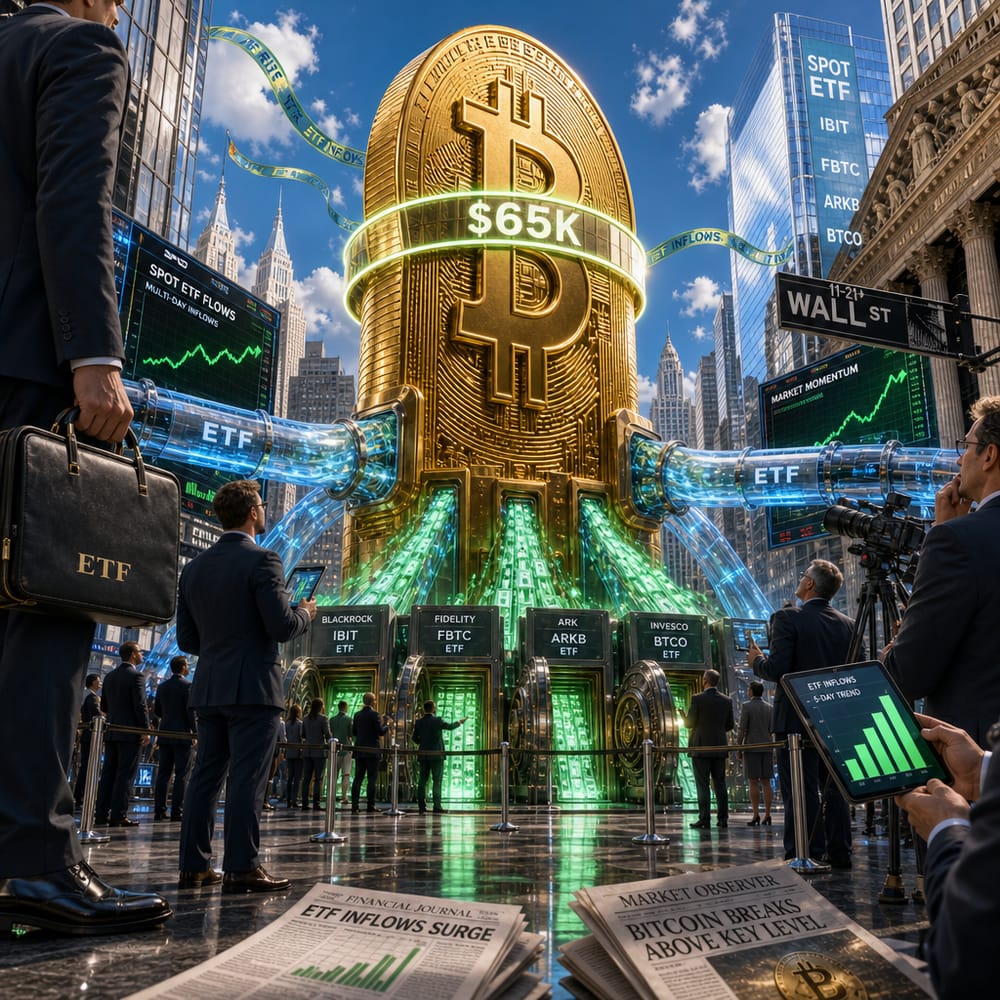
ETF-Driven Bounce: Bitcoin Briefly Reclaims $65K on Multi-Day Inflows
There's nothing like a little ETF action to give Bitcoin a caffeine kick. This time, the buzz came from a series of spot ETF inflows that temporarily pushed Bitcoin's price past the $65,000 mark. Now, before you start dreaming about Lambos and moon parties, let's pump the brakes a bit and look at what really went down.
Bitcoin's recent surge wasn't just a random spike in the crypto rollercoaster. It was turbocharged by a streak of spot ETF (Exchange-Traded Fund) inflows. For the uninitiated, think of ETFs as mutual funds you can trade on stock exchanges. They bundle together a bunch of securities, in this case, Bitcoin, and are traded throughout the day, just like stocks. These aren’t just any ETFs; these are spot ETFs, directly buying and holding the underlying asset—in this case, Bitcoin. They’re like the crypto equivalent of a sports car on a racetrack, and they have a serious grip on Bitcoin's price movements.
So what’s the big deal about these ETF inflows? Well, in the world of Bitcoin, where wild price swings are as common as cat videos on the internet, even the whisper of institutional money can cause ripples—or in this case, a tidal wave. When these big-money players start pouring money into spot ETFs, it's like lighting a fire under Bitcoin's proverbial seat.
But how long can this ETF-fueled rally really last? That’s the million-dollar question. The crypto market is no stranger to volatility, and ETF-driven surges are often more like a sugar high than a lasting meal. Sure, these inflows signal strong institutional interest, which is a good sign for long-term adoption. However, Bitcoin's price is akin to a teenager's mood—what goes up quickly can just as quickly come crashing down.
Here's the kicker: While ETF inflows can boost Bitcoin's price, they don't necessarily provide a long-term foundation for stability. The crypto market is still largely driven by hype, speculation, and, let's face it, a bit of drama. While the ETF inflows brought a temporary high, Bitcoin's price is still susceptible to the latest tweets, regulatory news, or unexpected market shifts. Remember when Elon Musk's tweets sent Bitcoin soaring one day and tumbling the next? The market's still playing a similar tune.
Moreover, with the broader economy juggling inflation concerns, fluctuating interest rates, and geopolitical tensions, cryptocurrency is not immune to these wider economic forces. Everything affects everything—from lettuce prices dipping due to a cyclospora outbreak to Saudi Arabia rerouting oil exports, global markets are interconnected, and Bitcoin is no exception. It’s crucial to understand that Bitcoin doesn't exist in a vacuum; it dances to the broader market's rhythm.
What does this mean for the average retail investor just trying to catch a break in the crypto world? Be savvy, stay informed, and always be ready for the market's next plot twist. While ETFs can lend a sense of legitimacy to Bitcoin, they also add layers of complexity and influence from institutional players. This can be both a good and a bad thing depending on your investment strategy and risk tolerance.
The surge past $65,000 may be thrilling, but it’s not a free pass to the moon. It’s a reminder of just how quickly things can change in the crypto universe. So whether you're hodling for dear life or just dabbling on the side, keep your eyes open and your strategies flexible. Bitcoin's journey is a marathon, not a sprint, and while ETFs have given it a powerful boost, it's the underlying technology, market adoption, and regulatory environments that will ultimately dictate whether Bitcoin's future is truly as golden as its price might suggest.
So, to all the Bitcoin fans out there, enjoy the ride, keep your wits about you, and remember: in the world of crypto, fortune favors the well-prepared, not just the bold.
This article is for informational purposes only and is not investment advice. Always do your own research or consult a licensed financial professional before making investment decisions.
© Copyright 2024. All Rights Reserved.
© Copyright 2024. All Rights Reserved.