

ESG Sector ETFs Heating Up – “Cloud Computing” & “AI” Leading the Pack
Tuesday, August 18, 2026
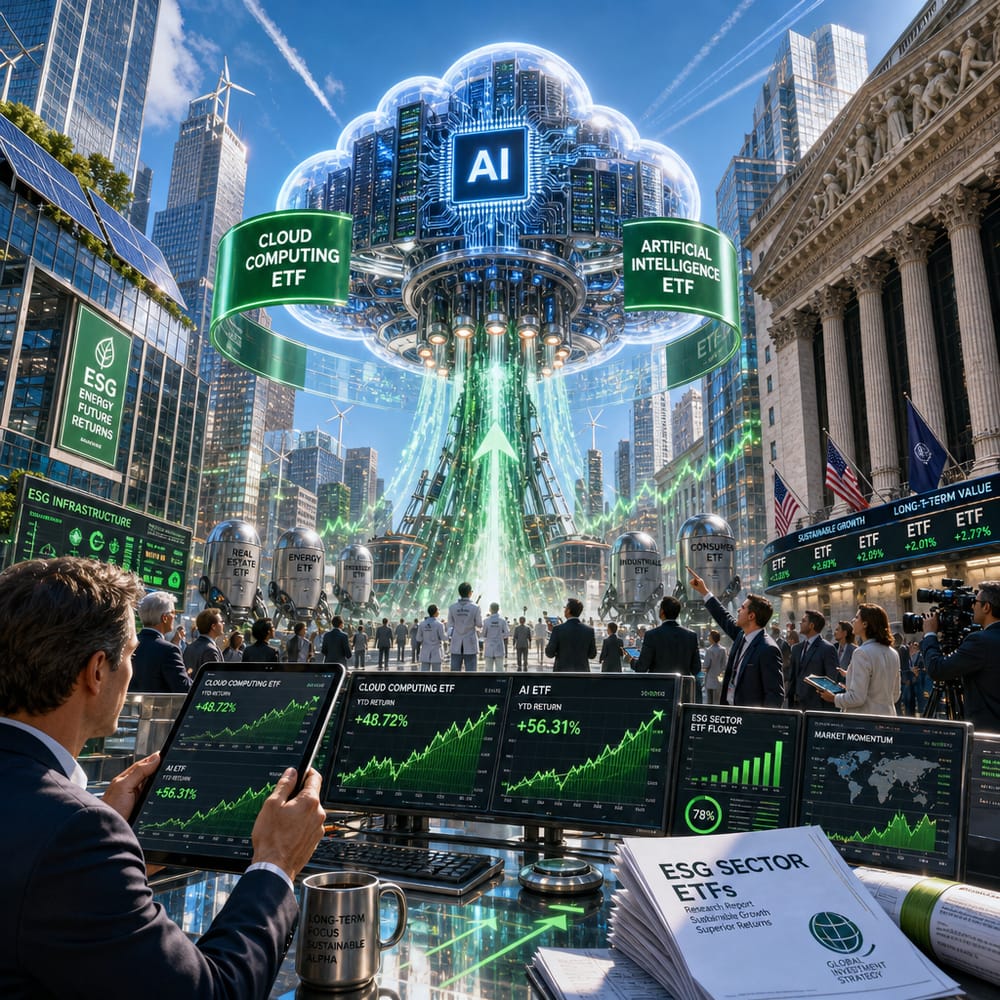
ESG SECTOR ETFs HEATING UP – "CLOUD COMPUTING" & "AI" LEADING THE PACK
In the world of investments, where fortunes are made and lost in the click of a mouse, Cloud Computing and Artificial Intelligence (AI) ETFs have been dressing up like rockstars and setting the stage on fire this year. The tech titans are at it again, and these ETFs have been leading the charge with dazzling, double-digit returns. But before you start thinking about jumping on the bandwagon, let’s dive into whether these tech darlings are a goldmine or a bubble poised to pop.
You see, Cloud and AI ETFs have had a swagger about them lately — think of them as the Mick Jagger and Keith Richards of the ETF world. They’re captivating, wildly popular, and have been on quite a run. But like any rockstar story, there’s always a dark side. Are they living in the fast lane, or are they really poised for long-term success? Understanding what’s under the hood is critical for investors looking to cash in without getting burned.
First, let’s talk performance. Why are Cloud and AI ETFs dancing like Fred Astaire on a caffeine high? Well, with businesses undergoing a digital renaissance post-pandemic, demand for cloud solutions and AI technologies has skyrocketed. Companies are more eager than ever to migrate to the digital cloud, automate processes, and utilize AI to drive innovation. Investors have taken note, driving these ETFs to impressive gains. Yet, as any good detective knows, there's always more to the story.
With great performance comes the inevitable question: Are we overpaying for this tech spectacle? Some market experts are whispering about valuations that are starting to resemble a bloated Bruce Lee movie budget. Overvaluation is a real concern when stocks are priced for perfection — and in the world of AI, perfection might mean futuristic earnings that haven’t materialized just yet. So, are these ETFs priced on hope rather than hard data? The jury is still out.
Next, let's consider the risk of mega-cap exposure. Big names like Microsoft, Amazon, and Alphabet tend to dominate both Cloud and AI ETFs — think of them as the headliners while smaller companies play backup. While these giants are sturdy, they are not immune to market whims. A downturn in any of these heavy hitters could send ripples through the ETFs, shaking investor confidence like a faulty speaker at a rock concert.
Now, how do these ETFs stack up against their tech peers, you ask? In comparison to other tech sectors, Cloud and AI have been the darlings of the investor ball, outshining even the semiconductor kings, who’ve seen a rough patch recently. But, tech is notoriously fickle, and what’s hot this season can cool faster than an autumn breeze in New England.
The big question is about rotation. Could other tech sectors steal the spotlight? Historically, sector rotation is a common phenomenon, and investors always hunt for the next big thing. Today’s Cloud and AI stars might be tomorrow’s has-beens if newer technologies or undervalued sectors start to gain traction.
Valuation concerns notwithstanding, the key drivers are solid. The digital transformation trend is here to stay as businesses navigate an era where technology underpins nearly every facet of operation. Additionally, despite whispers of a tech bubble, the substantial corporate investments in AI and cloud infrastructure indicate a belief in the longevity of these technologies.
In conclusion, while Cloud and AI ETFs have been the life of the investment party, investors should approach with caution lest they get caught in a bubble. Diversification remains the name of the game, lest you find yourself caught without a ticket when the music stops.
Remember, investing is as much about managing risk as it is about chasing returns. Keep your eyes peeled and your portfolio diversified, and you might just dance your way to the bank.
This article is for informational purposes only and is not investment advice. Always do your own research or consult a licensed financial professional before making investment decisions.
© Copyright 2024. All Rights Reserved.
© Copyright 2024. All Rights Reserved.