

Equity Stress Test: Long-Term Treasury Yields Surge to 19-Year Highs and Test Market Resilience
Tuesday, August 18, 2026
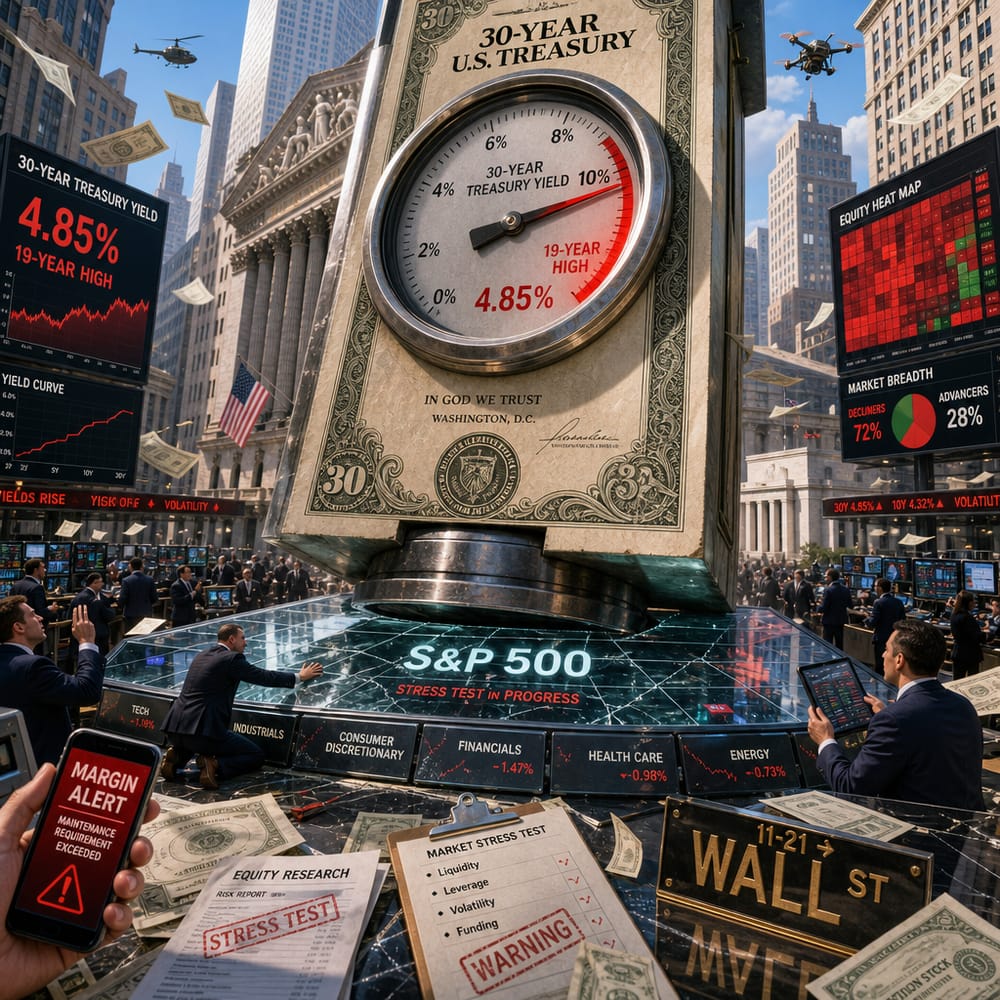
Forget the roller coaster; Wall Street's latest thrill ride is happening in bond markets. With long-term Treasury yields scaling heights unseen since flip phones were still cool, it might be time to ask: What does this mean for your portfolio, and are there any seat belts on this thing?
If “Treasury yields” sound as exciting as reading the fine print on a cereal box, think again. The yield on the 30-year Treasury bond recently vaulted to 5.33%, the highest since 2002. What does this mean for you, the average investor? Well, when these yields climb, borrowing costs across the economy tend to rise like dough in a warm kitchen, affecting everything from corporate loans to mortgages. It’s a financial ripple effect with the power to shake equity markets like a Polaroid picture.
WHY TREASURY YIELDS MATTER
The basic principle here is a bit like dating advice from an over-eager friend: When yields go up, bond prices go down. But here’s the kicker: Higher bond yields can make stocks less attractive because bonds are perceived as safer. Why risk your hard-earned cash on a stock market bungee jump when you can snag a reliable return from bonds?
This all relates to the “risk-free rate” — a term finance folks love. It’s essentially the return you'd expect from an investment with zero chance of default. Picture it as the Goldilocks of investments, not too risky, not too bland. As Treasury yields soar, this risk-free rate goes up, demanding higher returns from riskier investments like stocks. If companies can’t outperform these rising benchmarks, their stock valuations tend to take a hit, as investors move their money to what seems like safer harbors.
IMPACT ON THE MARKET
So, what happens when the cost of borrowing starts to climb? Corporations feeling the pinch might scale back on spending. Expansion plans go on the back burner, stalling growth, and potentially trimming profits. Take Home Depot, navigating a “frozen housing market.” Mortgage rates that rise in tandem with Treasury yields aren’t doing them any favors. High borrowing costs mean consumers are hesitant to take on those big renovation projects, and that impacts Home Depot’s bottom line.
And let’s not forget our tech darlings. Companies like Nvidia, despite their AI ambitions and deep pockets, could find the cost of capital rising, making it more expensive to fund future tech escapades.
PLAYING THE STRATEGIC GAME
So, what's an investor to do? First, it might be time to rethink the investment playbook. Diversification isn’t just a buzzword your financial advisor throws around — it’s your parachute, your safety net, your... OK, you get it. Consider balancing your portfolio with a mix of asset classes, such as bonds, stocks, and maybe a glimmer of gold or real estate.
However, higher Treasury yields aren’t all doom and gloom. For bond aficionados, it’s shopping time. Higher yields can offer a chance to lock in attractive returns on new bond investments. Say hello to those juicy Certificates of Deposit (CDs), which are now offering attractive rates, as banks try to match the rising tide of Treasury yields.
For equity investors, focusing on dividend-paying stocks might be a smart move. Companies with a solid history of paying dividends can cushion the ride with regular income, even if stock prices dip.
Another strategy worth considering? Look to sectors less sensitive to interest rates. Utilities and consumer staples, those everyday essentials, tend to hold their ground better when borrowing costs rise.
THE LONG VIEW
Lastly, keep an eye on inflation. Rising yields often signal concerns about inflation, which erodes purchasing power. Inflation-resistant assets like Treasury Inflation-Protected Securities (TIPS) could be worth a look.
Remember, markets, like life, are a journey, not a destination. Rising Treasury yields might twist the road ahead, but savvy investors know how to navigate the curves. With the right strategies, you can keep your portfolio on track, no matter how wild the ride. So buckle up, stay informed, and enjoy the view — who knows what the next bend will bring?
This article is for informational purposes only and is not investment advice. Always do your own research or consult a licensed financial professional before making investment decisions.
© Copyright 2024. All Rights Reserved.
© Copyright 2024. All Rights Reserved.