

Equity ETFs Attracting Heavy Investment—$27.8B Inflows Reflect Dip Buying
Sunday, August 23, 2026
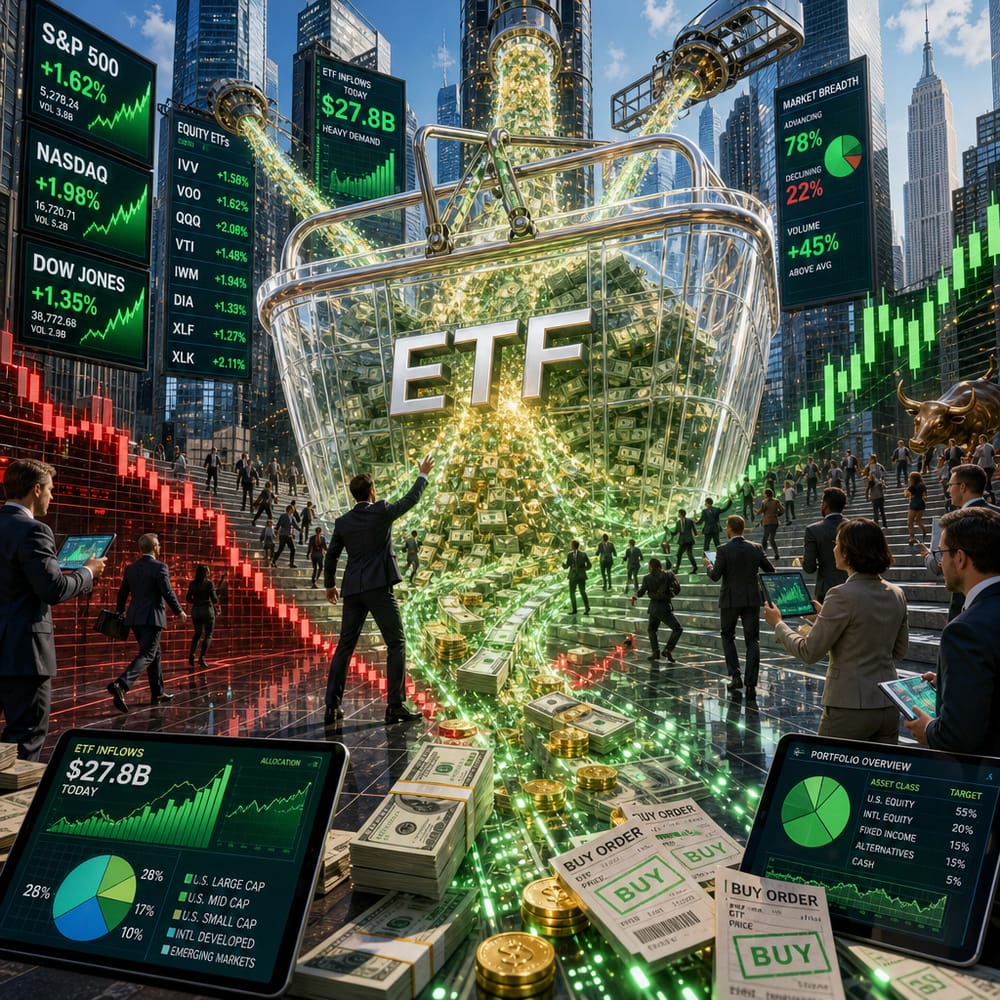
WHEN MONEY TALKS: $27.8 BILLION SAYS U.S. EQUITY ETFS ARE THE HOT COMMODITY
Grab a shovel and start digging, because U.S. retail investors are going on a treasure hunt. Their target? Equity ETFs. In a spectacular show of confidence—or maybe just a collective case of FOMO—these savvy (or optimistic, depending on your angle) buyers shoveled a whopping $27.8 billion into U.S. equity ETFs recently. That's a lot of cash, my friend, and it's sending major ripples through the investment waters.
So why the big bucks, and what does it all mean? Well, if you’re imagining hordes of investors charging into the market like kids at a candy store, you wouldn’t be too far off. But before we dive into the sugar rush, let’s look at the sweet spots: Which ETF categories are getting the most love?
WHERE’S THE MONEY GOING?
It turns out, investors aren’t just throwing darts at a board. They’re targeting broad-market index ETFs—think the S&P 500 or the Russell 2000. These are the reliable old standbys of the investment world, the blue jeans and t-shirts of your financial wardrobe. Why the preference? Broad-market ETFs spread risk like butter on toast, letting you nibble on a bit of everything instead of betting the farm on one single stock.
But it's not just the big names getting play. Investors are also eyeing sector-specific ETFs with laser-like focus. Tech and finance are seeing their share of the bounty as well. After all, who doesn’t love a good tech stock, especially when it promises to make our gadgets faster or our apps smarter? Meanwhile, financial ETFs are enjoying a little revival. Could it be the allure of rising interest rates? Perhaps. But it’s likely more about investors hedging their bets across diversified portfolios.
SURGE IN INFLOWS: WHAT’S THE SENTIMENT?
Now, what does this cacophony of cash tell us about market sentiment? Simply put, optimism is in the air. Despite the turbulent economic backdrops—hello, $40 trillion national debt and a looming debt crisis—investors seem to have packed away their fears, opting instead to load up on equities. This is the "buying the dip" mentality at its finest. Investors are sniffing out opportunities where others see risk. It’s the Wall Street equivalent of buying umbrellas on a sunny day because you just know rain is around the corner.
But hold on! Don’t let this flood of optimism fool you into thinking the markets are immune from reality. While investors are diving into ETFs, it's important to note that this could lead to some valuation pressures. There’s only so much air a balloon can take before it pops, right?
VALUATION AND ROTATIONAL TRADES
With so much money rushing in, prices can start to feel the heat. When ETFs rally, individual stocks within those funds can also see their valuations inflate. Picture it like a snowball: the bigger it gets, the more momentum it collects, but also the more potential for a messy crash unless it stabilizes.
This is where rotational trades come into the picture. Investors may start to move their funds around within the ETF universe, chasing the next big thing or cooling off overheated sectors. It's like musical chairs, except with less sitting and more strategizing.
WHAT’S THE PLAY?
So, what should the everyday retail investor do in the face of such a market whirlwind? First off, breathe. Remember, trends are like fashion—they change. Today’s hot ETF might be tomorrow’s lukewarm cup of coffee. Stay focused on your long-term goals, not just the market's latest craze. Diversification is key, and while ETFs provide a built-in spread of risk, it’s always wise to maintain a balanced portfolio.
In essence, while the $27.8 billion influx into equity ETFs is a clear sign of bullish sentiment, it's critical to remain level-headed. Enjoy the ride, but don't forget to check your seatbelt. After all, when it comes to investing, riding waves is fine—just make sure you don’t wipe out.
This article is for informational purposes only and is not investment advice. Always do your own research or consult a licensed financial professional before making investment decisions.
© Copyright 2024. All Rights Reserved.
© Copyright 2024. All Rights Reserved.