

Equities Rally on Slower Hiring: Nasdaq, Dow, S&P, Russell Move Higher
Saturday, October 03, 2026
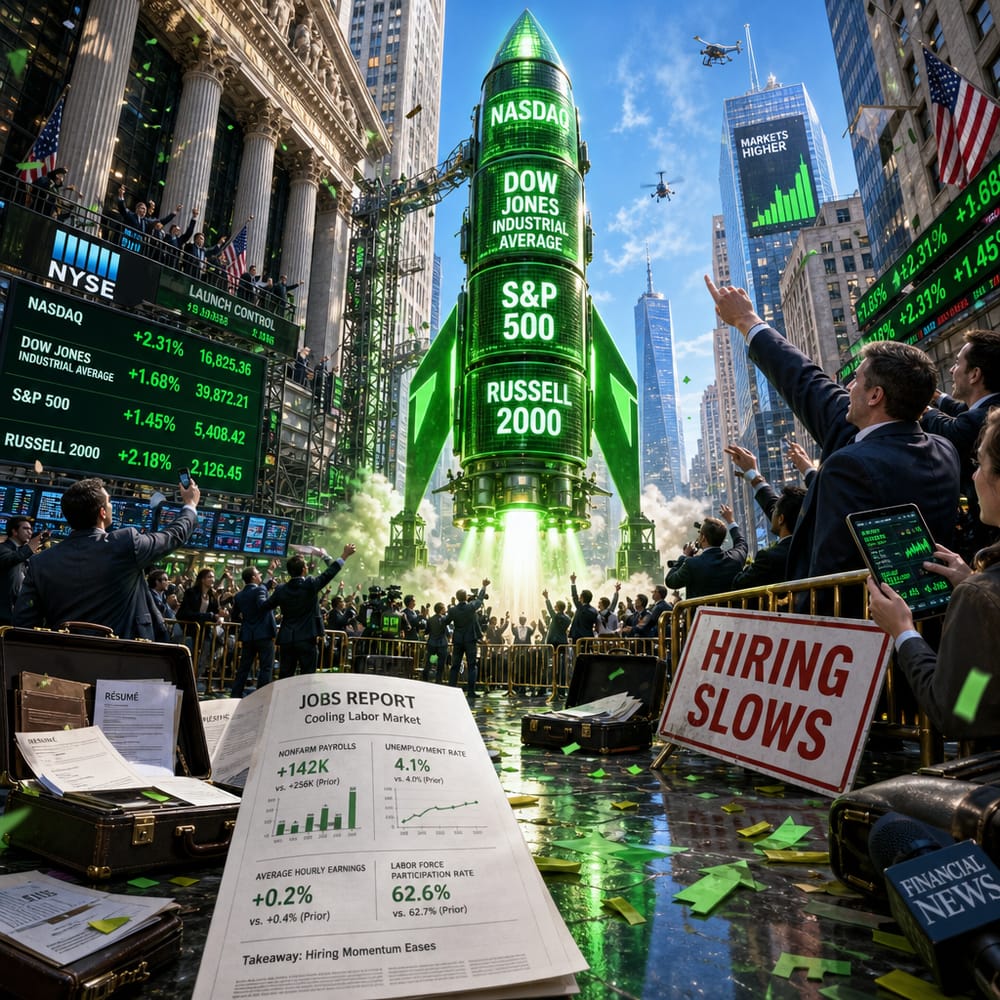
STOCKS JUMP ON SLOWER HIRING: BIG RELIEF FOR INVESTORS
Move over Hollywood drama and political déjà vu—Wall Street just stole the show with a twist more unexpected than a season finale cliffhanger. The markets are partying like it's 1999, not because of some tech boom, but thanks to a good ol' fashioned slowdown in hiring. Yes, you heard it right! In an economy that seems to be blurring the lines between a soap opera and a reality show, it was the latest jobs report that had the Nasdaq, the Dow, the S&P 500, and even the Russell 2000 all dolled up and moving higher.
Now, let's rewind for a second. Labor market data just dropped, and it was softer than a marshmallow in the microwave. The U.S. economy added a mere 29,000 jobs last month, and the unemployment rate exhaled a little, ticking up to 4.2%. Normally, this would be cause for some economic nail-biting, but retail investors couldn’t have been more relieved if they found a $20 bill in an old pair of jeans.
Why the breakdance on Wall Street? It's all about the Federal Reserve, the omnipresent puppeteer pulling at rate strings. A slowing jobs market is like a siren song to the Fed, signaling that it might just ease off on the aggressive interest rate hikes that have been squeezing wallets tighter than a pair of skinny jeans. Less hiring means less wage inflation, which means the Fed can chill on turning the rate screws—a concept that investors are more in love with than pumpkin spice lattes in October.
So, what's the lowdown on how different sectors are boogieing to this news? Tech stocks, always the bellwether of rate sensitivity, had a moment in the spotlight. The Nasdaq Composite, home to tech giants like Apple and Microsoft, saw investors flocking back like moths to a flame. Technology companies live and die by borrowing costs, so a potential for rates to stabilize is music to their ears—and their balance sheets.
Over on the Dow Jones Industrial Average, a mix of blue-chip stocks also found their groove. The index climbed as investors began to feel more optimistic about the economic horizon, betting that consumer spending might stay resilient even if job growth takes a bit of a coffee break. Consumer staples and healthcare stocks, typically seen as safe havens, also rode the wave as cautious optimism spread.
Meanwhile, the S&P 500, reflecting the market’s broader mood, captured gains across the board, spreading the love to sectors like financials and real estate. Companies in these sectors are particularly sensitive to rate changes, and a pause or slowdown in hikes can mean more affordable lending and investment opportunities—a win-win for both consumers and corporations.
And let's not forget the Russell 2000, the index often seen as the barometer for small-cap stocks. These companies typically have higher borrowing costs, so any hint that those might not rise as fast as feared is like a shot of adrenaline.
With all this action, you might be wondering: What does this mean for future Fed decisions? Well, if the jobs market continues to cool without freezing, we could see the Fed holding rates steady, avoiding further hikes that could crimp growth. It’s a balancing act more delicate than a tightrope walker at a circus, but right now, the Fed has every reason to step back and let the economy breathe.
However, let's not get too comfortable on that sunny outlook. Clouds could still form on the horizon. While investors are celebrating now, an economy that slows too much could lead to the dreaded word “recession.” So, it’s a fine line to tread—one that will keep the Fed on its toes and investors glued to their screens.
In the meantime, grab your popcorn and enjoy the market rally while it lasts. The twist in this financial saga might just be the start of a new chapter, and for now, Wall Street is loving every plot twist.
This article is for informational purposes only and is not investment advice. Always do your own research or consult a licensed financial professional before making investment decisions.
© Copyright 2024. All Rights Reserved.
© Copyright 2024. All Rights Reserved.