

Equities Drift Lower on Tuesday Despite Record-High Yields
Wednesday, September 30, 2026
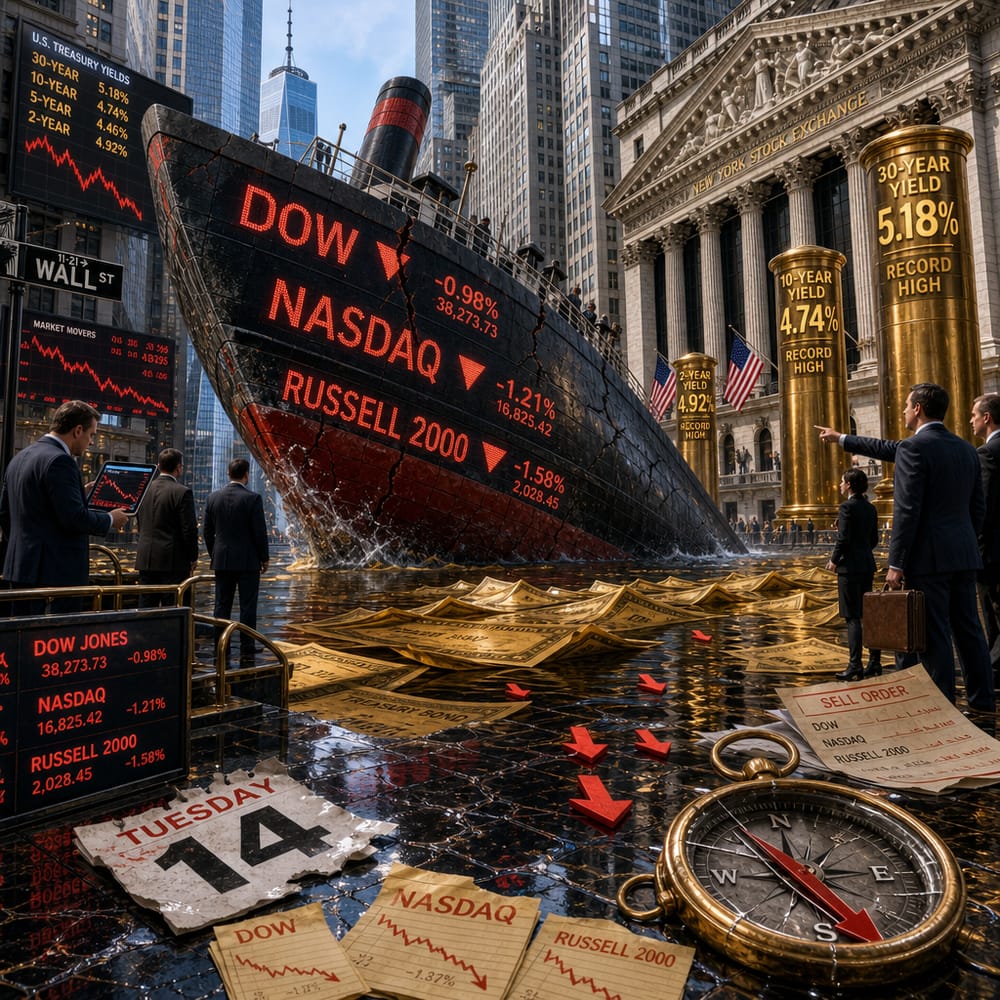
STOCKS SLIDE AS BONDS KEEP GRABBING THE LIMELIGHT
Hold onto your hats, folks, because U.S. stock indices are doing their best impression of deflating balloons. On Tuesday, the Dow, Nasdaq, and the little Russell 2000 that could all found themselves slipping further into the red. Meanwhile, bond yields decided that the spotlight was theirs to keep. But what’s driving this downturn, and is there any silver lining on the investment horizon?
First, let’s address the elephant in the room: those pesky high bond yields. Yields on bonds have been partying like it’s 1999, hitting record highs and refusing to budge, even as they stabilize. You might be thinking, "Who cares about bond yields when my tech stocks are tanking?" Well, when bond yields rise, investors often see them as safer bets compared to the wild west of the stock market. After all, why roll the dice on a volatile stock when your local government is promising a guaranteed return?
This shift in sentiment is putting pressure on equities like never before. With yields so enticing, investors are pulling out of stocks faster than a kid leaving a dentist appointment. It’s not just fear; it's about maximizing returns in a market where safety is looking pretty darn attractive.
Adding another layer of intrigue is the broader economic climate. Geopolitical tensions simmering in the Middle East, economic power plays over in Europe, and China's cautious stance on its own markets are all doing their bit to shake investor confidence. Yet, it’s not quite the doomsday scenario one might expect. The U.S. economy still shows resilience—unemployment remains low, and consumer spending hasn’t ground to a halt. The market is more a cautious beast than a panicked one.
But what does this mean for the average investor scrolling through headlines on their morning commute? Should you go full ostrich and bury your head in the sand? Not so fast. While the current climate is choppy, savvy investors know it’s all about riding the waves, not being swept away by them.
One potential strategy? Diversification. If your portfolio looks like a tech fan club, it might be time to spread the love—and the risk. Think beyond the usual suspects, perhaps dipping a toe into sectors that traditionally thrive when bond yields are high. Utilities and consumer staples, for instance, often hold their own when the going gets tough, offering stability and consistent dividends that can soften the blow of market swings.
Another potential play is to keep an eye on small caps, like those in the Russell 2000. These underdogs often take a hit when the market gets jittery, but they're also primed for a comeback when the economy turns a corner. If you're willing to stomach a bit of risk, now could be the time to consider bargain hunting among these smaller players.
And let’s not forget that investor sentiment can change as quickly as a TikTok trend. While today’s headlines are all about record-high bond yields and stock declines, tomorrow could bring a whole new narrative. For instance, if economic indicators start pointing to lower inflation or if geopolitical tensions ease, we might see a shift back towards equities.
So, will investor sentiment shift in the coming days? It’s anyone’s guess, but never underestimate the market’s ability to surprise. The next week or so could bring profit reports from companies that defy expectations or policy changes that boost confidence.
In this topsy-turvy market, the best advice might just be the oldest: stay informed, stay calm, and remember that even the most turbulent seas eventually calm. Whether you’re a seasoned investor or a newcomer, the current market might be serving a reality check, but it’s also offering opportunities for those with the patience to spot them. It might not be the time to take wild gambles, but it's certainly not the time to tune out entirely. Stay sharp, stay savvy, and who knows—you might just find yourself ahead when the dust settles.
This article is for informational purposes only and is not investment advice. Always do your own research or consult a licensed financial professional before making investment decisions.
© Copyright 2024. All Rights Reserved.
© Copyright 2024. All Rights Reserved.