

Equal-Weight S&P 500 Outperforms Cap-Weighted Index
Tuesday, August 18, 2026
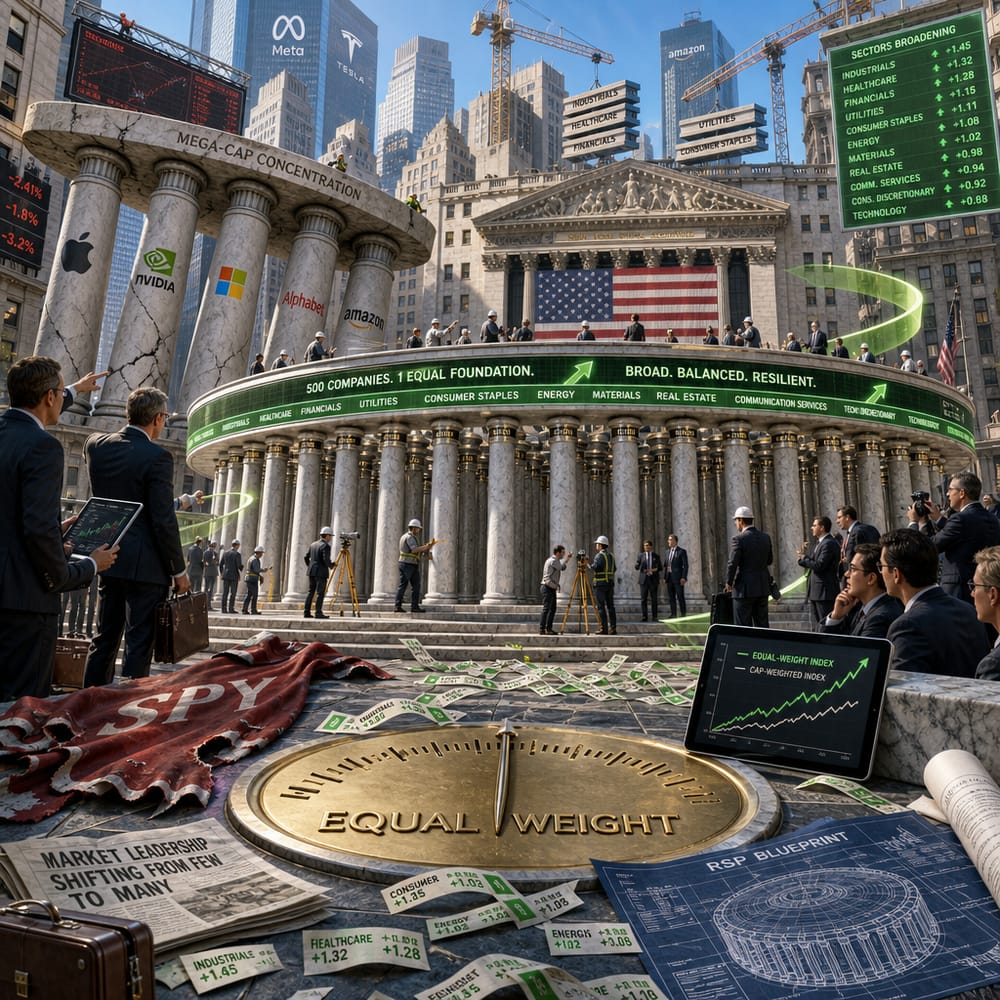
When it comes to the stock market, size doesn’t always matter. In a twist that might make Goliath sweat, the equal-weighted S&P 500 index has outperformed its more famous, cap-weighted cousin. Yes, David may have found his slingshot in the form of a more democratic approach to investing. But why should you, the savvy investor, give a hoot? Because this shift could signal a major sea change in how markets tick and where your money might want to play.
THE BIG GUYS AREN’T THE ONLY GAME IN TOWN
First, let’s clear up what we're talking about. The S&P 500, as most people know it, is cap-weighted. That means the bigger the company, the bigger its influence. If you were at a concert, think of cap-weighted as letting the tallest person in the crowd decide what song the band should play next. Not exactly fair, right? The top dogs—think Apple, Amazon, and Microsoft—have been calling the shots for a while now. But their reign may not be as unassailable as it seems.
Enter the equal-weight S&P 500 index. Here, every company wields the same influence, no matter how vast its market cap. It’s like giving everyone at that concert equal say in the setlist. Over the past year, this egalitarian index has been giving its heavyweight cousin a good run for its money. Why? Because smaller and mid-sized companies are pulling their weight, and then some. With a 2023 that saw small-cap stocks flexing their muscles, the equal-weight index has been strutting around with higher returns.
WHAT’S IN IT FOR YOU?
So what’s the big deal? For one, an equal-weight index offers diversification. Instead of banking on a few behemoths, your money gets spread across the field. This reduces the risk of a bad day from just one or two mega-caps spoiling the party for your whole portfolio. And in a market that's been more volatile than a soap opera plot twist, spreading out the risk can be a solid strategy.
Moreover, investing in an equal-weight index might just be a bet on broader economic recovery. Smaller companies often react more swiftly to changes in the economy and can offer greater growth potential. If you're the kind of investor who believes that the economic tide will lift all boats, not just the luxury yachts, this approach might resonate with you.
SHIFTING SENTIMENTS AND MARKET MAVERICKS
But what’s driving this shift? It seems investors are starting to question whether the mega-cap stocks can continue to defy gravity. Inflation concerns, geopolitical drama, and interest rates that seem to have a mind of their own are all causing some investors to seek refuge in less obvious places. The market's message? Diversify, or risk watching your portfolio ride the rollercoaster with hands in the air.
The big takeaway here is about investor sentiment. Increasingly, there's recognition that the future might not be dominated by tech giants or established behemoths. Investors, like goldfish gifted a larger fishbowl, are exploring new spaces. It's a mindset that embraces a broader array of industries—think healthcare, consumer goods, and even those oft-overlooked industrials.
THE ROAD AHEAD
So, what's next on the investment horizon? If this trend holds, we might see a market less beholden to its trillion-dollar titans. The equal-weight S&P's recent victory lap could inspire more interest in smaller cap funds, sector-specific ETFs, or even international markets. In other words, the next frontier might just be a local neighborhood rather than Silicon Valley.
For those who have watched the FAANG stocks (that’s Facebook, Amazon, Apple, Netflix, and Google, in case you've been living under a rock) dominate news headlines and stock portfolios, this new paradigm shift offers a chance to look beyond the obvious. But, as with any investment, remember that past performance doesn’t guarantee future returns. This could be a momentary flash-in-the-pan or a harbinger of new market dynamics.
Either way, whether you're a seasoned trader or just someone trying to make your savings work a bit harder, keeping an eye on these shifts can pay dividends. Literally. As investors, it’s our job to keep our ears to the ground and our eyes on the prize, ready to adapt to whatever trends the market throws our way. After all, in investing, as in life, it's good to remember that sometimes, the little guy packs the most punch.
This article is for informational purposes only and is not investment advice. Always do your own research or consult a licensed financial professional before making investment decisions.
© Copyright 2024. All Rights Reserved.
© Copyright 2024. All Rights Reserved.