

Equal-Weight S&P 500 Outpaces Mega-Cap Index
Friday, August 14, 2026
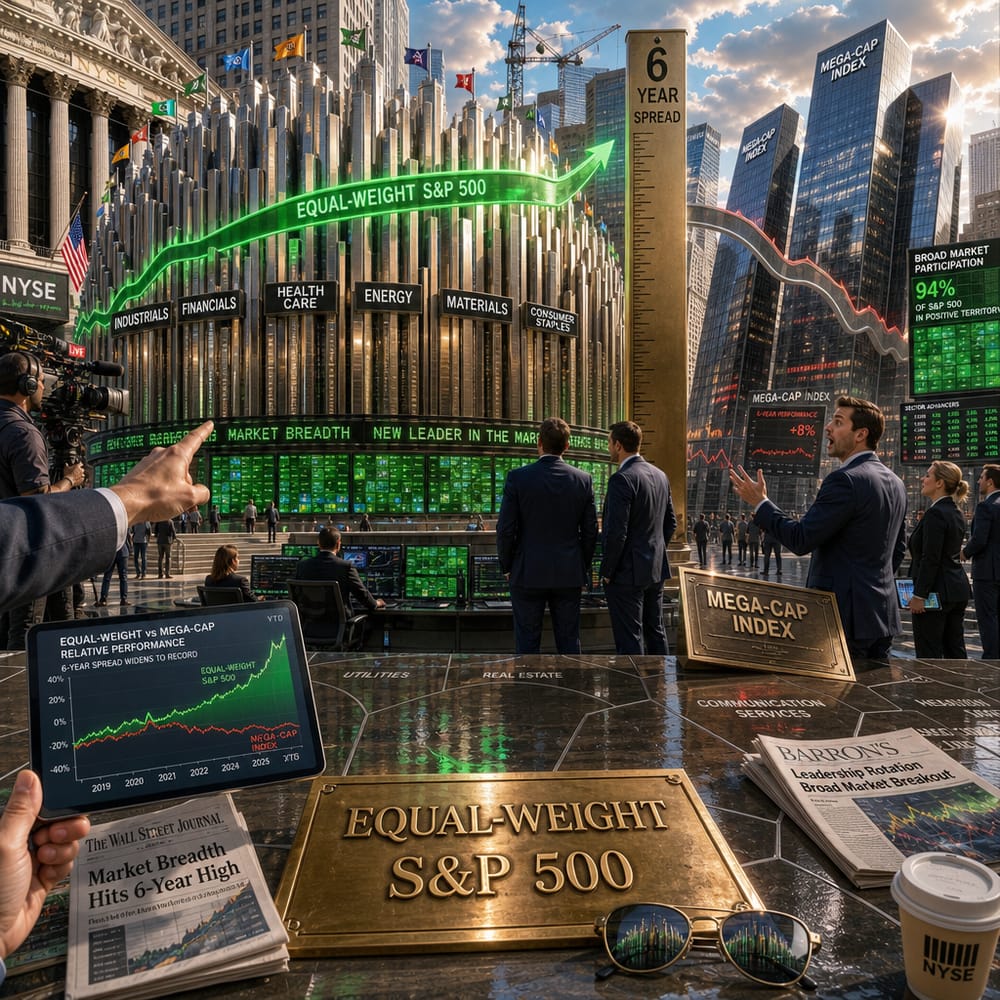
EQUAL-WEIGHT S&P 500 OUTPACES MEGA-CAP INDEX
Buckle up, market enthusiasts. There's a seismic shift happening beneath the polite facade of the S&P 500, and it’s not just about the usual suspects – the mega-cap tech behemoths. The equal-weighted S&P 500 index is strutting ahead of its cap-weighted sibling, marking the widest performance gap we've seen in six years. So, what’s going on, and why should you care? Let’s dive in.
First things first, a quick primer: the equal-weighted S&P 500 treats every company the same, like an egalitarian dinner party where everyone gets the same portion. Meanwhile, the cap-weighted S&P 500 throws the lion's share of attention at the tech giants like Apple, Microsoft, and Amazon, who usually steal the show (and your data).
Now, let’s dissect the elephant in the room. Why is the equal-weight index showing off its moves? For starters, it’s about breadth. Imagine a concert where, after years of listening to the same old headline act, the opening bands finally have their time to shine. Mid and small-cap stocks, the lesser-known darlings of investing, are gaining traction, and they’re doing a fantastic job of it.
Rising interest rates and economic recovery efforts are nudging investors towards sectors that have been overshadowed by tech giants. Financials, industrials, and consumer discretionary stocks are coming in hot, getting the love they so richly deserve. With the Federal Reserve playing coy about its next move, these sectors offer a sweet mix of growth and stability, a cocktail investors find irresistible during uncertain times.
The burning question: is this shift away from mega-cap tech just a passing fad, or are we witnessing a sustainable change? The jury's still out, but several factors suggest this trend might stick around longer than a TikTok dance craze. For one, valuations in the mega-cap realm have reached nosebleed heights, leaving investors searching for greener (and cheaper) pastures. Plus, with corporate earnings not just meeting but smashing expectations, the appetite for diversity in investments has grown exponentially.
So, what does this mean for the long-term health of the market? Simply put, it's a good sign. A market rally that involves more players is like a potluck with a well-balanced menu – everyone contributes, and everyone benefits. When mid and small caps participate in the market’s upward march, it suggests underlying economic strength and reduces reliance on a handful of giants.
But hold on, there’s a twist. The once steady foundation of tech dominance isn't vanishing overnight. Despite the equal-weight index's run, tech is still the toast of the town, especially with SpaceX dreaming of data centers in orbit and SanDisk making headlines with jaw-dropping gains. So, while the giants may be taking a breather, they’re not about to hand over their crowns just yet.
For retail investors, the equal-weighted index’s rise offers an enticing opportunity to reassess portfolios. Diversification isn’t just a dull finance word; it’s your ticket to not keeping all your eggs in the Silicon Valley basket. As always, it’s about balance, finding that sweet spot between growth and stability, old faithfuls and fresh upstarts.
In a world where mega-cap tech has often felt like the only game in town, the recent performance of the equal-weighted S&P 500 is a refreshing reminder of the market’s vast, unexplored terrain. Whether this marks a long-term trend or just a short-lived diversion, it’s a fascinating development that deserves your attention.
So here’s to new faces and old faiths, and to hoping that this trend adds a little more spice to your market musings. Keep your eyes peeled; the equal-weighted S&P 500 is not just a footnote in the investment world. It’s the beginning of a story that could reshape the way we think about market rallies and portfolio allocation. Now that's something worth scrolling for.
This article is for informational purposes only and is not investment advice. Always do your own research or consult a licensed financial professional before making investment decisions.
© Copyright 2024. All Rights Reserved.
© Copyright 2024. All Rights Reserved.