

Energy Sector Volatility and Market Impact
Tuesday, August 11, 2026
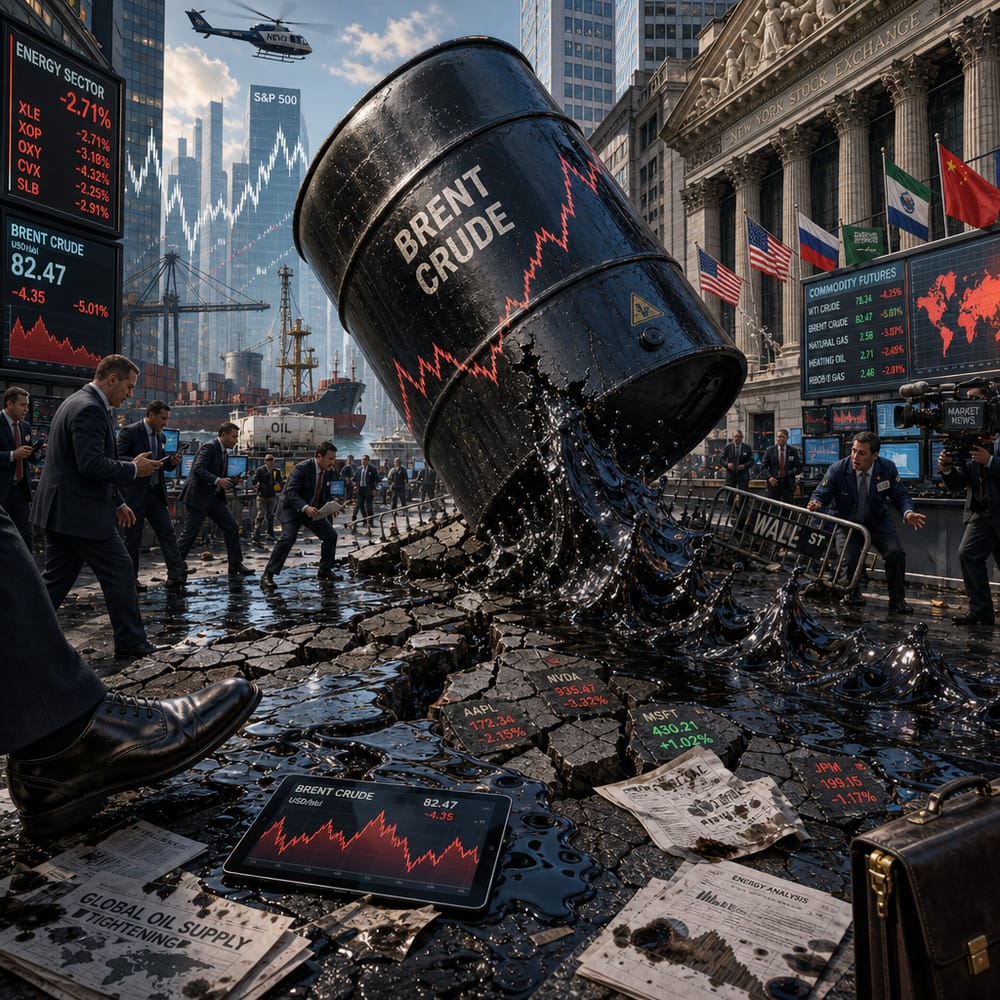
ENERGY SECTOR VOLATILITY AND MARKET IMPACT
Hold on to your portfolios, folks—oil prices are rocking the boat, and not in a good way. If you've been wondering why the energy sector feels like it's on a caffeine high, you're not alone. The recent rollercoaster in oil prices has everyone from Wall Street to Main Street doing a double-take. It's like the geopolitical version of a soap opera, and trust me, it's affecting more than just gas stations.
Let's get down to brass tacks. What’s driving this madness? Well, it's the geopolitical potluck, where everyone brings something disruptive. President Trump's reparations demand from Iran over "the damage they've done" over the past fifty years is the latest twist. Not surprisingly, Iran isn't exactly thrilled about this. Throw in the ongoing tension over the Strait of Hormuz—a crucial chokepoint for global oil shipping—and you have the perfect recipe for market chaos. One minute, a deal seems possible, the next, not so much, and oil prices swing like a pendulum.
Brent crude, the global benchmark, has been on a bit of a bender lately. One day it's up 2.5%, the next it's cooling down, settling at around $87.99 per barrel. Meanwhile, U.S. oil prices are doing their own dance, hovering around $82.32. The markets are digesting these conflicting signals and, understandably, investors are getting a little queasy.
But here's the kicker: when oil prices zigzag, they don't just affect the energy sector. Nope, the ripples spread across the broader market. Higher oil prices can fuel inflation, making everything from your morning latte to your car's gas more expensive. Inflation fears then lead to jitters across equity markets, as investors brace for the Federal Reserve to hike interest rates to keep things in check. It’s a domino effect that can make even the steadiest S&P 500 investor pause and think.
Speaking of the S&P 500, it’s been feeling the tremors. Futures for the index have been inching up and down like a cautious squirrel. Investors are hedging their bets, trying to figure out if the U.S. and Iran will play nice or if the drama will drag on. The impact of these oil price fluctuations is reminiscent of a high-stakes poker game, where every bluff and every call could spell big gains—or losses.
Let's not ignore the elephant in the room: geopolitical uncertainty. Look at Ukraine—the ongoing conflict is another layer of complexity. As Russia cozies up with North Korea, tensions are only rising. Ukraine's President Zelenskyy warns of further escalation with Russia bringing in North Korean military equipment. This could put additional pressure on global markets, as investors weigh the risks of broader conflict impacting everything from energy supplies to trade routes.
So, how do you, the retail investor, navigate this minefield? First, remember that oil prices can be a double-edged sword. On one hand, they can signal economic growth when demand is high, but when prices spike due to geopolitical drama, that's a different kettle of fish. Keep an eye on how companies in the energy sector, particularly those in the S&P 500, are responding to these shifts. Are they passing costs onto consumers? Are they cutting production? These are the questions that can provide clues on where to put your money—or where to take it out.
In this energy-fueled saga, staying informed is your best weapon. Follow the latest developments in Middle East geopolitics, because as oil prices go, so too does market sentiment. This volatility isn’t just noise; it's a signal that the market is trying to tell you something. Whether it’s time to hold steady or brace for impact, only time and the next round of geopolitical chess will tell.
So, there you have it. The energy sector is no snooze-fest right now, and neither should your investment strategy be. Just remember, in the wild world of energy and equity markets, expect the unexpected, and always be ready for the next plot twist.
This article is for informational purposes only and is not investment advice. Always do your own research or consult a licensed financial professional before making investment decisions.
© Copyright 2024. All Rights Reserved.
© Copyright 2024. All Rights Reserved.