

Energy Sector Rotation: BP's Rise and Exxon's Fall
Sunday, October 04, 2026
ENERGY SECTOR ROTATION: BP'S RISE AND EXXON'S FALL
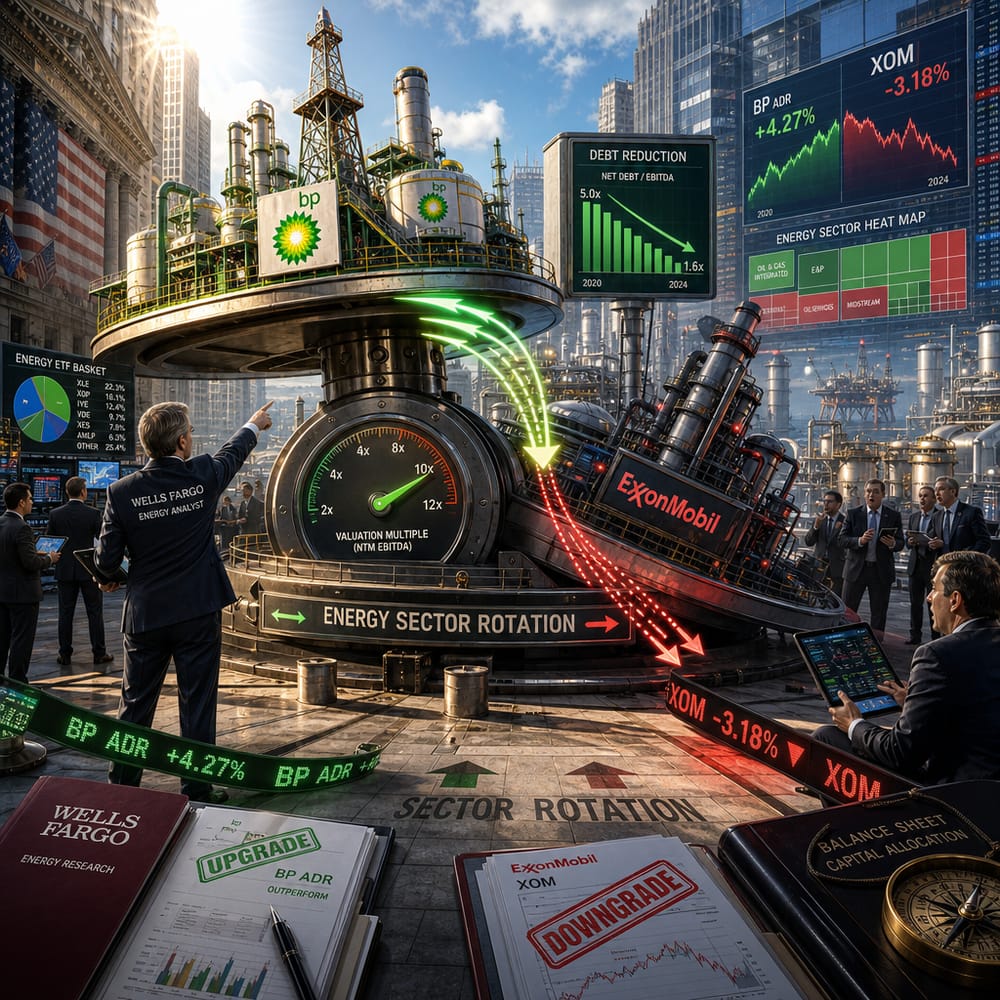
In the ever-volatile energy sector, it's almost like a high-stakes game of musical chairs—except the stakes are your portfolio. And guess what? The tune's changed, and BP just snagged the best seat while ExxonMobil might be left without a cushion. Wells Fargo has played DJ, upgrading BP and downgrading ExxonMobil, and retail investors everywhere should be tuning in.
SO, WHAT’S THE DEAL?
When Wells Fargo speaks, markets listen. They’ve given BP a thumbs-up and Exxon a thumbs-down, all thanks to some number-crunching magic involving valuation metrics and debt reduction strategies. What does all that mean? In plain English, BP appears to offer a better bang for your buck at the moment, while ExxonMobil is carrying more baggage—think of it as trying to run a marathon with a backpack full of bricks.
BP's recent performance has captured Wells Fargo's attention, painting a picture of a company that's not only pricing its assets attractively but also tidying up its financial closet. Remember that messy room we all had as teenagers? BP decided to clean theirs, actively managing debt levels to ensure future stability. Meanwhile, Exxon’s debt levels are more like a Jenga tower teetering on instability.
IMPACT ON INVESTOR SENTIMENT
This reshuffling could lead to a sector rotation—a fancy way of saying investors might start looking at BP with heart-eyes emojis, while Exxon makes them think twice. Investor sentiment can shift faster than a TikTok trend, and energy stocks are no exception. As they say, the trend is your friend, and BP might just be the new bestie for investors looking to ride the wave of a more favorable risk-reward balance.
BP's upgrade could entice investors to pivot their focus, potentially affecting stock performance as funds reallocate to where the grass seems greener. It’s like moving from an all-night diner to a five-star restaurant—the menu looks better, even if you don’t know exactly what you’re ordering.
THE BIGGER PICTURE IN THE ENERGY SECTOR
This isn’t just a BP vs. ExxonMobil drama; it’s a reflection of broader trends in the energy sector. With renewable energy gaining ground and traditional oil giants feeling the pressure to adapt, companies like BP have been quicker on their feet, investing in cleaner alternatives and thus, appealing to the environmentally-conscious investor. Being green isn’t just a color anymore; it’s a strategy.
Exxon's struggles could signal a need for legacy energy companies to rethink their strategies. Sticking to old habits might not cut it in a market that's increasingly valuing innovation and sustainability.
WHAT DOES THIS MEAN FOR YOU, THE INVESTOR?
If you’re a retail investor scratching your head, wondering what this means for your portfolio, here's the lowdown: Watch out for shifts in investment strategies focusing on companies that are agile in debt management and valuation. This is especially crucial given the broader economic environment, where high debt can be a thorn in a company's side, or, even worse, a nail in the coffin if interest rates continue their upward march.
Also, keep an eye on the evolving energy landscape. The rise of renewables and sustainability trends could serve as a weather vane, pointing towards the future of energy investments. Investing isn’t just about the present; it’s about anticipating where the puck is going, not where it’s been.
In conclusion, BP and ExxonMobil's current maneuvering offers a glimpse into the dynamic dance of the energy sector. Whether you’re bullish on BP or sympathizing with ExxonMobil, the key takeaway is to remain vigilant and adaptable. After all, as the energy tides shift, so too should your investment strategy. Time to put on your analyst hat and decide where to place your bets. Who knows? You might just find yourself ahead of the curve—or at least comfortably seated when the music stops.
This article is for informational purposes only and is not investment advice. Always do your own research or consult a licensed financial professional before making investment decisions.
© Copyright 2024. All Rights Reserved.
© Copyright 2024. All Rights Reserved.