

Energy Prices Stabilizing—New York Fed’s Williams Offers Reassurance
Saturday, August 15, 2026
ENERGY PRICES STABILIZING—NEW YORK FED’S WILLIAMS OFFERS REASSURANCE
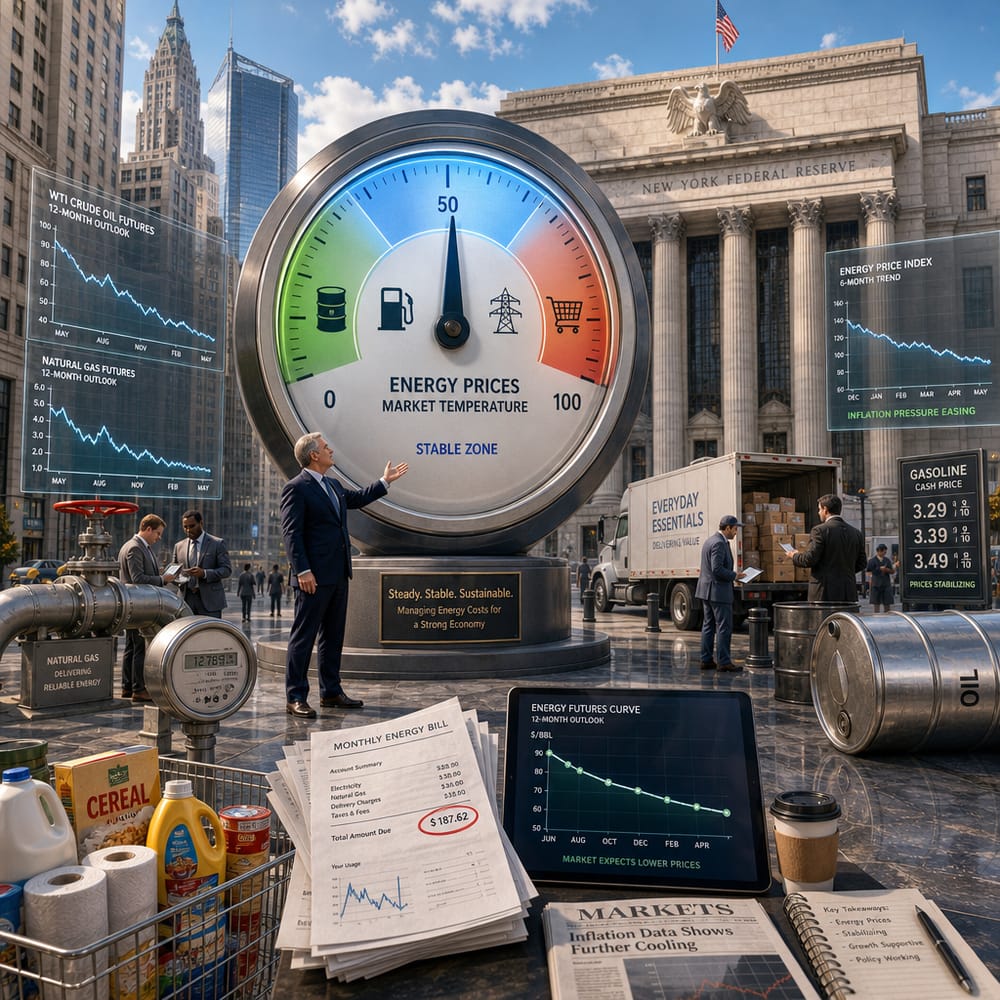
Picture this: a world where the thought of checking your gas bill doesn’t send shivers down your spine. A utopia where the price at the pump doesn't trigger heart palpitations. Well, the New York Fed’s President, John Williams, just served up a hearty helping of optimism to the everyday American budget, announcing that energy prices are expected to simmer down over the next six to twelve months. So, should you pop the champagne or keep it on ice? Let's dig into the factors at play here.
First, what’s got energy prices thinking about taking a long-overdue chill pill? A cocktail of factors, my friends. Global supply chains are slowly unknotting themselves after a pandemic-induced meltdown, and alternative energy sources are elbowing their way into the spotlight like a rock star at a classical concert. All of this is contributing to a stabilization in prices, according to Williams’ informed crystal ball.
Now, if you’re thinking: “Well, sweet relief! But what's the catch?” Allow me to present a wildcard: geopolitics. Specifically, the chaos carousel known as the Strait of Hormuz. This narrow waterway has been the site for tensions between the United States and Iran, and any disruptions here can send crude oil prices on a rollercoaster ride that no one wants a ticket for. Just when things were looking up, a spat over shipping routes can throw a wrench in the works.
So what does this mean for inflation, that pesky economic specter haunting your weekly grocery run? Well, as energy prices plateau—or better yet, dip—consumer goods won’t have to hitch a ride on the inflation express. That’s right, the prices of the stuff you actually buy could start to level off. It’s like finally getting some shade on a scorching summer day. Lower energy prices could ease the cost of producing and transporting goods, which in turn could slow down inflation and perhaps stop it from gobbling up your savings.
And don't forget about the financial puppeteers over at the Federal Reserve. Lower energy prices make their job a bit easier too. It’s like taking off a weighted backpack mid-hike. Without runaway energy prices fueling inflation, the Fed might not feel as pressured to raise interest rates. This could keep borrowing costs in check, making it less costly for you and I to take on loans, invest, or buy homes. Not too shabby, right?
But hold on, the ripple effects stretch beyond just your wallet. For those dabbling in the stock market, keep a keen eye on the energy sector. Oil and gas companies, whose fortunes rise and fall with energy prices, could see a bit of turbulence if prices start to stabilize or decline. If you're invested in this sector, make sure your portfolio is strapped in for the ride.
Meanwhile, sectors like consumer goods might just get their day in the sun. Lower production and transportation costs can mean higher profits if they keep retail prices steady. That’s potential good news if you’ve thrown your lot in with companies selling everything from cereal to smartwatches.
And let’s not find ourselves with our heads in the sand—geopolitical risks are always lurking. The situation around the Strait of Hormuz is just one headliner in the grand theater of world politics, with energy supplies often caught in the crossfire. A single flare-up can send energy prices whizzing skyward quicker than a Fourth of July firecracker.
So, what’s the takeaway here? Energy prices may be about to give us a break, and that could mean relief for inflation and your monthly budget. But, as always in the financial world, there’s nothing as certain as uncertainty. Keep an eye on those geopolitical headlines, stay nimble with your investments, and maybe hold off on spending that windfall just yet. After all, in this economic climate, it never hurts to have a little cushion for the unexpected.
This article is for informational purposes only and is not investment advice. Always do your own research or consult a licensed financial professional before making investment decisions.
© Copyright 2024. All Rights Reserved.
© Copyright 2024. All Rights Reserved.