

Emerging-Markets FX Under Pressure from Dollar Strength
Sunday, August 23, 2026
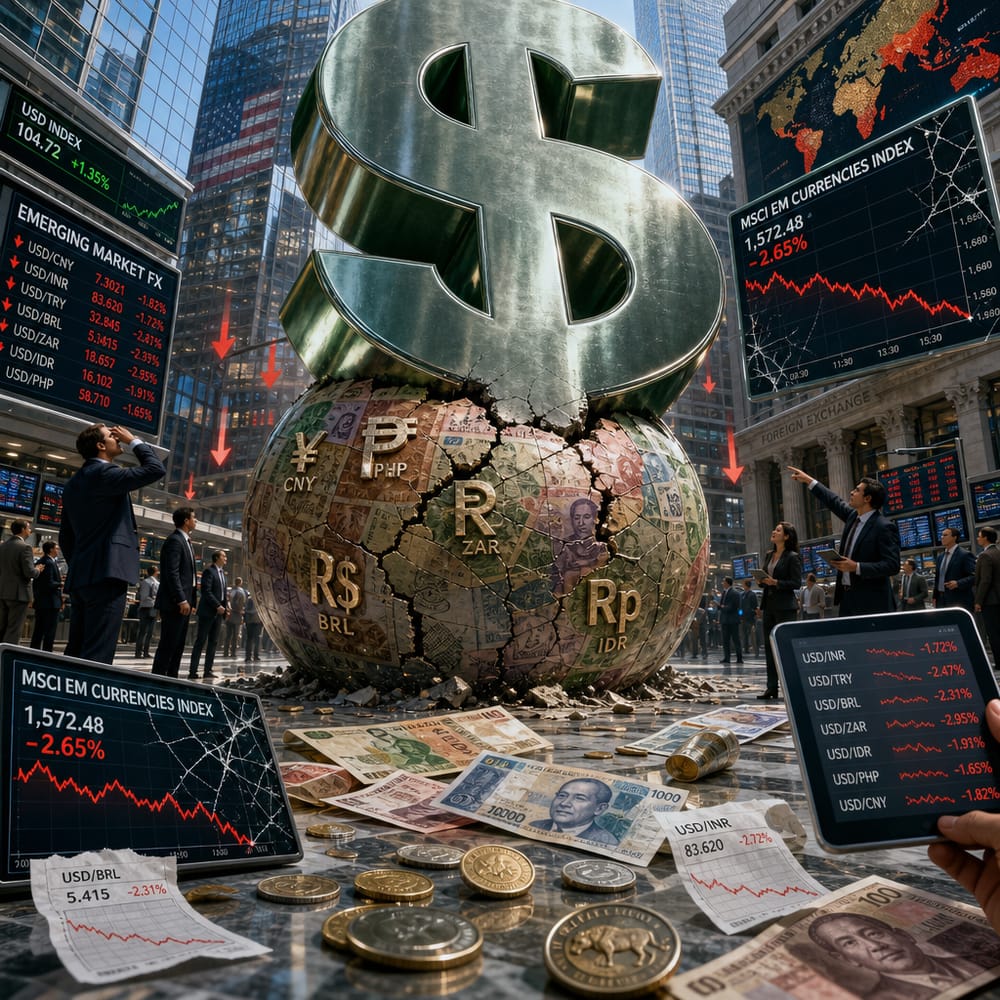
DOLLAR DOMINANCE: EMERGING MARKETS IN A TAILSPIN
Hold onto your wallets, folks, because the dollar is riding high, and it's making life a little miserable for emerging markets. Think of it like a heavyweight champ throwing punches at smaller fighters. The MSCI Emerging Markets Currency Index has been seeing stars, and that's just the beginning.
This isn't just a tale of numbers and charts; it's a drama unfolding on a global stage. The U.S. dollar, backed by the Federal Reserve's interest rate hikes, has turned into a beast that emerging market currencies are struggling to tame. Picture this: Brazil, South Africa, and Turkey are all in the ring, taking hits one after another, and trying to stay on their feet.
WHY EMERGING MARKETS?
Emerging markets are a bit like the new kids on the financial block. They have promising economies and a lot of growth potential, but they haven't yet reached the stability of, say, the United States or Germany. When the dollar strengthens, it sucks capital away from these markets faster than a limited-time offer on Amazon Prime Day. Investors want the safety and returns of dollar-denominated assets, and for emerging markets, it's a challenge that feels a lot like trying to fill a bucket with a hole in it.
WHO'S TAKING THE HARDEST PUNCHES?
Let's break it down. Countries like Argentina and Turkey are feeling the heat, with their currencies taking a nosedive against the mighty greenback. Argentina's peso is practically in freefall. It's the kind of scenario that makes you want to pour an extra shot of espresso in your morning coffee. Meanwhile, Turkey’s lira is having a tough time finding its footing, despite central bank efforts to keep it steady by hiking interest rates and throwing everything but the kitchen sink at the problem.
CENTRAL BANKS TO THE RESCUE?
Emerging market central banks are not just sitting on their hands. They're in full battle mode, trying everything from raising interest rates to burning through foreign reserves like they're going out of style. Some are even considering capital controls, a fancy term for saying, "Sorry investors, but you might not be able to take your money out as easily as before."
The idea is to make local currency assets more attractive to investors, but there's only so much they can do when the dollar is strutting around like it owns the place.
THE LONG GAME: WHAT'S AT STAKE?
This isn't just about bruised egos and jittery investors. There's a lot more riding on this than just currency exchange rates. Economic stability is on the line, and a prolonged currency devaluation can lead to higher inflation, increased debt burdens, and even social unrest. It's like trying to build a house of cards on a shaky table.
For countries heavily reliant on imports, a weaker currency means paying more for essential goods, which can be a punch to the gut for everyday consumers. It’s the kind of scenario that keeps finance ministers up at night, staring at the ceiling and wondering what to do next.
THE GLOBAL RIPPLE EFFECT
Why should you care if you're lounging comfortably in the U.S. with your Starbucks in hand? Because these emerging market struggles can cause ripples that hit global financial markets. Think of it as a series of dominoes. One topples, and the rest could follow. An emerging market crisis could lead to a sell-off in global equities, a shake-up in commodities like oil and metals, and potentially even impact your 401(k).
While the U.S. and other developed nations might think they're safe in their financial bubbles, global markets are more interconnected than ever. If these markets can't catch a break, it might just affect the broader economic ecosystem that we're all a part of, whether we like it or not.
THE WRAP-UP
So, what's the takeaway? Emerging markets are in a tight spot, trying to dodge the hard punches thrown by a supercharged dollar. Central banks are pulling out all the stops, but the battle is far from over. Keep an eye on this developing story, because the stakes are high, and the outcome could echo across the global economy. Stay tuned — this is financial intrigue at its finest.
This article is for informational purposes only and is not investment advice. Always do your own research or consult a licensed financial professional before making investment decisions.
© Copyright 2024. All Rights Reserved.
© Copyright 2024. All Rights Reserved.