

Emerging-Market Turmoil: Egyptian Pound Slumps Nearly 4% Against the Dollar
Saturday, November 07, 2026
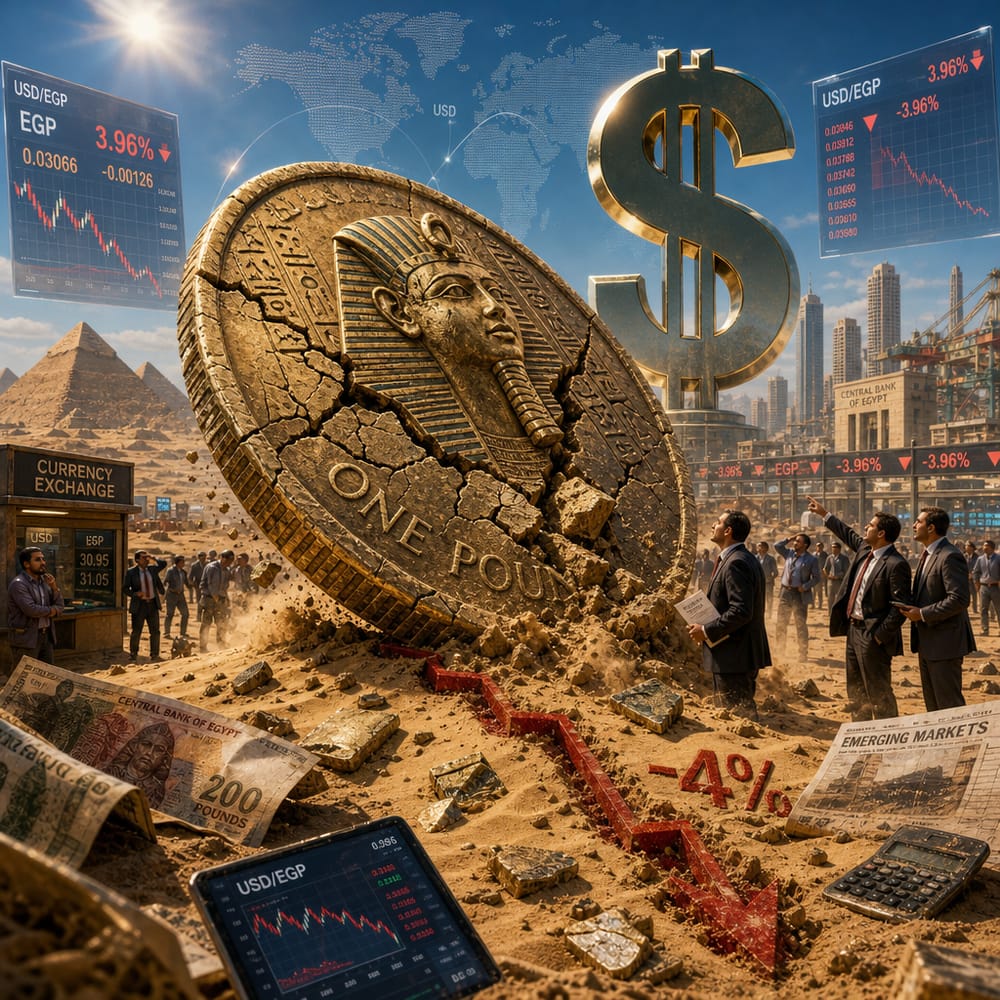
EGYPTIAN POUND TAKES A NOSE DIVE: WHAT'S BEHIND THE FREEFALL?
If you're feeling that déjà vu tingle and picturing the Egyptian pound riding an economic rollercoaster, you're not alone. The Egyptian pound has taken a nosedive, tumbling nearly 4% against the dollar, leaving analysts scratching their heads and investors clutching their portfolios a little tighter. So, what's behind this wild ride? Let's dive into the thrills and spills of Egypt's currency drama.
First off, let's set the scene. Egypt isn't exactly basking in economic sunshine right now. The country's currency has become the most volatile player on the emerging-market stage, leading to some serious nail-biting for investors watching their global holdings. But why has the Egyptian pound suddenly decided to take this downward plunge?
THE IMMEDIATE DRIVERS
Blame it on inflation, blame it on geopolitics, or perhaps even sunspots for all we know. But a few key factors stand out. Firstly, inflation in Egypt is as stubborn as a cat refusing to take a bath. The Central Bank of Egypt (CBE) has been hiking interest rates to tame the beast, but it seems inflation isn't getting the memo, persistently gnawing at consumer purchasing power.
Then there's the International Monetary Fund (IMF), the international financial firefighter that countries call when things get too hot to handle. Egypt has been cozying up to the IMF, negotiating for a potential loan to bolster its economy. Such negotiations usually come with a hefty list of economic reforms as the price of admission, reforms that can often make the market jittery in the short term.
And let's not forget the potential tectonic shifts on the geopolitical front. With regional tensions occasionally bubbling over like a pot left on high heat, investors might be feeling the heat and seeking safer ground — usually in the form of the good old US dollar.
A RIPPLE THROUGH EMERGING MARKETS
Now, before you shrug this off as Egypt's problem, consider this: investors often view emerging markets as a box of chocolates where you can't pick and choose. If one currency hits the skids, others can follow suit out of sheer sympathy or fear. Emerging-market currencies as a group have been on a bit of a rollercoaster thanks to global pressures and investor sentiment.
But not all markets are equally spooked. Some, like the Indian rupee or Mexican peso, have proven to be a bit more resilient in recent months, largely due to stronger economic fundamentals or less exposure to the same kind of political and economic pressures Egypt faces.
LONG-TERM IMPACTS: BRACING FOR THE FUTURE
What about the long-term impacts on Egypt's economy? Well, instability in the currency market can lead to a chain reaction. Increased import prices, for instance, can cause local businesses to hit the brakes on expansion plans. Consumers might tighten their belts, all of which can slow economic growth.
Moreover, Egypt's reliance on imports for staple goods could exacerbate the situation, leading to higher prices for everyday essentials. And when day-to-day living becomes more expensive, social tensions can rise, putting further strain on an already pressured government.
On a slightly brighter note, a weaker currency can be a boon for exports, making Egyptian goods more attractive on the global market. Tourism, a key sector for Egypt, could also benefit as travelers look to capitalize on favorable exchange rates.
WHAT SHOULD INVESTORS DO?
So, what's the savvy investor to do in such choppy waters? Diversification remains your best friend. Keeping a balanced portfolio with some exposure to different currencies and regions can help cushion the blow when one market starts to rock the boat.
Pay attention to global economic trends, especially those related to interest rates and inflation, which can play huge roles in currency movements. And keep an eye on those IMF negotiations — any developments there can be pivotal for Egypt's economic direction.
In the unpredictable world of emerging markets, today’s crisis could be tomorrow’s opportunity. But until then, hold onto your hats, because when currencies start to tumble, it can be one wild ride. Stay informed, stay nimble, and keep your investment strategies as diversified as a good playlist — a little of everything, just in case.
This article is for informational purposes only and is not investment advice. Always do your own research or consult a licensed financial professional before making investment decisions.
© Copyright 2024. All Rights Reserved.
© Copyright 2024. All Rights Reserved.