

Emerging-Market FX Under Strain as Fed Signals Possible 2026 Rate Hike
Wednesday, August 12, 2026
EMERGING-MARKET FX UNDER STRAIN AS FED SIGNALS POSSIBLE 2026 RATE HIKE
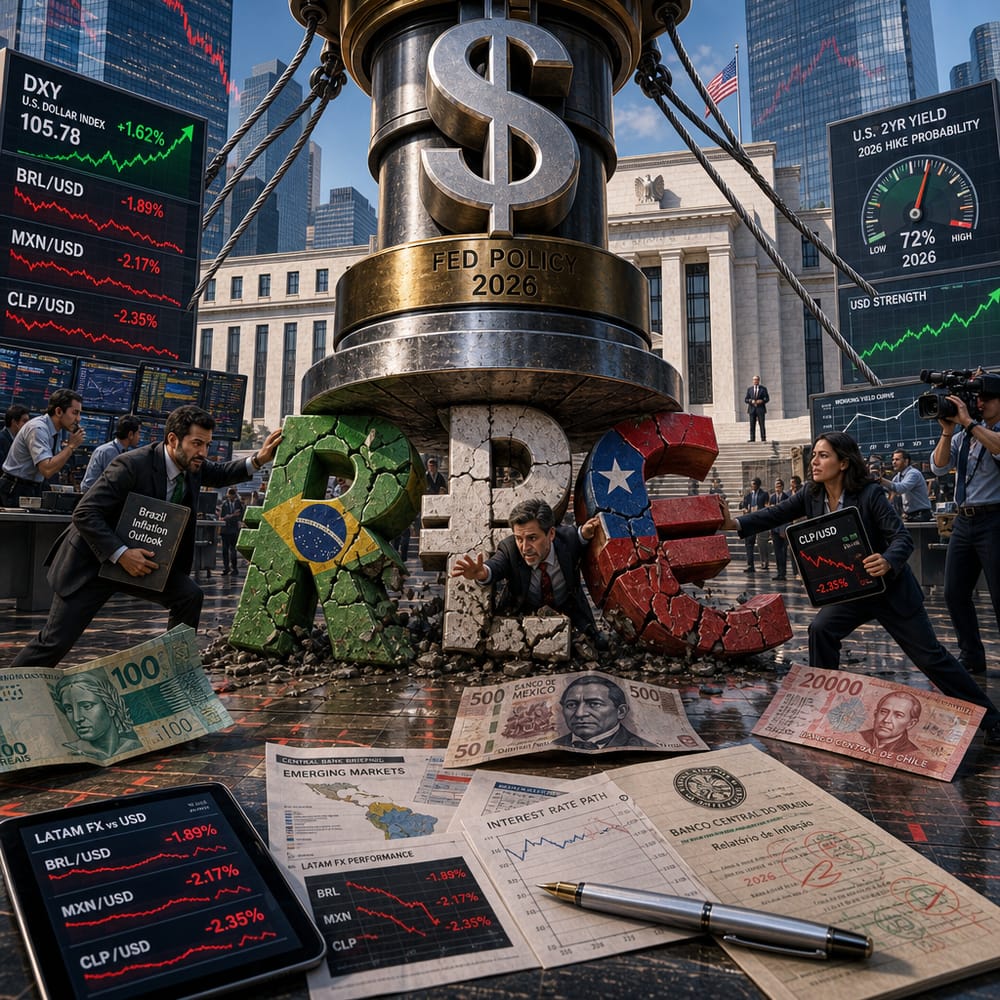
Attention retail investors: the Federal Reserve has spoken, and emerging-market currencies are breaking a sweat. For anyone who’s ever danced to the financial tunes of Latin America, you might want to check out how the Brazilian real, Mexican peso, and Chilean peso are reacting to the Fed’s latest hint at a potential 2026 rate hike.
When the Fed whispers about rate changes, the global economy tends to shout back — and emerging markets are no exception. Just picture it: the U.S. holds the biggest money hammer, and when it swings, smaller economies feel the smack. So, what’s at stake if the Fed does decide to tighten the screws and raise its interest rates?
For starters, think of interest rates like gravity for money. When the Fed raises its rates, it’s like turning the Earth into a super magnet for dollars. Investors and their capital retreat from high-risk areas, like emerging markets, seeking the relative safety and higher returns of U.S. assets. This means Latin American currencies might find themselves in a bit of a pickle — think of it as a sale at the dollar store where everything else gets marked down in dollar terms.
Here’s the kicker: a stronger U.S. dollar can mean pricier imports for Latin American economies, potentially pushing up inflation. It’s a bit like trying to fight a fire while someone keeps adding logs. Higher inflation could push these countries to raise their own interest rates, which might sound sensible, but imagine the economy wearing a heavy winter coat in the middle of summer — stifling, to say the least.
But wait, it’s not all doom and gloom. Some emerging-market economies are suiting up for this potential Fed move. Think of them as financial Boy Scouts: always prepared. Countries like Brazil have been stockpiling foreign reserves to cushion any potential economic blow. It’s like keeping a financial umbrella handy in case of a dollar downpour.
Mexico’s central bank, Banxico, has also been keeping an eye on Uncle Sam’s rate hikes, ready to pivot its policies to keep the peso from wilting. Meanwhile, Chile is keeping its powder dry with prudent fiscal policies aimed at increasing resilience.
You might be thinking, "Should I dodge emerging-market assets altogether?" Not so fast. While the short-term prospects might seem shaky, there's still a silver lining for the patient investor who’s unafraid of a little roller-coaster action. Emerging markets often have growth rates that make a tortoise of the U.S. economy look snail-paced by comparison. Once the initial jitters settle, these economies could offer opportunities for those willing to ride out the ruckus.
Another angle worth your attention: the Fed's decision might not be set in stone. Inflation data, like the recent report showing a 3.4% rise in consumer prices, plays a part in these decisions. Should inflation cool down significantly, the Fed might hit the brakes on a rate hike, giving emerging markets some breathing space.
Let’s not forget the wild card: geopolitical flair. Recent tensions between the U.S. and Iran are throwing energy prices into turmoil, which adds another unpredictable layer to how monetary policy could play out. If energy prices keep climbing despite moderating inflation, the Fed’s plans could shift, and emerging markets might find themselves on a different path altogether.
The takeaway for retail investors? Keep your eyes peeled and ears tuned to the Fed’s next move, and consider the broader picture before making any decisions about your investments in emerging markets. The financial landscape can change as quickly as a basketball team’s ownership — case in point, the Los Angeles Lakers’ swift sale to Bob Iger and Joshua Kushner.
In this high-stakes financial chess game, the next move is never certain. But whether you’re considering snagging some emerging-market currencies on the cheap or merely watching from the sidelines, stay informed and nimble. Because when the Fed winks, the whole world might just blink.
This article is for informational purposes only and is not investment advice. Always do your own research or consult a licensed financial professional before making investment decisions.
© Copyright 2024. All Rights Reserved.
© Copyright 2024. All Rights Reserved.