

Emerging-market FX: Turkey’s Central Bank Resumes Dollar Purchases
Monday, August 17, 2026
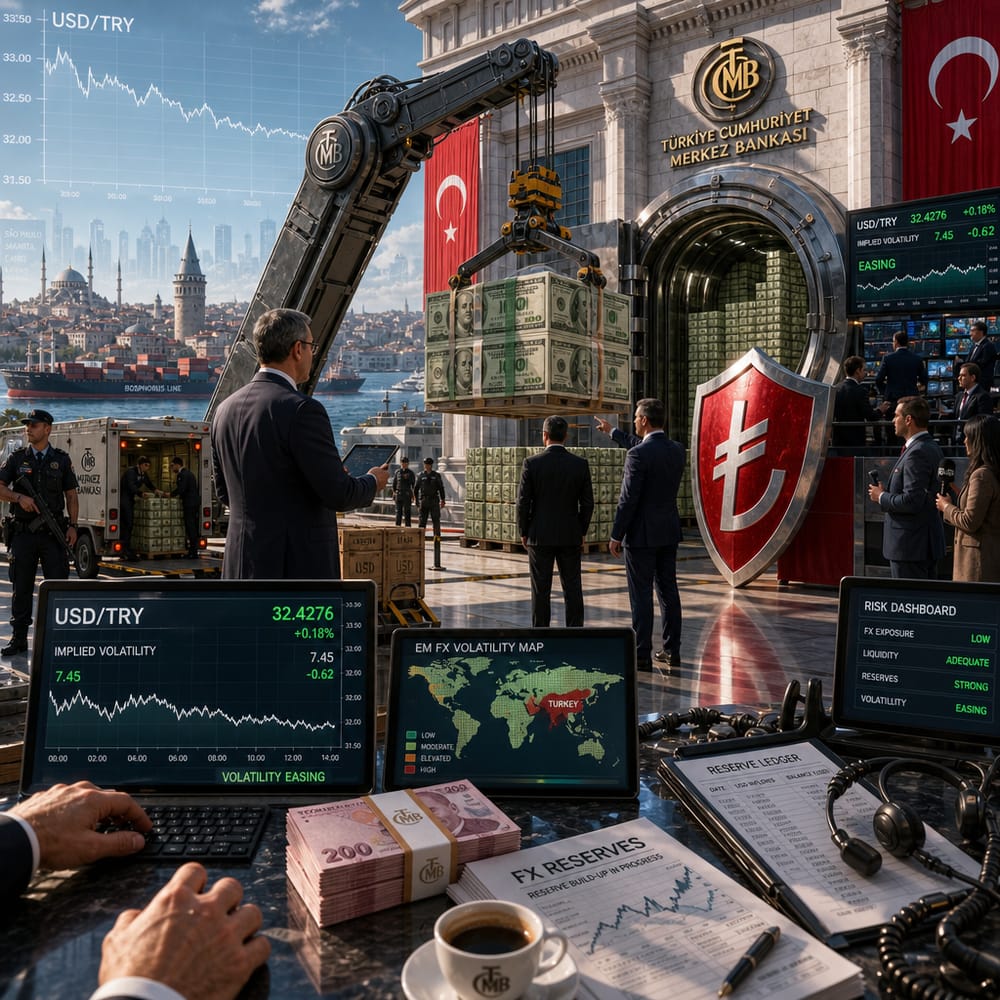
TURKEY’S CENTRAL BANK DITCHES THE SELLS, GOES DOLLAR SHOPPING: WHAT’S UP WITH THE LIRA?
Stop the presses: Turkey’s central bank has decided it's time to switch gears and start stocking up on Uncle Sam’s finest greenbacks again. After a recent spree of selling off foreign currency like it was going out of style, they’ve hit the brakes and are now back on the dollar-buying train. The Turkish lira is watching with bated breath.
But why the sudden about-face? Let’s dive into the juicy details of Turkey’s financial soap opera and see what this plot twist means for the lira and those eyeing a piece of the emerging-market pie.
THE BIG SWITCH
Picture this: Turkey’s central bank has been merrily offloading dollars to keep the lira from nosediving. But suddenly, they’ve had a change of heart and decided it's time to replenish their stash of USD. It’s like a shopper realizing they need to save up after a year of Black Friday frenzies. But what’s behind this monetary maneuver?
Two words: market stability. The central bank’s earlier selling frenzy aimed to prop up the lira, which had been floundering like a fish out of water. However, excessive selling can have its own set of pitfalls. By replenishing their reserves, Turkey's financial bigwigs aim to strike a more balanced pose, calm market jitters, and ensure they’ve got enough foreign currency in the vault for a rainy day or a financial storm.
RIPPLES THROUGH THE MARKET
So, how’s our underdog currency reacting to this plot twist? Well, the lira has been wobbling on a tightrope for quite some time. The central bank’s move to buy dollars could be the nudge it needs to regain some footing. Think of it as a caffeine shot for a currency that’s been sluggishly trying to keep up with the global marathon.
Investors in the USD/TRY pair (that’s financial lingo for the USD to Turkish lira exchange rate) are also keeping their eyes peeled. Any shift in central-bank policy tends to create ripples across foreign exchange markets, especially for emerging-market currencies that are often more volatile than their developed-world counterparts.
WHAT’S NEXT FOR TURKEY?
Looking into the crystal ball, what does this mean for the Turkish economy in the long run? Well, for starters, a more stable lira could help rein in inflation, which has been galloping along at a not-so-comfortable rate. A stable currency can also bolster investor confidence, making Turkey a more appealing dance partner for foreign investments.
However, there’s a flip side. Depending too much on these kinds of interventions can be like walking a financial tightrope without a net. There's a need for structural reforms to ensure long-term stability rather than relying solely on currency interventions. Otherwise, it’s a bit like using duct tape on a sinking ship—effective for a while, but not a permanent fix.
THE GLOBAL PLAYGROUND
Turkey isn’t playing in a vacuum here. The implications of their central bank's policy tweaks ripple outwards, affecting not just emerging markets, but also those investors in far-off lands sipping cappuccinos while watching forex charts. As Turkey tweaks its currency strategy, it signals to the rest of the world that it’s not just reactive, but proactive—an important distinction for a nation aiming to keep its seat at the global economic table.
In conclusion, Turkey’s return to dollar shopping is more than just a financial reshuffle. It’s a strategic play in a high-stakes game where the central bank is trying to juggle domestic stability while sending a message to the global market that it’s got everything under control. Whether this strategy holds water in the long run remains to be seen, but for now, it’s a captivating episode in the ever-evolving saga of the lira. So, stay tuned, because Turkey’s monetary adventures are far from over.
This article is for informational purposes only and is not investment advice. Always do your own research or consult a licensed financial professional before making investment decisions.
© Copyright 2024. All Rights Reserved.
© Copyright 2024. All Rights Reserved.